
YOGA
Lotus Position (Padmasana): How to Do It Safely and Avoid Knee Pain

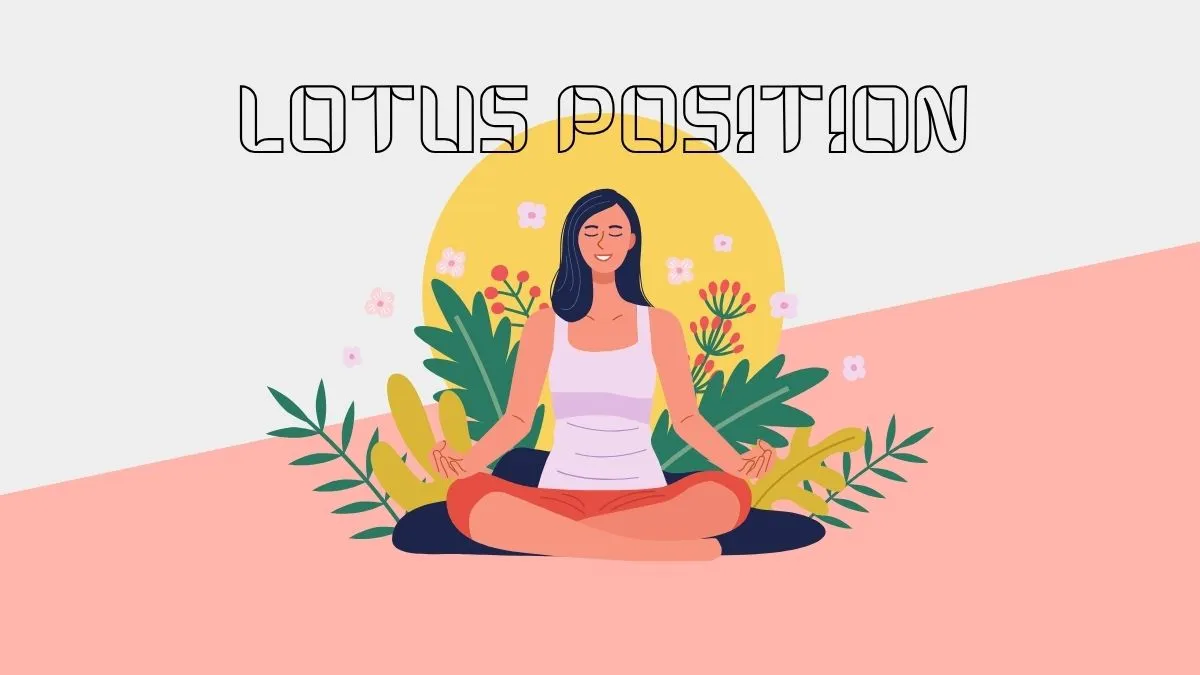
In Lotus Position, both legs are crossed with each foot resting on the opposite thigh, while the pelvis supports an upright trunk. Traditionally, the posture is associated with meditation and seated yogic practices rather than being an achievement measured by how close the knees reach the floor.
The final shape is deceptively simple. Research examining hip positions in yoga has found that several yoga postures place the hip near substantial ranges of motion, illustrating why joint mobility, not simply muscle flexibility, can determine whether a posture is accessible.
Table of Contents
The Real Challenge: Hip Rotation, Not “Loose Knees”
The most important movement in Lotus occurs at the hips. The thighs need substantial external rotation while the knees remain flexed, and the ankle also contributes to how the final position is accommodated.
This explains a common mistake: someone pushes the knee toward the floor because the hip has stopped rotating. The knee can rotate when flexed, but it is generally a poorer place to force the movement than the hip. Anatomical analyses of Padmasana emphasize treating the leg as a connected chain rather than the hip, knee, and ankle as independent joints.
There is also no scientifically established universal number such as “everyone needs exactly 115 degrees of hip rotation” to perform Lotus. Individual anatomy, joint shape, soft-tissue mobility, and the contribution of other joints all influence the available movement.
How to Tell Whether You Are Ready for Full Lotus
Before forcing full Padmasana, test the movement in a less demanding position. Look for comfortable hip rotation, not simply the ability to move the foot somewhere near the opposite thigh.
A useful readiness checklist is:
- You can sit upright without immediately collapsing backward or rounding excessively.
- You can practice Half Lotus without sharp knee pain.
- You can guide the leg into position without yanking on the foot.
- The sensation is primarily around the hip rather than inside the knee.
- You can release the position slowly without sudden knee discomfort.
- Both sides may differ, but neither side produces alarming joint symptoms.
If several of these are missing, Full Lotus is probably not your next progression. Working on controlled hip mobility and a comfortable Half Lotus makes more sense than repeatedly testing the final position.
How to Enter Lotus Without Using Your Knee as a Lever
Start seated with both legs extended. Bend one knee and bring the foot toward the pelvis, then support the lower leg with your hands and allow the thigh to rotate outward from the hip.
From there, bring the foot toward the opposite thigh only as far as the leg moves comfortably. Do not push the knee toward the floor to create the appearance of Lotus. If you feel a sharp or localized sensation around the knee, come out of the position rather than attempting to stretch through it.
Once the first leg is comfortably positioned, repeat the process on the opposite side. Keep the pelvis stable enough to support an upright spine, but do not mistake an artificially straightened torso for successful positioning; if maintaining posture requires excessive effort, elevate the pelvis on a firm folded blanket.
The safest technique is therefore less about “getting into Lotus” and more about controlling where the movement comes from. Yoga anatomy resources specifically describe the hip, knee, and ankle as a functional chain and caution against allowing restricted movement elsewhere to overload the knee.
Half Lotus vs. Full Lotus: Which Should You Practice?
| Feature | Half Lotus | Full Lotus |
| Feet on opposite thighs | One | Both |
| Required hip rotation | High | Very high |
| Complexity | Lower | Higher |
| Easier to modify | Yes | Limited |
| Appropriate progression | Often | Advanced |
Half Lotus is not an inferior version of Padmasana. It is a useful way to practice the same general hip-rotation pattern while reducing the total demand on the lower limbs.
If one side enters comfortably and the other does not, do not assume the tighter side needs aggressive stretching. Asymmetry may reflect differences in hip structure, mobility, previous injury, or habitual movement. Train both sides but let the more restricted side determine the intensity.

What Should You Feel and What Should You Not Feel?
A mild, controllable stretch around the hip is normal when you are near your current mobility limit. A sharp sensation, pinching inside the knee, twisting pain, or symptoms that become worse as you settle deeper are different signals.
Numbness or tingling also deserves attention, not treatment as evidence that the pose is “working.” If these symptoms occur, release the position and reassess your setup.
The practical rule is simple: you can train muscular effort; you should not use joint pain as a training target.
Why Some People May Never Have a Fully Comfortable Lotus
Flexibility training can change usable range of motion, but it cannot guarantee that every person will eventually have an effortless Padmasana. Hip-joint anatomy varies considerably between individuals, and the geometry of the joint can influence which movements are naturally available.
That means “I cannot do Lotus” does not automatically mean “I am inflexible.” Sometimes the more accurate conclusion is that your anatomy does not favor the required combination of movements. Anatomical analysis of Lotus specifically warns against reducing the posture to a single required range-of-motion number.
For meditation, this is hardly a problem. A stable cross-legged seat, Half Lotus, kneeling position, or chair can provide the seated stability you need without requiring Full Lotus.
Common Lotus Position Mistakes
- Pulling the foot aggressively: Guide the foot; don’t use it as a handle to force the knee into rotation.
- Pushing the knee downward: A lower knee does not necessarily indicate better mobility. It can simply mean you’re applying more force at the wrong joint.
- Practicing only one side: Repeating the same leg configuration can reinforce existing asymmetry. Alternate the lead leg.
- Chasing the visual shape: A technically impressive Lotus with knee pain is not a successful pose.
- Holding too long: Longer duration does not compensate for poor positioning. A short, comfortable hold is more useful than a prolonged painful one.
When Should You Avoid Lotus Position?
If you have current knee or hip pain, a recent lower-limb injury, significant joint stiffness, or a history of hip, knee, or ankle surgery, Full Lotus should not be treated as a posture to work through on your own.
The National Center for Complementary and Integrative Health notes that yoga is generally safe when practiced appropriately. Still, sprains and strains can occur, with the knee or lower leg among the most injured areas. It specifically advises beginners to avoid advanced practices such as the lotus position or to approach them only gradually and carefully.
Does Lotus Position Have Special Health Benefits?
Padmasana can provide a stable seated base for meditation, but claims that Lotus itself dramatically improves circulation, digestion, immunity, or organ function go beyond what the evidence establishes.
Research supports potential benefits of yoga as a broader practice, including effects on stress, balance, mental well-being, and some pain conditions. Those findings should not automatically be interpreted as proof that Full Lotus produces the same benefits independently.
Its most defensible practical benefit is therefore positional: if your body tolerates it, Lotus can give you a stable, compact seat for meditation. You don’t need the posture to get the benefits associated with meditation or yoga practice.
FAQs
1. Should your knees touch the floor in Lotus?
No. Knee height is not a reliable measure of whether you are performing Padmasana correctly, and where the movement originates matter more than forcing the knees downward.
2. Why does Lotus hurt my knee but not my hip?
Your hip may have reached its available external rotation while the knee is absorbing additional rotational demand. Treat knee pain as a reason to reduce or stop the movement rather than as evidence that you need to stretch harder.
3. Can stretching help me do Full Lotus?
It can improve mobility in some people, but it cannot override individual joint anatomy. Measure progress by increased comfortable movement, not by forcing the final shape.
4. Is Half Lotus enough for meditation?
Yes. Meditation does not require Full Lotus. If Half Lotus or a supported seated position lets you stay comfortable and attentive, there is no physiological requirement to progress further.
5. How long should you hold the Lotus position?
Start with a short, comfortable hold and increase duration only if the posture remains symptom-free. Pain, numbness, or progressively increasing joint discomfort is a reason to release the pose rather than extend the hold.
The Bottom Line
The lotus position is best understood as a demanding combination of hip, knee, ankle, and pelvic movement, not a simple test of flexibility. The safest progression is to develop controlled hip rotation, use Half Lotus when appropriate, and let comfort determine whether Full Padmasana is a sensible goal.
You do not need to make your body fit the posture. The better practice is to make the posture fit your available anatomy.







Preparing for Your Child’s First Dental Visit: A Practical Guide for Parents

What to Look for in a Pilates Studio or Instructor

Why Recurrent Cleaning Services Keep Homes Spotless All Year

AI PPT Maker for Teachers: Turn Lesson Notes into Slides That Leave Room to Teach

Chief Technical Examiner: Roles, Rules and Responsibilities

When Should You Visit an Orthopaedic Clinic for a Sports Injury?

How to Choose an E-Bike for a More Active Everyday Lifestyle

What is Chin Mudra? Discover Its Meaning and Health Benefits

Classroom20x: Future of Hybrid Learning Explained

Exploring the World of Futbolear: A Comprehensive Guide

LeahRoseVIP: Trusted Lifestyle Magazine for Holistic Wellbeing

Daily Spine Care: Simple Habits for Less Strain and More Comfortable Movement

Switching 2nd: Understanding the Shift into Second Gear

Hamro Solar LLC: Leading Renewable Energy Solutions

Ausbeulstation: Advanced Automotive Dent Repair
-
 GENERAL1 year ago
Christofle – For Those Who Dream of Family Heirloom Silver
-
GENERAL10 months ago
Uncovering the World of кинокрадко: The Dark Side of Film Piracy
-
SPORTS3 months ago
Discover the World of Football with Streameast: Watch Your Favorite Leagues and Tournaments
-
HOME IMPROVEMENT2 years ago
Spacious and Stylish 300cm Round Rugs: Elegant and Modern Designs for a Chic Home Decor