
YOGA
Butterfly Position: How to Do Baddha Konasana Safely

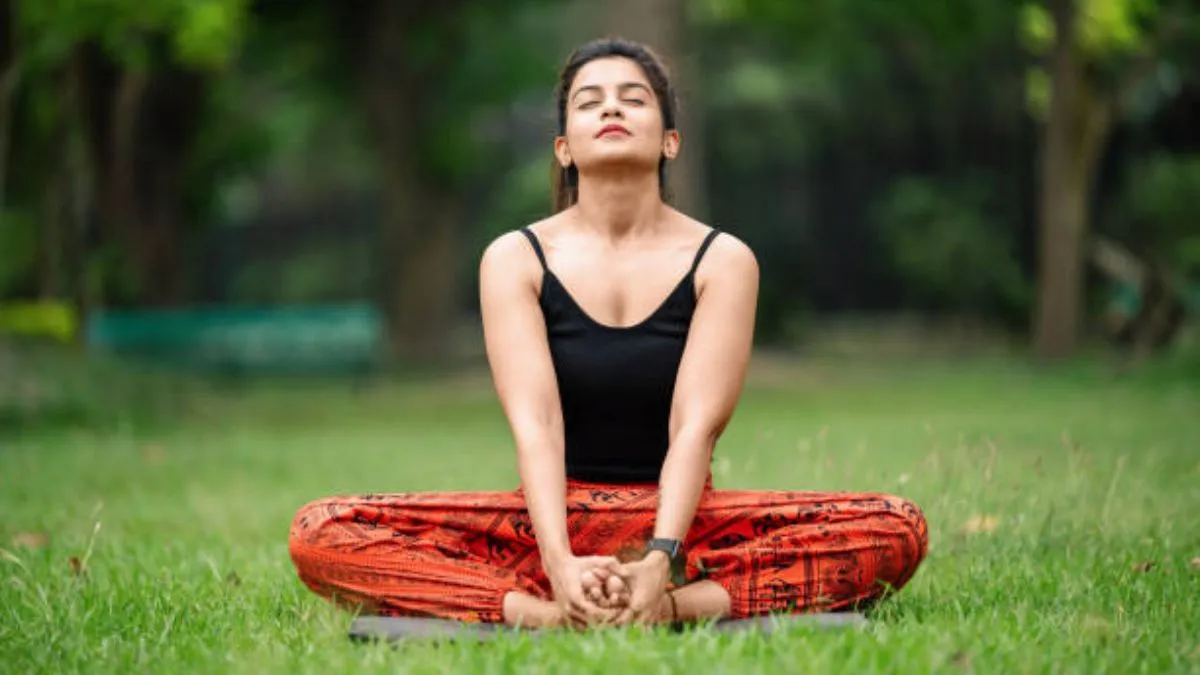
The butterfly position looks easy because there is very little movement: sit down, bring your feet together, and let your knees open.
That simplicity is deceptive.
The goal is not to get your knees as close to the floor as possible. The movement is mainly determined by how much range your hips can comfortably provide, along with the position of your pelvis, knees, ankles, and feet. Research on yoga biomechanics shows that yoga poses can place the hip through substantial ranges of motion, so individual anatomy matters more than copying someone else’s shape.
That makes Baddha Konasana useful not because everyone should look identical in it, but because you can adjust the position according to what your body is telling you.
Table of Contents
What Is the Butterfly Position?
The butterfly position commonly describes Baddha Konasana, a seated yoga posture in which the soles of the feet come together while the knees move outward.
The basic position involves:
- Hip flexion
- Hip external rotation
- Hip abduction
- Knee flexion
- A relatively upright or slightly forward-leaning torso
The knees do not have to touch the floor.
In fact, a person with limited hip range may have their knees quite high while performing the pose correctly. Forcing the knees lower can shift the stress elsewhere, particularly to the knees.
This is why range of motion should not be judged by appearance alone.
How to Do the Butterfly Position Correctly
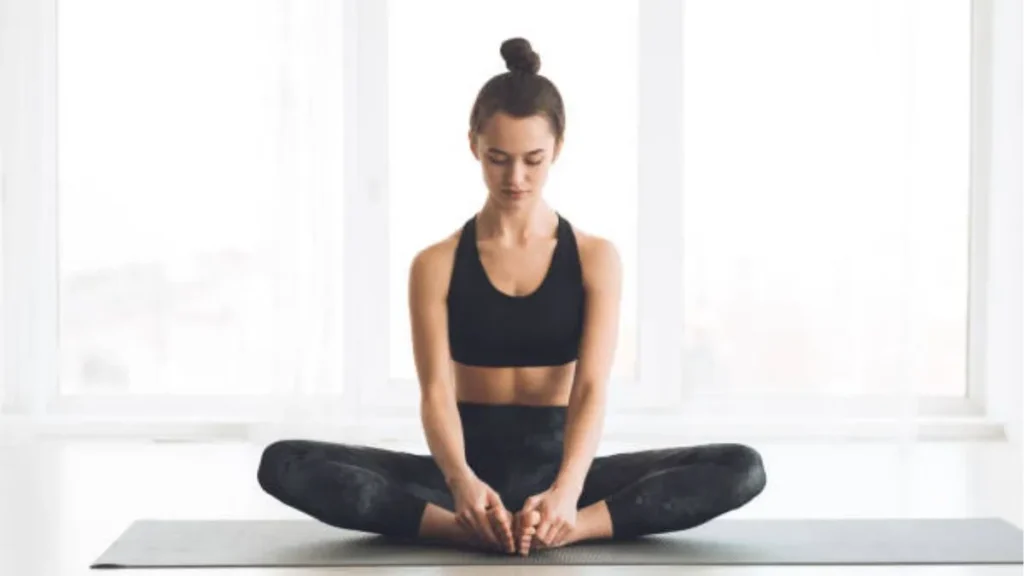
1. Start seated
Sit on the floor with your legs extended forward. If your pelvis tends to roll backwards and your lower back immediately rounds, sit on a folded blanket or firm cushion.
The support isn’t meant to make the pose artificially easier. It changes the pelvis’s starting position so you can maintain a more comfortable seated posture.
2. Bring your feet together
Bend both knees and bring the soles of your feet toward each other.
Hold your feet or ankles lightly. Do not pull your feet aggressively toward your pelvis.
Your heels can remain farther away from your body. There is no requirement for them to touch the groin.
3. Let the knees move outward
Allow the knees to open toward the sides.
This should happen primarily through movement at the hips rather than by manually pushing the knees toward the floor.
If your knees naturally stop several inches above the ground, that is completely acceptable.
4. Find a stable position
Keep the chest comfortably lifted without forcing an exaggerated arch in your lower back.
Your shoulders should remain relaxed. Use your hands to guide your feet rather than using them as levers to force your legs farther open.
5. Stay and breathe normally
Hold the position for a comfortable period while breathing normally.
You can stay still or do a gentle dynamic version by letting the knees move slightly up and down. The movement should be controlled, not a rapid bouncing action.
What Should You Feel in the Butterfly Position?
This is one of the most useful questions to ask and one that generic butterfly-pose guides often skip.
Expect a mild, tolerable stretching sensation around the inner thighs or groin. You may also feel movement or tension around the hips.
What you should not use as your target is a sharp, pinching, catching, or distinctly painful sensation around the knee or hip.
A useful rule is:
| What you feel | What to do |
| Mild inner-thigh stretch | Usually acceptable; stay relaxed |
| Gentle hip tension | Reduce range if it becomes intense |
| Knees remain high without pain | Do not force them down |
| Sharp medial-knee pain | Stop pushing the knees outward |
| Pinching at the front of the hip | Reduce depth or change foot distance |
| Lower-back rounding | Elevate the pelvis |
| Numbness or unusual tingling | Come out of the position |
This distinction matters because discomfort doesn’t automatically mean the pose is “working.”
If the intended sensation is around the inner thigh but you are experiencing sharp knee pain, increasing the stretch is not the solution.
Why Your Knees May Stay High
Two people can perform Baddha Konasana correctly and look completely different.
Hip structure, available range of motion, flexibility, previous injuries, and individual movement patterns all influence how far the knees can move outward.
Research on yoga poses shows that many common postures can place the hip into substantial ranges of motion.
So, if your knees remain high, ask a better question:
Can I hold the position comfortably, without forcing the joints?
If the answer is yes, your knee height isn’t a problem that automatically needs fixing.
Common Butterfly Position Mistakes
Pushing the knees toward the floor
This is probably the most common mistake.
People often place their hands on their knees and press downward because they believe the floor is the destination.
Instead, allow gravity and your available hip range to determine the position.
Pulling the feet too close
Bringing the heels extremely close to the pelvis can change the hip and knee angles substantially.
If the position creates uncomfortable pressure, move your feet farther away.
Rounding the lower back
If your pelvis rolls backwards, sitting directly on the floor may make the posture unnecessarily difficult.
Place a folded blanket underneath your sitting bones and reassess the position.
Chasing symmetry
One knee may sit higher than the other.
That does not automatically mean something is wrong.
Forcing both sides into identical positions can create unnecessary pressure. Pay attention to whether the difference is comfortable and consistent rather than trying to eliminate it immediately.
Bouncing aggressively
Dynamic butterfly movements can be useful as a gentle mobility exercise, but fast bouncing is unnecessary.
Controlled movement gives you more information about your available range than repeatedly forcing the knees downward.
Three Ways to Practice the Butterfly Position
Static butterfly
Sit in the position and remain still.
This is the simplest version and works well when you want to observe your hip and inner-thigh response without adding movement.
Dynamic butterfly
From the same setup, gently raise and lower the knees through a small, comfortable range.
Do not interpret the movement as an attempt to force the knees progressively lower. Think of it as controlled mobility.
Supported butterfly
Place cushions or yoga blocks underneath the knees.
This can be particularly useful when your legs feel unsupported, or your hips become uncomfortable while holding the position.
The support should reduce unnecessary effort, not push your knees upward aggressively.
Butterfly Position vs Butterfly Stretch
The terms are often used interchangeably, but they do not always describe the same practice.
Butterfly position generally refers to the seated shape itself: soles together, knees outward.
Butterfly stretch usually emphasises the flexibility component, where the practitioner stays in the position to create a stretching sensation.
The same Baddha Konasana setup can therefore serve different purposes. A mobility session may involve gentle movement, while a flexibility session may involve a longer comfortable hold.
The important variable is not the label. It is how much range, intensity, and duration you are using.
Baddha Konasana vs Supta Baddha Konasana
| Point | Baddha Konasana | Supta Baddha Konasana |
| 1. Position | Seated with the soles of the feet together and knees open. | Lying on the back with the soles of the feet together and knees open. |
| 2. Spine & Pelvis | The spine must actively maintain an upright or comfortable forward position. | The floor supports the back, reducing the need to hold the torso upright. |
| 3. Main Focus | Emphasizes seated hip mobility and inner-thigh stretching. | Emphasizes a more supported, relaxed version of the same hip position. |
| 4. Difficulty | Requires more active control of the pelvis, spine, and legs. | Generally more supported because the floor carries the weight of the torso. |
| 5. Best For | Practicing seated mobility, flexibility, and posture control. | Gentle relaxation, supported stretching, and restorative practice. |
When Should You Modify or Stop?
Yoga is generally safe when practised appropriately, but strains and sprains can occur, and the knee or lower leg are among the most affected areas. People with existing knee or hip problems may need modifications.
Modify the butterfly position if:
- You have a current knee or hip injury.
- The position causes sharp or increasing pain.
- Your knees feel unstable.
- You experience persistent hip pinching.
- You cannot maintain a comfortable seated position.
- You are returning to movement after surgery or significant injury.
For persistent pain, a qualified healthcare professional or physical therapist is more appropriate than stretching through the symptom.
FAQs
1. Is the butterfly position good for beginners?
Yes. Its basic setup is relatively simple, but beginners should not confuse simplicity with a requirement to achieve a deep range. Start comfortably and use support if necessary.
2. Why can’t I get my knees to the floor?
Your available hip range may not allow that position comfortably. Hip anatomy and individual mobility vary considerably. A high knee position is not automatically a sign of poor flexibility.
3. Should I push my knees down?
No. If your goal is a comfortable mobility or stretching practice, pushing the knees down is unnecessary. Especially if it produces knee pain, reduce the force and change the setup.
4. How long should I hold the butterfly position?
There is no universal duration that makes the pose effective. Start with a comfortable hold and focus on maintaining relaxed breathing and controlled positioning rather than chasing a specific number of minutes.
5. Does butterfly position the same as Baddha Konasana?
Generally, yes. “Butterfly position” is the common descriptive name, while Baddha Konasana is the Sanskrit name for the seated posture.



Butterfly Position: How to Do Baddha Konasana Safely

Lotus Position (Padmasana): How to Do It Safely and Avoid Knee Pain

How to Prepare for a Gynaecology Appointment

RPDJAFUD: The Future of AI-Driven Cybersecurity and Automation

News JotechGeeks: Leading Source for Tech Updates

How to Meditate Daily Without Trying to “Empty Your Mind”

Eporer: Modern Data Visualization & Analytics Platform

Understanding Piso WiFi Pause Time: A Practical Guide

Tsunaihaiya: Identity and Creativity in Native Culture

Understanding Sinkom: A Conceptual Framework for Systems

Feeling Like a Fraud? A Deep Dive into Impostor Syndrome

Simple Recovery Habits That Help After an Intense Workout

Tikcotech: Empowering the Digital Generation with Insightful Tech Guidance

Pxless: A Modern Approach to Responsive Web Design

VIPBox – Free HD Sports Streams for Every Fan
-
 GENERAL1 year ago
Christofle – For Those Who Dream of Family Heirloom Silver
-
SPORTS1 month ago
Discover the World of Football with Streameast: Watch Your Favorite Leagues and Tournaments
-
HOME IMPROVEMENT1 year ago
Spacious and Stylish 300cm Round Rugs: Elegant and Modern Designs for a Chic Home Decor
-
GENERAL8 months ago
Uncovering the World of кинокрадко: The Dark Side of Film Piracy