
HEALTH AND FITNESS
Why You Should Continue Light Activity Even on Low Energy Days

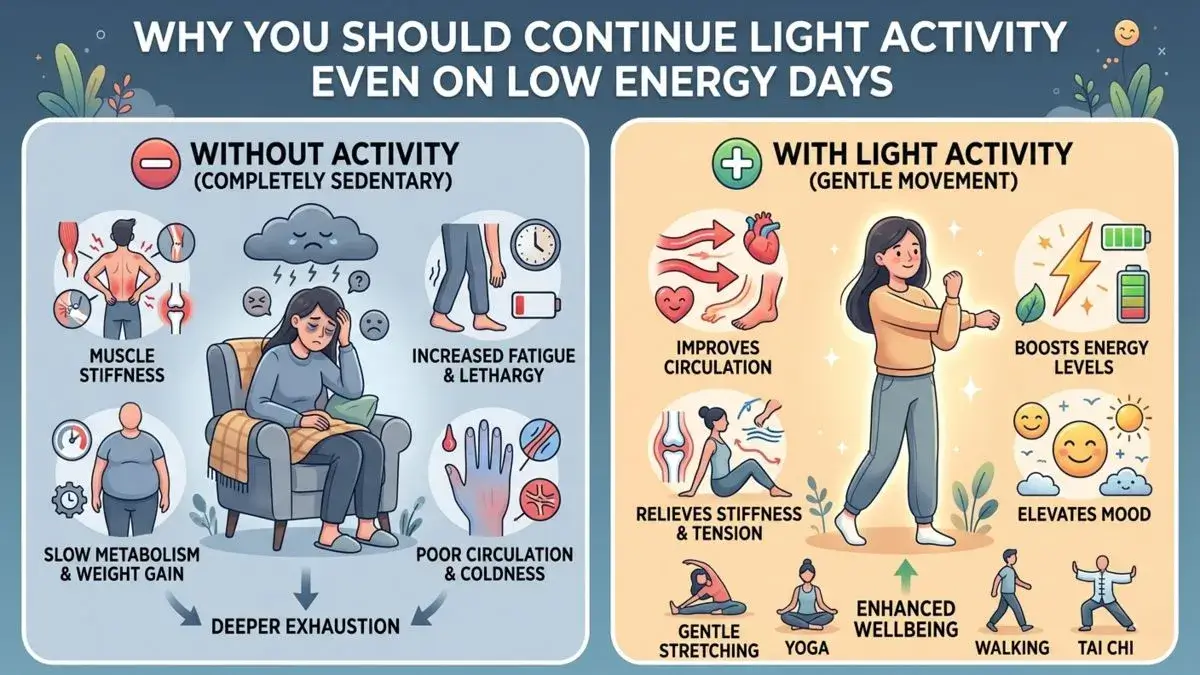
Individuals often have days when they are less energetic, particularly during recovery from a medical condition or while they manage persistent tiredness. Many people feel that they should remain still and only rest. Although sleep plus relaxation is necessary, a total absence of physical activity is associated with joints that do not move easily, blood that flow more slowly and internal systems that work less effectively. Light exercise is a helpful method because it assists the body but also is not difficult to perform. Short periods of movement are beneficial because they keep the muscles comfortable and ensure that a person is not stationary for an extended time.
Table of Contents
Maintaining Movement During Low Energy Periods
Gentle movement ensures the body stays active without becoming exhausted. Simple actions, like stretching slowly or walking short distances inside the house, are effective for flexibility and reducing the physical heaviness caused by inactivity – these actions are not required to be long or difficult. Consistency is more useful than high effort on challenging days. Minimal activity is a way to keep the body functioning normally over time.
Assisting Physical Stability
Light activity is also helpful for coordination and stability. Muscles are often less responsive when the body is still for long durations, which makes later movement more difficult. Gentle motion is a way to keep the body ready for daily tasks and makes the transition from rest to movement easier – this regular engagement is responsible for a steadier physical experience.
Reducing Stiffness & Assisting Blood Flow
Physical fatigue often results in extended periods of sitting or reclining, which causes joints and muscles to lose flexibility. Regular movement is a method to support blood flow plus maintain joint range of motion. Simple actions, like rotating the shoulders or slowly straightening the legs, are beneficial for physical comfort. Effective circulation is necessary for wellbeing and decreases the exhaustion that occurs after long durations of inactivity.
Improving Daily Comfort
Daily comfort is often higher when a person maintains gentle movement. An active body is typically less tense and adapts more easily to changes in position. Routine actions, like standing or reaching, are simpler to perform when the body is not stationary. Supportive devices, like lift chairs for seniors with standing, are also useful for reducing strain and making light activity easier to manage.
Managing Energy with Gentle Actions
A central part of light activity is the wise management of energy. It is helpful to break activity into small, brief moments rather than avoiding movement entirely – this strategy allows a person to save energy for necessary tasks while preventing the physical decline caused by a lack of motion – this approach is a way to create a more balanced daily schedule.
Maintaining Independence & Using Support Tools
Light activity is beneficial for independence because it keeps the body ready for daily chores. Small movements are helpful for performing basic tasks with less help from others. In some situations, tools like a mobility scooter are effective for saving energy during travel outside the home. The combination of assistive tools and gentle movement is a practical way to protect both energy levels and physical function.
Supporting Mental Health
Regular physical activity is beneficial for mental wellbeing, including when the effort is low. People who lack energy often feel a sense of failure if they cannot finish their typical exercise programs. Individuals can feel successful if they follow a light routine, which improves how they feel. Physical movement is a process that connects the brain and the body.
Establishing Long Term Consistency
Regular light activity is more useful than occasional high effort. The body adapts more easily to changes in energy when gentle movement is a habit – this makes days with low energy less disruptive because the body is used to moving regularly – this habit is a way to build long term physical strength and maintain the ability to move regardless of health conditions.
Conclusion
Regular physical activity is beneficial for a person’s health and emotional state, even when they have little energy. Moving in small ways is helpful for blood flow and joint movement because it does not cause physical stress. People manage their energy well when they balance light movement with periods of rest – this approach is a practical method for establishing a predictable daily schedule that allows a person to care for themselves. When a person moves around their home or uses assistive devices, they can remain active plus perform their daily tasks despite their fatigue.


The 5 Best HIPAA-Compliant Communication Platforms for Multi-Location Healthcare Organizations

Cataracts and Diabetes: What Patients in Singapore Should Know

Cosmetic Dentistry Trends in 2026: How Minimally Invasive Techniques Are Creating Natural, Youthful Smiles

Does Stress Cause Hair Loss? When Should You Worry?

Teeth Grinding Causes, Symptoms, and Treatment Options

Meditation and Hair Loss: Causes, Benefits, and Limits

Yoga and Physical Therapy: How Both Support Recovery

Can Accutane Sun Exposure Make Your Skin Burn Faster?

Does Stress Cause Hair Loss? Causes and Recovery

Building a Digital Marketing Growth Playbook for 2026 and Beyond

The Ultimate Guide to Choosing the Right Yoga Mat for Your Practice

Kingymab: The Workout Routine Taking the Fitness World by Storm

10 Yoga Kneeling Pose Ideas for Beginners

HydraHD Overview: Experience the Best in HD Entertainment

Bureau of Energy Efficiency Drawings: Purpose and Standards
-
 GENERAL12 months ago
Christofle – For Those Who Dream of Family Heirloom Silver
-
SPORTS1 year ago
Discover the World of Football with Streameast: Watch Your Favorite Leagues and Tournaments
-
GENERAL6 months ago
Uncovering the World of кинокрадко: The Dark Side of Film Piracy
-
GENERAL2 months ago
Unveiling the Art of преводсч: How Translators Bridge Language Barriers