YOGA
Yoga for Anxiety: Poses, Breathing & Expert Tips

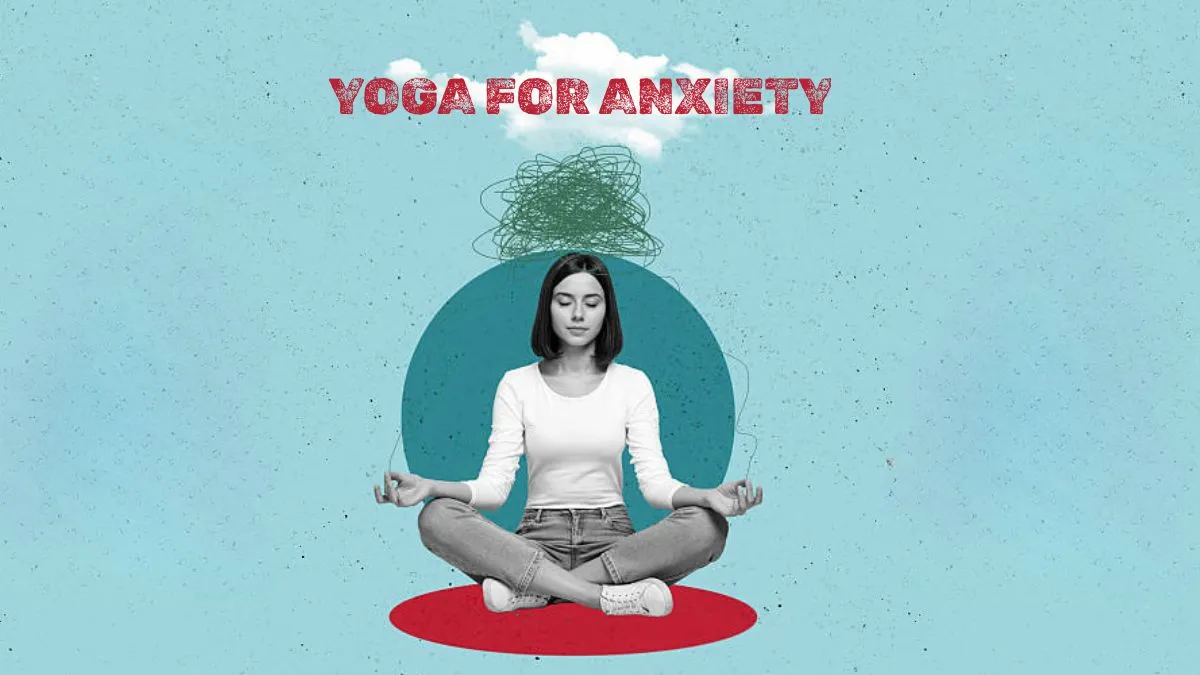
If anxiety leaves you restless, tense, unable to settle your thoughts, or unusually aware of your heartbeat and breathing, the most useful yoga session may not look like a conventional yoga class. The goal is not to force yourself into relaxation. It is to choose movements and breathing patterns that do not add more stimulation to an already activated system.
That distinction matters because yoga appears to help some people with anxiety symptoms, but research does not establish yoga as a primary treatment for diagnosed anxiety disorders. A 2019 review of 38 studies involving 2,295 people found a substantial beneficial effect on anxiety symptoms, while a later review concluded that evidence remains insufficient for recommending yoga as a primary treatment for anxiety disorders.
Table of Contents
How Yoga May Help When You Feel Anxious
Anxiety is not only a thought process. It can involve muscle tension, restlessness, gastrointestinal symptoms, difficulty concentrating, and persistent physical arousal. WHO describes anxiety disorders as conditions involving excessive fear or worry accompanied by physical and behavioral symptoms that can interfere with daily life.
Yoga gives you several ways to work with that physical response at once. Slow movement directs attention toward body sensations, controlled breathing gives you something concrete to regulate, and periods of stillness provide an opportunity to notice tension without immediately reacting to it.
But there is an important limitation: yoga does not need to make you feel completely calm to be useful. If your first few sessions teach you to notice tension earlier, move without fighting your body, and return attention to breathing after distraction, those are meaningful skills even if anxiety remains present.
The Best Yoga Approach Depends on How Your Anxiety Feels
There is no single “best yoga pose for anxiety.” The better question is what your body is doing at that moment.
| What you notice | Better starting point | What to avoid initially |
| Restlessness and excess energy | Gentle flowing movement | Long periods of forced stillness |
| Tight shoulders or jaw | Slow mobility and shoulder movements | Aggressive stretching |
| Racing thoughts | Repetitive movement linked to breathing | Trying to empty your mind |
| Sensitivity to heartbeat or breathing | Normal, quiet breathing | Forceful breathwork |
| Feeling overstimulated | Supported, low effort poses | Fast or vigorous sequences |
| Anxiety increases when lying down | Seated or standing practice | Forcing Savasana |
This is one reason generic “best poses” lists can be misleading. A posture that helps one person settle can make another person more aware of uncomfortable sensations. Your response to the position is more useful than its reputation as a relaxation pose.
Why Savasana Can Sometimes Make Anxiety Worse
Savasana is often presented as the obvious ending for an anxiety-focused yoga session, but lying completely still is not universally calming. When external movement stops, some people become more aware of their heartbeat, breathing, muscle tension, or intrusive thoughts.
If that happens, do not interpret it as a failure. Keep your eyes open, sit instead of lying down, place your feet firmly on the floor, or finish with slow walking. The purpose of relaxation is not to prove that you can remain motionless; it is to reduce unnecessary struggle with your physical and mental state.
Five Yoga Poses Worth Trying
1. Cat-Cow: Start with Movement
Cat-Cow is useful when sitting still feels impossible because it gives the mind a predictable physical sequence to follow. Move slowly between spinal flexion and extension while allowing breathing to remain comfortable.
Do not chase the largest possible range of motion. For anxiety-focused practice, a smaller repetitive movement performed without strain is often more appropriate than turning Cat-Cow into a flexibility exercise.
2. Child’s Pose: Use Support, Not Force
Child’s Pose can provide a quieter transition after movement, particularly when the shoulders, back, and hips feel tense. A cushion or folded blanket under the chest can make the position substantially more comfortable.
However, skip or modify it if the enclosed position feels uncomfortable or makes breathing feel restricted. There is no therapeutic requirement to keep your forehead on the floor simply because the pose is traditionally performed that way.
3. Supported Forward Fold: Reduce the Stretch
A forward fold can become counterproductive when someone treats it as a test of flexibility. Keep your knees bent and allow the upper body to become heavy instead of pulling yourself toward your legs.
The useful part is the controlled reduction in muscular effort; not how close your head gets to your knees. Pain or aggressive stretching adds another physical stressor when the objective is to settle.
4. Legs-Up-the-Wall: A Resting Option
Legs-Up-the-Wall can be useful when you want a supported posture requiring little muscular effort. It can also serve as a transition between active movement and ordinary rest.
But elevation is not inherently calming. If the position produces pressure, dizziness, discomfort, or increased awareness of bodily sensations, change the position or return to sitting.
5. Savasana: Only If Stillness Helps
Use Savasana when lying quietly feels comfortable rather than because it is mandatory. Begin with two or three minutes rather than immediately attempting a long relaxation period.
If your thoughts become louder, return attention to physical contact with the floor, open your eyes, or switch to seated breathing. The ability to modify the practice is more useful than completing a predetermined sequence.

What About Breathing Exercises?
Breathing is often where yoga advice becomes too simplistic. “Take a deep breath” is not always useful for an anxious person, particularly someone who already feels frightened by sensations such as breathlessness, chest tightness, tingling, or dizziness.
Instead, start with quiet, ordinary breathing. Sit comfortably, relax your shoulders, and allow the breath to become slightly slower without trying to fill the lungs maximally.
Try this for three minutes:
- Breathe comfortably through the nose if that feels natural.
- Keep the inhalation gentle rather than unusually deep.
- Allow the exhalation to last slightly longer if comfortable.
- Do not hold your breath.
- If dizziness or discomfort develops, return to normal breathing.
The objective is not to achieve a special breathing state. It is to avoid turning breathing itself into another performance task.
A Better 15-Minute Yoga Routine for Anxiety
Instead of following the same sequence every day, choose the version that matches your symptoms.
Minutes 1–3: Check your starting state
Sit or stand comfortably and notice whether you feel restless, tense, overstimulated, or unusually focused on bodily sensations.
Minutes 3–7: Move first if you are restless
Perform slow Cat-Cow, shoulder rolls, gentle standing movements, or an easy forward-and-back flow. Keep the movement repetitive and predictable.
Minutes 7–10: Reduce physical effort
Move into Child’s Pose, a supported forward fold, or another comfortable resting posture. Use cushions rather than forcing flexibility.
Minutes 10–13: Slow the breathing
Allow quiet breathing without breath retention or forceful inhalation. If focusing on breathing increases anxiety, shift attention to the sensation of your feet or hands instead.
Minutes 13–15: Choose your ending
Use Savasana if stillness feels comfortable. Otherwise remain seated, stand quietly, or take a slow walk.
This approach has an important advantage: you are adjusting the practice to your nervous response rather than forcing your nervous response to fit the practice.
Yoga Style: Gentle Isn’t Always Better
Restorative yoga is often recommended for anxiety because it uses supported positions and lower physical demands. That can be useful when stimulation is already high, but a person who feels physically restless may become more uncomfortable during a very slow class.
Hatha yoga may provide a useful middle ground because it can combine manageable postures, movement, and breathing. More vigorous practice may also suit someone who finds physical activity helpful, but intense exercise is not automatically preferable when physical sensations themselves trigger anxiety.
The useful decision rule is simple: choose the least intense practice that produces a useful change in how you feel, then build from there.
When Yoga Is Not the Right Tool by Itself
Yoga can complement anxiety management, but persistent or disabling anxiety deserves proper assessment. WHO recommends evidence-based psychological interventions, particularly approaches based on cognitive behavioral therapy principles, for adults with generalized anxiety disorder and panic disorder.
A randomized clinical trial involving 226 adults with generalized anxiety disorder found that Kundalini yoga improved symptoms compared with stress education, but it did not perform as well as CBT. The findings support yoga as a potentially useful option while keeping CBT as a first-line treatment.
Consider professional help when anxiety is persistent, significantly disrupts work or study, causes repeated panic attacks, leads to substantial avoidance, or interferes with sleep and relationships. Yoga can remain part of your routine without being asked to replace treatment designed specifically for an anxiety disorder.
Can Yoga Stop a Panic Attack?
There is no reliable evidence that a particular yoga pose can stop a panic attack. During acute panic, prioritize a safe environment, comfortable breathing, grounding, and appropriate medical or psychological support rather than attempting an advanced yoga sequence.
If focusing on breathing makes panic sensations stronger, stop breath-focused practice and use an external anchor instead; notice your feet against the floor, the chair supporting you, or objects in the room.
How Often Should You Practice Yoga for Anxiety?
Start with 10–15 minutes on several days each week, then adjust according to how consistently you can practice and how your body responds. This is a practical starting schedule, not a medically established dose of yoga for anxiety; research studies have used substantially different yoga programs and durations.
A useful measure of progress is also broader than “Do I feel calm afterward?” Track whether you are recovering from stress more easily, noticing tension earlier, sleeping better, or finding it easier to redirect attention after anxious thoughts.





Yoga for Anxiety: Poses, Breathing & Expert Tips

Dougahozonn: The Japanese Concept of Video Preservation

Viltnemnda: Managing Norway’s Wildlife Sustainably

Hitaar: A Cultural Art Form of Storytelling and Melody

What Is Drop MMS? Multimedia Messaging Simplified

What is a Rebar Locator? Understanding Non-Destructive Testing (NDT) for Reinforced Concrete

Humanilex: Revolutionizing Human-Computer Interaction

MyLawyer360: Your Comprehensive Legal Resource and Assistance Platform

How Innocams Revolutionizes Home Security: Everything You Need to Know

Cursed-Memes.com: Where Disturbing Meets Funny in Meme Form

TweakLoad Software: Master Weight & Balance Simulation

Diamondfairybunny: Unveiling the Myth and Magic

Lizard Pose: A Complete Guide to Form & Flexibility

TechDae.frl: Explore Expert Tips on Android, iPhone, and Social Media

What is ghuk-y44551/300? A Complete Guide to Product Identifiers
-
 GENERAL1 year ago
Christofle – For Those Who Dream of Family Heirloom Silver
-
SPORTS1 month ago
Discover the World of Football with Streameast: Watch Your Favorite Leagues and Tournaments
-
HOME IMPROVEMENT1 year ago
Spacious and Stylish 300cm Round Rugs: Elegant and Modern Designs for a Chic Home Decor
-
GENERAL9 months ago
Uncovering the World of кинокрадко: The Dark Side of Film Piracy