
HEALTH AND FITNESS
What’s the Difference Between a Preventive and Diagnostic Dental Exam?

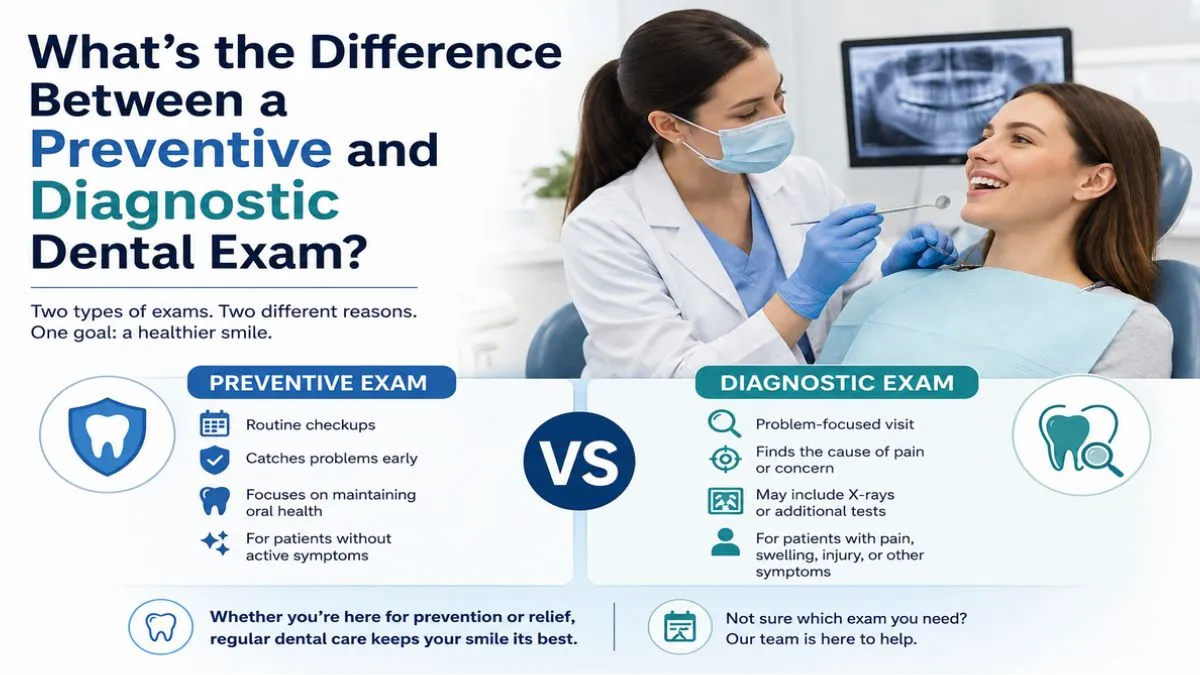
Every time people visit a dental clinic for a checkup, they often assume the appointment will be exactly the same as every previous visit. Sit down, open wide, get a cleaning, book the next one for six months out. And for a lot of visits, sure, that’s basically it. However, there’s another type of appointment that’s very different. It happens because something feels wrong and needs to be diagnosed, not simply because it’s time for a routine checkup.
That’s the gap between preventive and diagnostic care, and it trips people up more than you’d think. Preventive dentistry covers the first kind, the ongoing, watch-and-catch-things-early approach dentists use to keep your mouth in decent shape before anything goes wrong. Diagnostic visits are a different beast. Pain shows up, or swelling, or something just feels off, and that’s what pulls you in for a look.
Why bother knowing the difference? Because it changes what you say when you call the office, and it changes what happens once you’re actually in the chair. So let’s get into it: what each exam covers, when your dentist leans toward one instead of the other, and why any of this should matter to you.
Table of Contents
Nothing About a Dental Exam Is Really “Routine”
Every exam gets shaped by your history, whether or not you’re experiencing any symptoms, and how your mouth compares to the last time you were in. There’s no single script dentists run through for every patient.
Early detection might be the best argument for showing up even when nothing hurts. A cavity that’s barely started. A patch of gum tissue that’s a little inflamed. None of it hurts yet. It could sit there for months without you noticing. Catch it now, and it’s usually a small fix. Wait, and it turns into something bigger and pricier.
Maintaining a record of your oral health over time is equally important. A dentist flipping back through your last two or three visits can spot a slow change way faster than someone starting cold. It’s the difference between actually noticing something and just guessing at it.
And practically, whatever comes out of the exam decides what happens next, a cleaning, a filling, maybe a referral for something more involved. Those decisions are based on the findings from your dental examination.
The Preventive Exam Is About Maintenance
Nobody’s fixing pain during this one. It’s built around catching small stuff before it turns into a problem and reinforcing whatever’s already working for you at home.
For most people this is just the regular six-month visit. The dentist will check to see if things are changing, the way your routine is holding, and provide information based on your current oral health. This is what preventive dentistry is all about; constant attention to ensure that small problems don’t turn into appointment times you’d prefer to avoid.
Children need regular preventive exams because their teeth and jaws are still developing. Adults need it because staying ahead beats fixing things later. Older adults may require more frequent monitoring because aging can increase the risk of certain oral health conditions. Also, if you’ve experienced gum disease or cavities previously this type of regular examination is necessary even if they aren’t currently causing any pain.
Brush twice every day and floss every night, but even with the correct brushing and flossing technique, you’ll miss some spots. That’s not a knock on your habits. It’s just what professional eyes are for.
So what’s happening in the chair? Your dentist looks over your teeth, gums, tongue, the whole setup. Gums get checked for early inflammation. Plaque and tartar get flagged wherever they’ve built up in spots you’d never think of checking. If it seems necessary, they’ll point you toward oral hygiene services for the stuff a toothbrush just can’t handle on its own. And somewhere along the way, you’ll probably get a few pointers, maybe flossing, maybe on diet, whatever seems relevant to you specifically.
You walk out knowing a bit more about your own habits. Your dentist walks away having flagged anything worth keeping an eye on.
The Diagnostic Exam Is About Finding a Cause
One job here: figure out what’s actually wrong. A preventive visit is broad and ongoing. The one you’re looking at is a little more specific, instant and caused by a specific event that requires to be explained before talking about treatment.
It’s due to discomfort, or perhaps because the mouth is distinct in a manner it’s impossible to overlook. The goal is simple no matter if it involves some digging, find out exactly what’s happening.
Tooth pain that won’t quit gets you here. Swelling around the gums or jaw does too. So does a cracked or chipped tooth, bleeding gums no matter how gently you brush, sensitivity that spikes out of nowhere, a tooth that has gone loose, an actual injury, or a sore that just doesn’t look right.
Your dentist takes a close look at whatever’s bothering you and asks a lot of questions. Depending on what they suspect, X-rays or photographs or a bite analysis might come next, things that catch what a plain visual check just can’t.
None of it is guesswork. The whole point is finding the actual cause, so treatment addresses the real problem instead of just managing symptoms and hoping they settle down on their own.
Preventive vs. Diagnostic: Finding the Difference
Both exams protect your oral health, just at different moments. A preventive exam catches small things early, usually while nothing’s actively wrong. A diagnostic exam responds to something that’s already a problem.
| Preventive Dental Exam | Diagnostic Dental Exam |
| Keeps your oral health on track | Zeroes in on a specific problem |
| Part of a routine checkup | Triggered by symptoms |
| For patients without active complaints | For patients dealing with pain, swelling, trauma, or other symptoms |
| Visual check, gum assessment, general evaluation | Detailed clinical exam, X-rays, further testing as needed |
| Aimed at preventing future problems | Aimed at identifying a current cause |
| Supports long-term planning | Supports diagnosis and treatment decisions |
| Coverage depends on your plan and the reason for the visit | Coverage depends on the exam type and diagnostics required |
There is no way to beat one over the other. A healthy mouth requires both, one to help maintain the balance, the other to intervene when things are going wrong.
Skipping Checkups Costs You More Down the Road
Most dental problems start small and quiet. Nothing hurts yet, which is exactly why it’s so easy to put off dealing with it. Skip enough checkups, though, and that quiet little issue eventually turns into something bigger and slower to fix.
Catching things early usually means less discomfort. Less chance you’ll need anything invasive later. Not complicated. Just consistent.
Gum health deserves its own mention. Healthy gums give your teeth something solid to hold onto, and they cut your odds of more serious periodontal disease later, which, again, affects more than just your smile.
Keeping your natural teeth as long as you can is really the bigger goal running through all of this. Good habits, paired with regular monitoring, means problems get caught while they’re still small enough to matter less.
Oral hygiene services fit in here too, clearing what brushing and flossing alone can’t fully remove. Pair that with decent home care and you get cleaner teeth and healthier gums without a lot of extra effort.
Preventive care isn’t only about dodging trouble. It’s about protecting your mouth long term and making decisions now that actually pay off later.
Which One Should You Book?
It usually comes down to why you’re calling in the first place. Due for your six-month visit? Just want to keep tabs on things? Book preventive.
Do you have a toothache that won’t go away or a broken filling that is bleeding or swelling gums, a chipped or damaged tooth, sudden sensation of sensitivity, an injury or any other thing that appears to be wrong? That’s diagnostic territory.
Not sure? Call and describe what’s happening. Someone there will point you in the right direction.


Lizard Pose: A Complete Guide to Form & Flexibility

Tech Etruesports: The Evolution of Competitive Gaming

Ceıvır: Traditional Turkish Dish with Rich Flavors

GNHUSTGames: The Ultimate Platform for Unblocked Games

Kraams: The Heart of Dutch Market Culture

Butterfly Position: How to Do Baddha Konasana Safely

Tissariss Textile Art: A Tradition of Cultural Weaving

Anna Archive: Free Shadow Library Search Engine

Bl_Faceless: Anonymous Digital Creators Redefining the Digital Space

Pepe Coin Overview: Inside the Meme Cryptocurrency Craze

Lotus Position (Padmasana): How to Do It Safely and Avoid Knee Pain

How to Prepare for a Gynaecology Appointment

RPDJAFUD: The Future of AI-Driven Cybersecurity and Automation

News JotechGeeks: Leading Source for Tech Updates

How to Meditate Daily Without Trying to “Empty Your Mind”
-
 GENERAL1 year ago
Christofle – For Those Who Dream of Family Heirloom Silver
-
SPORTS1 month ago
Discover the World of Football with Streameast: Watch Your Favorite Leagues and Tournaments
-
HOME IMPROVEMENT1 year ago
Spacious and Stylish 300cm Round Rugs: Elegant and Modern Designs for a Chic Home Decor
-
GENERAL8 months ago
Uncovering the World of кинокрадко: The Dark Side of Film Piracy