
YOGA
Cat Cow Stretch: Master the Pose with Proper Form

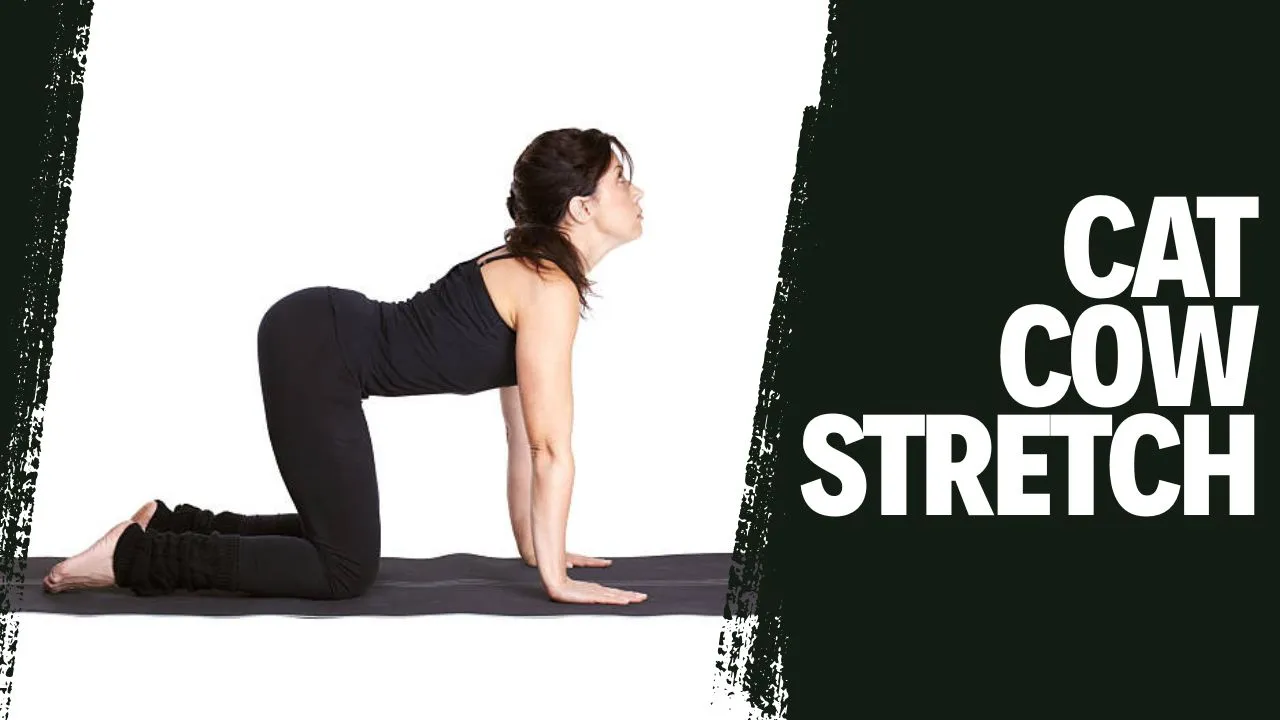
The cat cow stretch is a flowing spinal mobility exercise performed on hands and knees. It alternates between two positions:
- Cow Pose: the spine gently extends while the chest broadens and the pelvis tilts forward.
- Cat Pose: the spine flexes as the abdominal muscles engage, the pelvis tilts backward, and the shoulder blades spread apart.
Unlike passive stretching, the movement actively trains the muscles that control spinal motion. Every repetition reinforces coordination between the pelvis, rib cage, diaphragm, and deep core muscles.
This distinction explains why therapists, yoga instructors, strength coaches, and rehabilitation specialists frequently include it in warm-up routines rather than treating it as a simple flexibility exercise.
Table of Contents
Why the Cat Cow Stretch Works: The Biomechanics Behind the Movement
The spine contains multiple regions: cervical, thoracic, lumbar, sacral, and coccygeal, and each contributes differently to movement. The cat cow stretch encourages controlled movement across these regions rather than forcing excessive movement in only one area.
During Cow Pose:
- The pelvis rotates anteriorly.
- The lumbar spine extends slightly.
- The thoracic spine opens.
- The rib cage lifts.
- The diaphragm descends during inhalation.
During Cat Pose:
- The pelvis rotates posteriorly.
- The abdominal wall contracts.
- The thoracic spine rounds.
- The shoulder blades protract.
- Exhalation assists deep abdominal activation.
A common misconception is that the exercise exists to maximize spinal range of motion. Experienced clinicians often prioritize segmental control small, evenly distributed movements through each vertebral region over achieving dramatic curves.
The quality of movement matters more than its size.
Benefits of the Cat Cow Stretch
- Improves spinal mobility: Promotes smooth movement throughout the spine, reducing stiffness and improving flexibility.
- Activates the core: Coordinates breathing with deep core muscles to enhance spinal stability and posture.
- Relieves stiffness: Increases joint lubrication, making it especially effective after sleep or prolonged sitting.
- Boosts body awareness: Improves control of pelvic and spinal movement for better posture and movement mechanics.
- Prepares the body for exercise: Warms up muscles and joints before yoga, strength training, running, or other physical activities.
Choosing the Right Spinal Mobility Exercise
| Exercise | Primary Purpose | Best For | Limitation |
| Cat Cow Stretch | Controlled spinal mobility | Warm-ups, posture, movement quality | Requires coordination |
| Child’s Pose | Passive stretching | Relaxation and recovery | Limited active muscle engagement |
| Thoracic Rotations | Rotational mobility | Desk workers and athletes | Doesn’t address spinal flexion-extension |
| Pelvic Tilts | Pelvic control | Low back rehabilitation | Less thoracic involvement |
| Bird Dog | Stability training | Core endurance | Focuses more on stabilization than mobility |
How to Perform the Cat Cow Stretch Correctly
Starting position determines the quality of every repetition.
Begin in a tabletop position with:
- Hands directly beneath the shoulders
- Knees under the hips
- Neutral spine
- Fingers spread for stability
- Neck relaxed with the gaze toward the floor
Step 1: Move into Cow Pose
As you inhale:
- Tilt the pelvis forward.
- Allow the abdomen to lower naturally.
- Lift the breastbone forward.
- Broaden the collarbones.
- Keep the neck long instead of throwing the head backward.
Think of creating length through the spine rather than compressing the lower back.
Step 2: Transition into Cat Pose
As you exhale:
- Draw the navel gently toward the spine.
- Rotate the pelvis backward.
- Round the mid-back gradually.
- Spread the shoulder blades.
- Allow the head to follow naturally without forcing the chin tightly toward the chest.
The movement should resemble a smooth wave traveling from the pelvis through the spine rather than isolated motion at the neck.
One useful cue from experienced movement practitioners is to imagine each vertebra moving one after another. Slowing the exercise often reveals stiff regions that faster repetitions conceal.
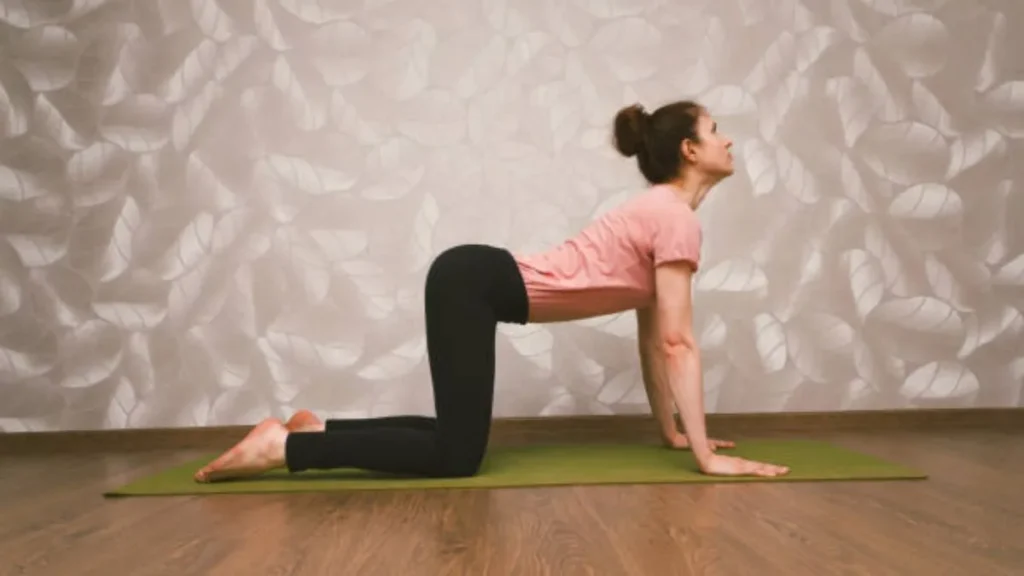
Common Cat Cow Stretch Mistakes (and How to Fix Them)
Small technical errors can dramatically reduce the effectiveness of the cat cow stretch. The goal is to control movement through the spine, not the creation of the largest possible arch.
1. Moving Too Fast
Many people perform the exercise like a warm-up drill to “get it over with.” Fast repetitions rely on momentum rather than muscular control.
Instead: Spend 4–6 seconds on each complete cycle. Slow movement allows every spinal segment to contribute.
2. Dumping Into the Lower Back
An exaggerated Cow Pose often comes from collapsing into the lumbar spine while the thoracic spine barely moves.
Correction: Imagine lifting the sternum forward rather than pushing the belly downward. The extension should feel evenly distributed from the pelvis to the upper back.
3. Overextending the Neck
Looking toward the ceiling compresses the cervical spine without adding meaningful mobility.
Correction: Let your head follow the movement naturally. Your gaze should move only slightly forward in Cow and toward the knees in Cat.
4. Forgetting to Move the Pelvis
The pelvis initiates the movement. Without it, exercise becomes little more than upper-back rounding.
Correction: Think “pelvis first, spine second.” An anterior pelvic tilt begins Cow Pose, while a posterior pelvic tilt begins Cat Pose.
5. Holding Your Breath
Breath is part of the exercise, not an afterthought.
Synchronizing breathing with movement improves rib cage mobility, diaphragm function, and deep abdominal activation.
Use this rhythm:
- Inhale: Cow Pose
- Exhale: Cat Pose
When Should You Use Cat Cow Stretch?
Although commonly associated with yoga classes, the cat cow position in yoga is useful in several situations because it prepares both joints and muscles for movement.
It works especially well:
- Before strength training
- Before running or cycling
- After prolonged sitting
- During mobility sessions
- At the beginning of yoga practice
- During active recovery days
- As part of physical therapy when recommended by a clinician
Morning stiffness often responds particularly well because gentle spinal motion helps restore movement after several hours in one position.
When Should You Avoid It?
Although low impact, the cat cow pose is not appropriate for everyone.
Avoid or modify the exercise if you have:
- Recent spinal surgery
- Acute vertebral fractures
- Severe osteoporosis with movement restrictions
- Uncontrolled inflammatory spinal conditions
- Significant wrist injuries that prevent weight-bearing
- Sudden numbness, muscle weakness, or radiating leg pain that has not been medically evaluated
Pregnant individuals can usually continue the movement comfortably during early and mid-pregnancy, but prolonged hands-and-knees positions may become uncomfortable later in pregnancy. A healthcare provider or prenatal exercise specialist can recommend appropriate modifications.
Pain during the exercise is a signal to stop. Mild muscular stretching is expected; sharp, shooting, or worsening pain is not.
How Many Repetitions Should You Do?
Quality matters far more than quantity.
| Goal | Recommendation |
| Morning mobility | 5–8 slow repetitions |
| Warm-up | 8–10 repetitions |
| Yoga practice | 8–12 repetitions |
| Mobility routine | 2–3 sets of 8 repetitions |
| Recovery day | Perform slowly for 2–3 minutes |
Recovery day Perform slowly for 2–3 minutes
If you lose smooth spinal control, stop rather than adding more repetitions.
Final Thoughts
The cat cow stretch has endured not because it is easy, but because it teaches something many exercises overlook how to move the spine with intention. Rather than chasing the deepest arch or the roundest back, focus on smooth, evenly distributed motion initiated by the pelvis, supported by coordinated breathing, and guided by muscular control.
When performed this way, the cat cow pose becomes more than a yoga warm-up. It becomes a foundational movement pattern that can improve posture, enhance body awareness, prepare the body for exercise, and help restore comfortable spinal motion throughout daily life.
References
- American College of Sports Medicine (ACSM): ACSM’s Guidelines for Exercise Testing and Prescription.
- American Physical Therapy Association (APTA): Clinical resources on spinal mobility and therapeutic exercise.
- National Center for Complementary and Integrative Health (NCCIH): Yoga for Health.
- McGill, S. M. Low Back Disorders: Evidence-Based Prevention and Rehabilitation.
World Health Organization (WHO): Physical Activity Guidelines.


Bebasinindo: Championing Freedom in Indonesia

Ankwave: Future of Connectivity with Energy-Efficient Solutions

Afruimwagens: Efficient Mobile Carts for Workspaces

Understanding Formula 1 Standings and Championship Rankings

Do Cats Fart? A Scientific and Behavioral Look at Feline Gas

Hatha Yoga: Balancing Body, Mind, and Energy

Wave_of_Happy_: Cultivating a Positive Mindset for Lasting Joy

Gamer Challenger: Definition, Role, and Competitive Focus

Slope Unblocked: Free Online 3D Ball Running Game

Brand Name Normalization Rules: A Complete Practical Guide

Veneajelu: The Finnish Art of Peaceful Summer Boating

The Journey of iamnobody89757: From Anonymous User to Internet Sensation

Adsy.pw/hb3: The Future of High-Impact Digital Advertising

Soutaipasu: Understanding Relative Paths in Computing

Omaha, Nebraska Mental Health Routines for School, Work, and Changing Seasons
-
 GENERAL1 year ago
Christofle – For Those Who Dream of Family Heirloom Silver
-
GENERAL9 months ago
Uncovering the World of кинокрадко: The Dark Side of Film Piracy
-
SPORTS2 months ago
Discover the World of Football with Streameast: Watch Your Favorite Leagues and Tournaments
-
HOME IMPROVEMENT2 years ago
Spacious and Stylish 300cm Round Rugs: Elegant and Modern Designs for a Chic Home Decor