
YOGA
How Many Calories Does Yoga Burn? The Style Matters More Than the Hour

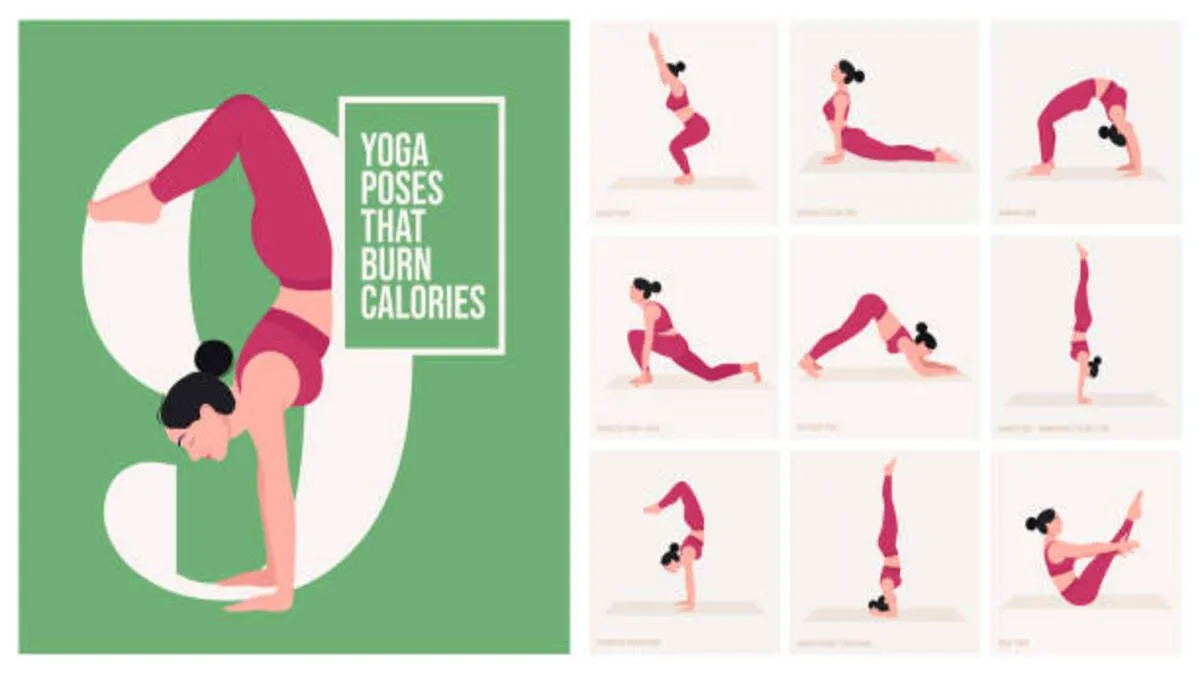
Two people walk out of the same 60-minute class.
One of them spent most of it on the floor. Long holds, a bolster under the knees, a lot of slow breathing. The other did a dozen Sun Salutations, held Warrior II until her front thigh started shaking, and dropped through Chaturanga something like forty times.
Same room. Same hour. Same mat. Nowhere near the same energy cost.
Which is why the number you usually see, “an hour of yoga burns 400 calories,” isn’t really an answer. It has to give both of those people the same figure, and that’s obviously wrong. The question only becomes answerable when you narrow it: what style, for how long, at what body weight, and how much of that hour were you actually moving?
Table of Contents
Style changes the math more than you’d guess from watching
Exercise researchers compare activities using METs, or metabolic equivalents. One MET is roughly what your body burns sitting still doing nothing. An activity rated at 4 METs costs about four times that.
The 2024 Adult Compendium of Physical Activities spreads yoga styles out further than most people expect:
| Style | METs | ~kcal/hour at 70 kg |
|---|---|---|
| Hatha | 2.3 | 161 |
| Vinyasa | 2.7 | 189 |
| Hot yoga | 3.0 | 210 |
| Surya Namaskar | 3.5 | 245 |
| Power yoga | 4.0 | 280 |
Power yoga costs roughly 74% more than Hatha for the identical hour. That gap is wider than the gap between a stroll and a brisk walk.
And the Compendium goes further than that table shows. It carries a separate entry for high-intensity Hatha, sustained challenging holds and advanced postures throughout, at 8.0 METs. That’s 560 calories an hour at 70 kg, and it puts two things both called “Hatha yoga” nearly three and a half times apart. Whatever a single number for “yoga” is describing, it isn’t the practice.
Two things to keep in your back pocket before you take those numbers anywhere. They’re population averages, not measurements of you. And MET math quietly includes the calories you would have burned anyway just lying there, so the extra cost of the session is smaller than the headline figure suggests. Treat 161 as “somewhere in the 130 to 190 range” and you’ll be closer to the truth than any decimal place implies.
If you want the version that uses your actual body weight and session length instead of a 70 kg stranger’s, that’s what a yoga calorie calculator is for. Same MET data, applied to you.
What actually moves the number
Movement density. This is the one nobody accounts for and it’s probably the biggest lever. Picture two “60-minute” classes. The first has a five-minute settling-in, three demonstrations, two breathing exercises, a few Child’s Pose resets, and a ten-minute savasana. The second is Sun Salutations, standing sequences, transitions, and almost no idle time. Both are an hour on paper. Only one of them is an hour of work.
Body weight. Bigger body, more mass to move and hold, more energy to do it. Two people can run identical sequences side by side and finish with genuinely different totals. Nothing unfair about it, it’s just physics.
Duration. Obvious, but worth saying because people underrate short sessions. Twenty minutes of active flow isn’t a rounding error. If your constraint is calendar rather than motivation, a compact 20-minute routine done four times a week beats a 90-minute class you attend when you can face it.
Sweat is not a calorie meter
I want to be blunt about this one because hot yoga marketing leans on it hard.
Sweating is thermoregulation. It’s your body dumping heat. A room at 40°C will absolutely make you sweat more, and it will push your heart rate up, and none of that means you oxidized more fat. You can lose two pounds of water in a hot class and put it all back at the water fountain. The Compendium puts hot yoga at 3.0 METs, above Vinyasa but below Surya Namaskar, and that’s about where the honest estimate sits.
Your watch deserves similar skepticism. Wrist trackers are decent at spotting trends over weeks and mediocre at any single session, especially one full of static holds where heart rate stays low but muscular work is high. Isometric effort is exactly the case wrist optics handle worst. Use the trend, ignore the decimal.
The part where I argue against my own number
Here’s the trap. Once you have a figure, it starts acting like a verdict. 161 calories feels like a failed workout next to 280, so you start choosing sessions by their score instead of by what your body needs on a Tuesday in week three of a hard training block.
That’s backwards, and it’s how people end up quitting.
A Yin session built around long floor holds will produce a laughably small number. It is also, if your hips are wrecked from four days of running, the most useful thing you could do that week. Balance work challenges stabilizers that no calorie readout captures. Slow poses aimed at stress are doing something your metabolism doesn’t measure.
And on the weight-management question specifically: body composition responds to intake and total expenditure accumulated over months. No single session crosses a threshold. A 161-calorie Hatha class is about 7% of a typical day’s total energy expenditure, and if you don’t know roughly what that daily total is, the session number has nothing to sit against. That’s the actual context a class estimate needs, and it’s a TDEE calculation rather than a class one. Someone who genuinely enjoys yoga and shows up four times a week for two years will end up far ahead of someone grinding through a higher-MET workout they abandon in March.
So the number is feedback, not a grade. It’s useful for the same reason a scale is useful, which is to say useful as one input among several, and actively harmful the moment you let it be the whole story.
The better question
Stop asking whether yoga is a high-calorie or low-calorie exercise. It isn’t either. It’s a category containing both.
Ask instead: what style am I doing, how much of the hour am I genuinely working, and what is this session supposed to accomplish? Answer those three and the calorie estimate stops being a scoreboard and becomes what it should have been all along, which is context.


Walking Yoga: A Blend of Movement and Mindfulness

Sumosearch: AI-Driven Search Engine

Sodziu: Heart of Traditional Lithuanian Countryside

Recyclatanteil: Measuring the Share of Recycled Material

Exploring the Eight Limbs of Yoga

Wellhealthorganic Buffalo Milk Tag: A Nutrient-Rich Choice

Sowix Online: Simplify Project Management

Helonium Explained: Formula, Chemistry, Uses & HeH⁺

Acamento: The Artful Science of Finishing with Purpose

Aura Farming: The Viral Slang Shaping Digital Identity

SoSoActive: Lifestyle & Culture for Millennials & Gen Z

Prasarita Padottanasana: How to Do It Correctly

From Webinar Recordings to Social Clips with Video Cutter AI

A Little Room to Breathe: Making Quieter AI Videos with Wan 3.0

Kouskousi: How Traditional Couscous Is Made and Served
-
 GENERAL1 year ago
Christofle – For Those Who Dream of Family Heirloom Silver
-
SPORTS2 months ago
Discover the World of Football with Streameast: Watch Your Favorite Leagues and Tournaments
-
HOME IMPROVEMENT2 years ago
Spacious and Stylish 300cm Round Rugs: Elegant and Modern Designs for a Chic Home Decor
-
GENERAL9 months ago
Uncovering the World of кинокрадко: The Dark Side of Film Piracy