HEALTH AND FITNESS
Prone Pose: Clinical Importance, Benefits, and Risks

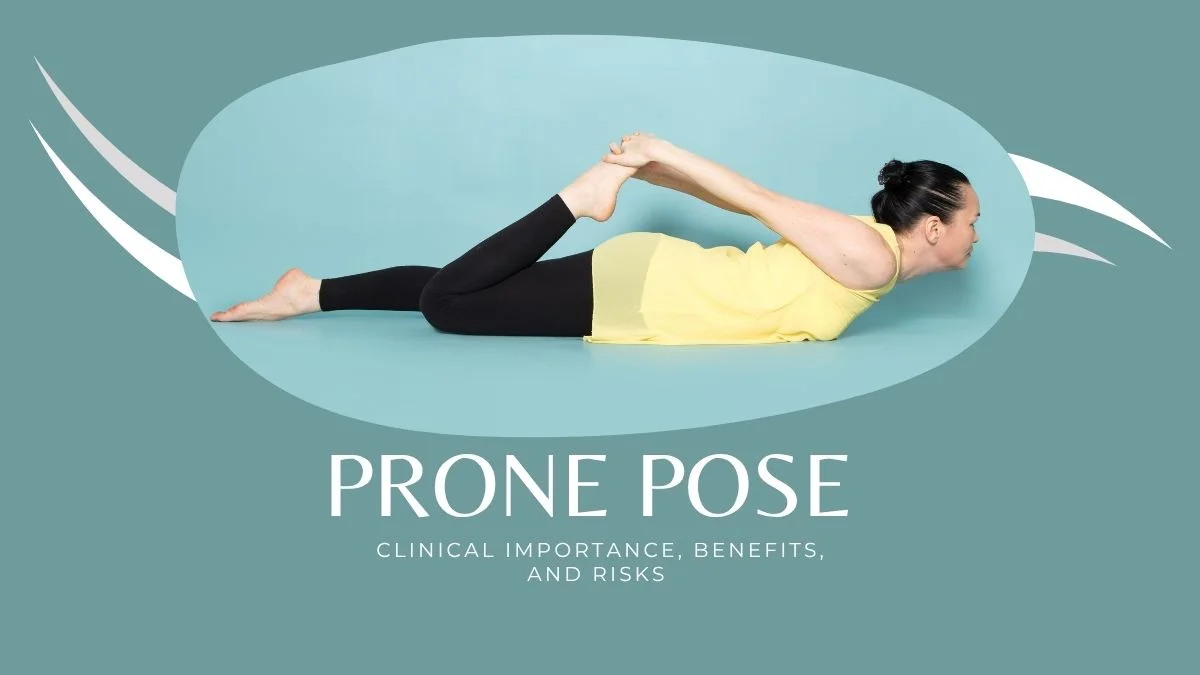
The prone pose is a fundamental body position in which an individual lies face down, with the anterior (front) surface of the body in contact with a supporting surface. While seemingly simple, this position has profound implications across clinical medicine, rehabilitation science, and movement practices.
Unlike basic descriptions often found online, the prone position is not merely a resting posture; it is a therapeutic intervention, a biomechanical tool, and in some cases, a life-saving strategy when applied in critical care.
Table of Contents
Understanding the Prone Pose in Anatomical Terms
From an anatomical perspective, the prone position involves:
- Ventral surface (chest and abdomen) facing downward
- Dorsal structures (spine and posterior muscles) facing upward
- Neutral or rotated cervical spine, depending on head placement
This orientation directly influences lung mechanics, spinal loading patterns, and neuromuscular activation, making it highly relevant in both passive and active contexts.
Prone Position in Critical Care: A Life-Saving Intervention
One of the most significant applications of the prone pose is in intensive care medicine, particularly for patients with severe respiratory distress.
Mechanism of Action in Lung Function
In conditions such as acute respiratory failure, the prone position improves oxygenation through:
- Enhanced dorsal lung recruitment: The posterior regions of the lungs, which contain a higher density of alveoli, expand more effectively
- Improved ventilation-perfusion (V/Q) matching: Blood flow and airflow become better aligned
- Reduction in lung compression: The heart and abdominal contents exert less pressure on the lungs compared to supine positioning
Clinical Relevance
Prone positioning is widely used in managing severe respiratory conditions, including cases similar to those observed during the COVID-19 pandemic, where it became a standard supportive therapy in intensive care units.
Biomechanics of the Prone Pose
The prone position alters how forces are distributed across the body, influencing both musculoskeletal alignment and movement efficiency.
Spinal Mechanics
- Encourages lumbar extension, counteracting prolonged flexion from sitting
- Reduces anterior disc pressure in some cases
- Promotes activation of spinal stabilizers
Muscle Activation Patterns
When used actively (e.g., in exercise):
- Erector spinae contribute to spinal extension
- Gluteal muscles stabilize the pelvis
- Scapular stabilizers (such as the lower trapezius) support shoulder mechanics
This makes prone-based exercises particularly useful in correcting postural imbalances, especially those associated with sedentary lifestyles.
Role of Prone Position in Rehabilitation Science
In physical therapy, the prone pose is not used randomly; it is strategically implemented based on patient goals and functional deficits.
Progressive Rehabilitation Use
- Passive Prone Lying
- Introduction to improve positional tolerance and reduce spinal stiffness
- Prone on Elbows (Extension Bias)
- Frequently used in managing lower back conditions
- Encourages gentle spinal extension
- Active Prone Exercises
- Includes leg lifts, trunk extensions, and arm raises
- Targets posterior chain strengthening
Clinical Insight
Rehabilitation protocols often incorporate prone positioning for patients with mechanical lower back pain, particularly when symptoms respond positively to extension-based movements.
Prone Pose in Movement Practices and Yoga
In disciplines like yoga, the prone position serves as a foundation for several controlled back-extension movements.
For example, poses such as Bhujangasana (cobra pose) and Salabhasana (locust pose) begin in prone alignment and emphasize:
- Controlled spinal extension
- Breath coordination
- Gradual muscular engagement
These practices, when performed correctly, can improve flexibility, posture, and body awareness without excessive spinal strain.
Evidence-Based Benefits of the Prone Pose
1. Improved Oxygenation
Clinical studies have demonstrated that prone positioning can significantly enhance oxygen saturation in patients with compromised lung function by optimizing alveolar ventilation.
2. Postural Correction
By activating posterior chain muscles and reducing forward-flexion dominance, the prone pose helps counteract:
- Rounded shoulders
- Forward head posture
- Prolonged sitting adaptations
3. Enhanced Neuromuscular Control
Prone exercises require coordinated activation of multiple muscle groups, improving:
- Motor control
- Stability
- Functional movement patterns
4. Pressure Redistribution
In clinical settings, alternating to prone positioning helps redistribute pressure away from commonly affected areas, reducing the risk of pressure injuries when used appropriately.
Risks, Limitations, and Contraindications
Despite its benefits, the prone pose is not universally safe and must be applied with caution.
Respiratory and Abdominal Considerations
- Increased intra-abdominal pressure may restrict diaphragmatic movement in some individuals
- Improper positioning can compromise breathing efficiency
Cervical Spine Strain
- Prolonged head rotation may lead to neck discomfort or muscle imbalance
- Neutral head support is recommended for extended durations
High-Risk Populations
Prone positioning may be contraindicated or require supervision in:
- Pregnant individuals (especially beyond the first trimester)
- Patients with unstable spinal injuries
- Individuals with recent abdominal or thoracic surgery
Common Mistakes in Using the Prone Pose
To ensure safe and effective use, avoid the following errors:
- Excessive lumbar compression due to lack of core engagement
- Incorrect head positioning, leading to cervical strain
- Holding breath during prone exercises, reducing oxygen efficiency
- Prolonged static positioning without adjustment, increasing pressure risk
Best Practices for Safe Implementation
Maintain Proper Alignment
- Keep the spine neutral or gently extended
- Avoid excessive arching of the lower back
Using External Support
- Pillows under the chest or pelvis can reduce strain
- Forehead support helps maintain cervical neutrality
Monitor Duration and Comfort
- Regularly change position
- Stop if discomfort or breathing difficulty occurs
Prone vs. Supine: Functional Differences
| Feature | Prone Position | Supine Position |
| Orientation | Face down | Face up |
| Lung Function | Improved dorsal expansion | More anterior lung expansion |
| Spinal Effect | Encourages extension | Neutral or slight flexion |
| Clinical Use | Respiratory therapy, rehab | Rest, general assessment |
Conclusion
The prone pose is far more than a simple body position, it is a clinically significant and biomechanically influential posture with applications spanning critical care, rehabilitation, and physical training. Its ability to improve oxygenation, support spinal health, and enhance neuromuscular function makes it a valuable tool when applied with proper understanding and technique. However, its effectiveness depends on individual context, correct execution, and professional guidance when necessary.



Lizard Pose: A Complete Guide to Form & Flexibility

Tech Etruesports: The Evolution of Competitive Gaming

Ceıvır: Traditional Turkish Dish with Rich Flavors

GNHUSTGames: The Ultimate Platform for Unblocked Games

Kraams: The Heart of Dutch Market Culture

Butterfly Position: How to Do Baddha Konasana Safely

Tissariss Textile Art: A Tradition of Cultural Weaving

Anna Archive: Free Shadow Library Search Engine

Bl_Faceless: Anonymous Digital Creators Redefining the Digital Space

Pepe Coin Overview: Inside the Meme Cryptocurrency Craze

Lotus Position (Padmasana): How to Do It Safely and Avoid Knee Pain

How to Prepare for a Gynaecology Appointment

RPDJAFUD: The Future of AI-Driven Cybersecurity and Automation

News JotechGeeks: Leading Source for Tech Updates

How to Meditate Daily Without Trying to “Empty Your Mind”
-
 GENERAL1 year ago
Christofle – For Those Who Dream of Family Heirloom Silver
-
SPORTS1 month ago
Discover the World of Football with Streameast: Watch Your Favorite Leagues and Tournaments
-
HOME IMPROVEMENT1 year ago
Spacious and Stylish 300cm Round Rugs: Elegant and Modern Designs for a Chic Home Decor
-
GENERAL8 months ago
Uncovering the World of кинокрадко: The Dark Side of Film Piracy