
GENERAL
5 Red Flags to Watch Before Buying Modular Horse Barns and Portable Sheds This Year

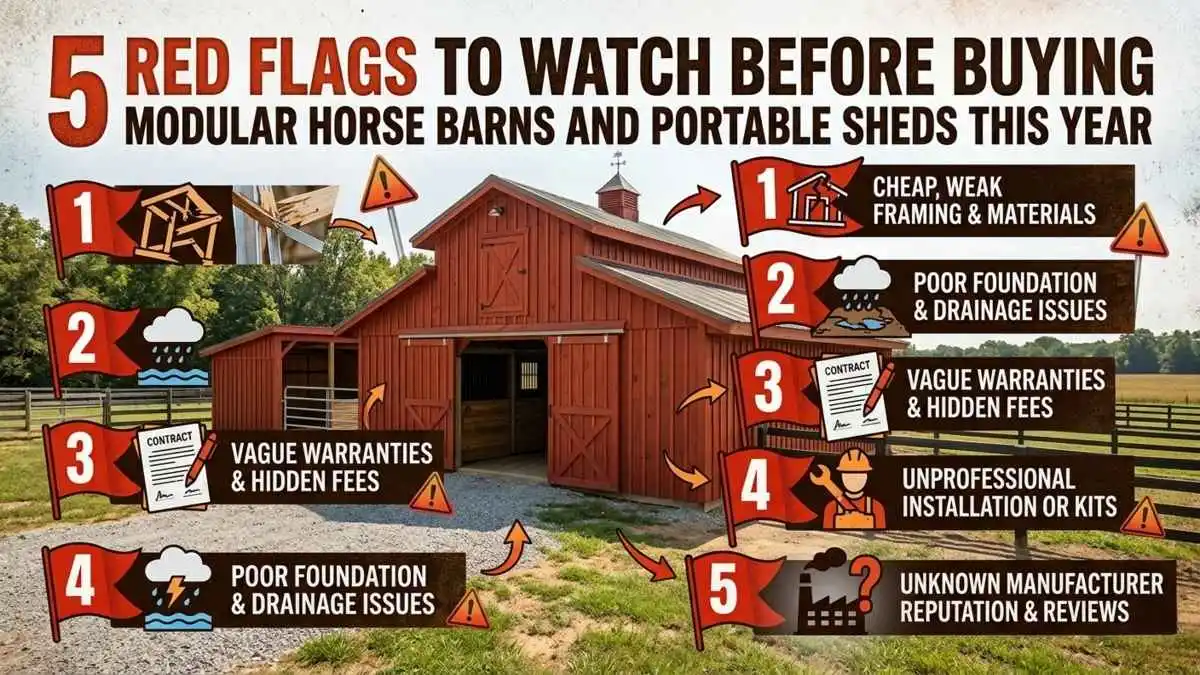
Purchasing a barn or shed is a significant investment for any property owner. Whether you need space for livestock, storage, or hobby equipment, choosing the right structure ensures durability, safety, and long-term value. While modular horse barns and portable sheds offer convenience, not all options on the market provide the same quality. Some may look attractive but hide issues that only appear after installation. Knowing what to look for can help you avoid wasted time, extra costs, and stress.
Table of Contents
This guide shows five important warning signs to check before buying, so you can make a smart choice.
1. Thin or Low-Quality Materials
One of the most obvious warning signs is the use of cheap or low-quality materials. Many mass-produced barns and sheds rely on thin plywood, low-grade treated lumber, or lightweight metal panels. These materials may seem sufficient initially, but they can warp, rot, or corrode within a few years.
When evaluating a barn or shed:
- Check panel thickness: Siding, floors, and roof panels should feel solid, not flimsy.
- Ask about lumber type: Pressure-treated wood or naturally rot-resistant wood like cedar or pine is a better investment.
- Look for signs of water damage: Even small warps, soft spots, or discoloration may indicate future problems.
Remember, the durability of a structure depends not only on its design but also on the quality of materials. Investing in a sturdier option upfront can prevent costly repairs or replacements later.
2. Poor Framing and Structural Design
Even high-quality materials won’t matter if the framing is poorly executed. Modular structures that cut corners in design can sag, shift, or leak over time. Structural problems often emerge months after installation, so careful inspection is critical.
Watch for:
- Uneven floor joists: Floors should feel level and solid underfoot.
- Misaligned wall studs: Walls that lean or appear crooked are a red flag.
- Inadequate roof support: Roof trusses should be reinforced and properly connected to withstand snow, wind, or heavy use.
A barn with proper framing will maintain its integrity for years, protecting both stored items and animals.
3. Inadequate Fasteners and Joinery
A common issue with mass-produced modular barns is the use of insufficient fasteners, such as nails instead of screws, or joints held together with only glue. These shortcuts may save money but compromise long-term stability.
When inspecting a structure:
- Check corners and joints: Wiggle the walls, doors, or panels to see if they move.
- Look for proper brackets and reinforcements: Screws, metal brackets, and secure joinery indicate attention to stability.
- Avoid glue-only constructions: Glued joints may fail under stress or with changing weather conditions.
Solid joinery ensures the barn or shed withstands wind, moisture, and everyday use. For horse owners, this is especially important to prevent accidents or injuries.
4. Limited Ventilation and Poor Airflow
Ventilation is often overlooked, but it is essential for both storage and livestock health. Without proper airflow, barns can trap moisture, leading to mold, mildew, and wood rot. Poorly ventilated spaces may also become excessively hot in summer, causing stress for animals or damage to stored items.
Tips for evaluating ventilation:
- Look for windows and vents: Even small openings can significantly improve airflow.
- Check for obstructed ventilation: Partitions, shelving, or doors should not block air circulation.
- Ask about roof design: Some roof styles include vents or gaps that allow warm air to escape naturally.
A well-ventilated barn promotes a healthier environment and extends the life of the structure and its contents.
5. Lack of Craftsmanship Detail
Finally, examine the finer details of the build. Uneven doors, crooked siding, rushed finishing, or visible gaps can indicate corners were cut. While mass-produced barns may appear acceptable at first glance, these small issues often reflect larger construction flaws.
For a benchmark of quality, look at custom Amish-built barns. These structures are carefully handcrafted using time-tested joinery and construction methods, emphasizing durability and longevity. Every beam, truss, and siding panel is selected and placed with precision, creating barns that can last decades with minimal maintenance. Observing these standards helps you identify what true craftsmanship looks like and what to demand in modern modular options.
Additional Considerations
Beyond the five red flags, consider these additional tips when shopping for modular barns and sheds:
- Warranties and guarantees: A reputable manufacturer will stand behind their work.
- Ease of assembly or installation: Ensure you understand whether professional installation is required or if the barn is truly modular.
- Maintenance requirements: Some materials require more frequent treatment or care.
- Size and layout flexibility: Consider future needs for livestock, equipment, or storage.
Taking these factors into account, along with construction quality, ensures you make a purchase that fits your property and long-term goals.
Conclusion
Buying a barn or shed is more than a functional decision; it’s a long-term investment. By paying attention to red flags like low-quality materials, poor framing, inadequate fasteners, limited ventilation, and craftsmanship issues, you can avoid costly mistakes. Comparing modern modular structures to benchmarks like custom Amish-built barns helps you understand what real quality looks like. Carefully checking your options helps you pick a barn or shed that meets your needs now and lasts for years. With the right information, you can choose a structure that is strong, safe, and worth your investment.


Lizard Pose: A Complete Guide to Form & Flexibility

Dermatologist: Why This Specialist Matters for Your Skin Health

How AI Is Reshaping the Way We Edit Video

Tech Etruesports: The Evolution of Competitive Gaming

Ceıvır: Traditional Turkish Dish with Rich Flavors

GNHUSTGames: The Ultimate Platform for Unblocked Games

Kraams: The Heart of Dutch Market Culture

Butterfly Position: How to Do Baddha Konasana Safely

Tissariss Textile Art: A Tradition of Cultural Weaving

Anna Archive: Free Shadow Library Search Engine

Bl_Faceless: Anonymous Digital Creators Redefining the Digital Space

Pepe Coin Overview: Inside the Meme Cryptocurrency Craze

Lotus Position (Padmasana): How to Do It Safely and Avoid Knee Pain

How to Prepare for a Gynaecology Appointment

RPDJAFUD: The Future of AI-Driven Cybersecurity and Automation
-
 GENERAL1 year ago
Christofle – For Those Who Dream of Family Heirloom Silver
-
SPORTS1 month ago
Discover the World of Football with Streameast: Watch Your Favorite Leagues and Tournaments
-
HOME IMPROVEMENT1 year ago
Spacious and Stylish 300cm Round Rugs: Elegant and Modern Designs for a Chic Home Decor
-
GENERAL9 months ago
Uncovering the World of кинокрадко: The Dark Side of Film Piracy