GENERAL
The counter, not the burners, is what makes an outdoor kitchen island usable

Cooking outdoors falls apart at the prep stage, not the fire
Anyone who has cooked for a crowd on a Canadian patio knows the real bottleneck. The grill handles the heat perfectly well, and then the cook is trapped running raw trays out and cooked plates back through a screen door. An outdoor kitchen island is bought to end that trip.
The burners on an outdoor kitchen island get all the attention in a showroom, yet they are rarely what fails a summer evening. It is the lack of anywhere to set a tray, rest a plate, or work a knife that sends people back inside.
Table of Contents
An eleven foot run is mostly working surface
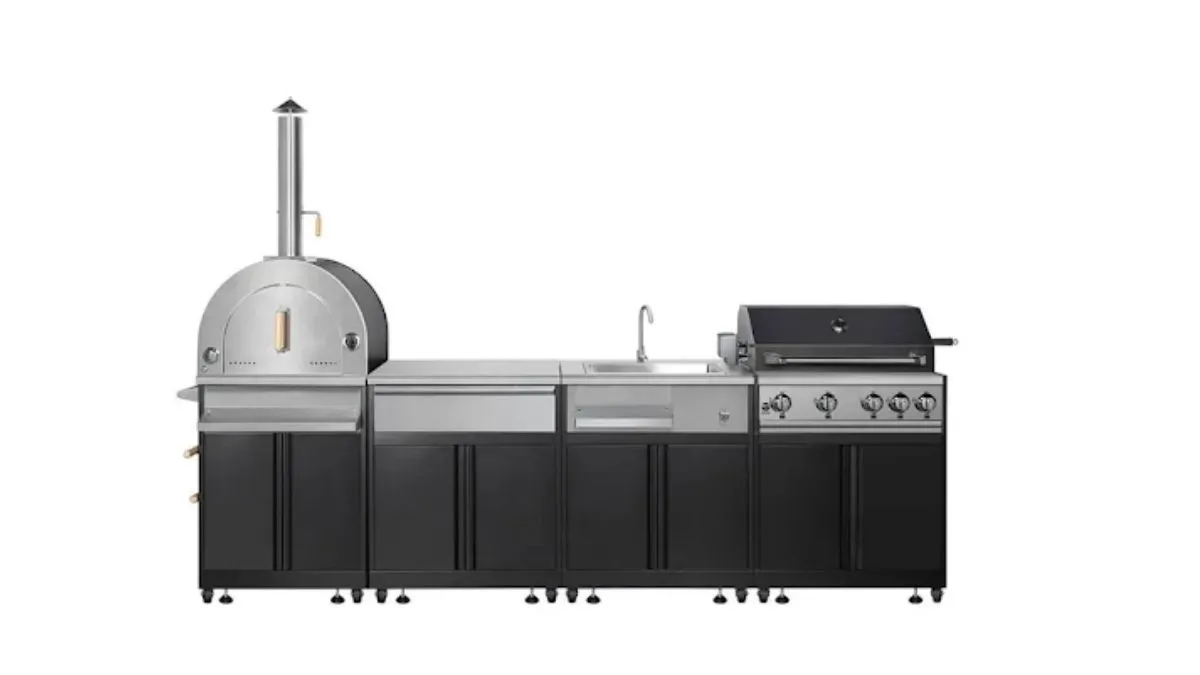
Measured end to end, the burners and the oven occupy far less of an eleven foot outdoor kitchen island than the counter does. That remaining stainless steel is the part that turns the unit into a kitchen rather than a grill on a stand.
That surface is what holds the tray coming out, the board being used, and the plates going back. Without it a cook is balancing things on a railing, and with it the whole meal can be assembled where it is being cooked.
Stainless steel is chosen for what happens after the meal
Stainless steel is non-porous, so raw juices sit on the surface rather than soaking into it, and a wipe with hot soapy water resets the working area. That matters more outdoors than in, since a patio counter collects dust and pollen between uses. A surface that cleans completely makes an outdoor kitchen island safe to prepare food on rather than merely convenient.
Raw and cooked need separate ground on a hot day
Summer heat is exactly the condition that turns a small handling mistake into an unpleasant evening, which is why the layout of the counter deserves a moment of thought before the food comes out. The workable habit is simple. One end of the run holds raw food and its board, the other holds finished plates, and the tray that carried raw meat out never carries the cooked meat back to the table.
The pizza oven changes what the counter has to hold
A built-in oven brings a second stream of work to the same run, since dough has to be stretched, topped, and moved onto a peel before it reaches the heat, and all of that happens on the counter rather than over the flame. Leaving a clear stretch of steel beside the oven door makes that practical, because a topped pizza has to be launched in one movement and there is nowhere to set it down partway through.
The missing tap is the gap worth planning around
The one thing an outdoor island rarely has is running water, and that absence is felt during preparation rather than during cooking. Hands need washing between tasks and boards need rinsing partway through a meal. Most owners solve it with a hose on the wall and a bottle of soap kept in the cabinet below. A host outside Barrie ran a garden tap to the end of the patio and stopped going indoors entirely once it was there.
The cabinet decides how much of the meal happens outside
Storage under the counter keeps utensils, foil, boards, and a bin of tools at the cooking station rather than in a kitchen drawer thirty feet away. That is the quiet difference between an island that gets used every weekend and one that gets used when someone remembers to carry everything out to it first.
A working counter follows a few habits
- Raw at one end: keep finished plates apart
- Wipe as you go: stainless resets in seconds
- Water nearby: a hose and soap within reach
- Stock the cabinet: tools live at the island
Where a full island wins and where it asks for planning
- Strength: the whole meal happens in one place
- Strength: stainless cleans down between uses
- Limit: no plumbing unless a tap is run to it
- Limit: a fixed run needs its spot chosen well
Weighed against a grill on a cart, an outdoor kitchen island costs more and cannot be moved once the gas is connected, and it returns an evening where the cook stays with the guests instead of shuttling between two kitchens.
Outdoor cooking keeps moving from grilling toward cooking
As backyards take on more of the entertaining, owners increasingly want to prepare a full meal outside rather than finish it over flame, and that ambition is measured in counter space more than in burner count. Owners now ask where the food gets prepared before they ask how many burners are included.
That shift is why the outdoor cooking equipment that TMG Industrial supplies is built around a long working surface with the burners set into it.


Understanding Azn Anonib: A Niche in Anonymous Online Communities

NS CrewCall: Norfolk Southern’s Crew Management System

xMovies8: The Ultimate Free Streaming Platform for Movies and TV Shows

Experience the Serenity of PO18: A Hidden Gem in West Sussex’s Countryside

The counter, not the burners, is what makes an outdoor kitchen island usable

Getting Your Logo to Last on a Branded Keyring

What Young Adults Need to Know About Dermal Filler Side Effects

Goddess Pose: How to Do Utkata Konasana Correctly

Early Signs of Retinal Disease: Why Early Diagnosis Can Help Protect Your Vision

5 Differences Between Personal Care and Assisted Living for Older Adults

How to Spot Complications After Breast Reconstruction Surgery

Yoni Mudra: Benefits, Steps, Meaning & Safety Guide

How to Decide Which Rooms Need Deep Cleaning First

Ardha Halasana (Half Plough Pose): Steps, Benefits & Safety

Where to Actually Practice Yoga in Bali: Studios Worth Crossing the Island For
-
 GENERAL1 year ago
Christofle – For Those Who Dream of Family Heirloom Silver
-
SPORTS1 month ago
Discover the World of Football with Streameast: Watch Your Favorite Leagues and Tournaments
-
HOME IMPROVEMENT1 year ago
Spacious and Stylish 300cm Round Rugs: Elegant and Modern Designs for a Chic Home Decor
-
GENERAL8 months ago
Uncovering the World of кинокрадко: The Dark Side of Film Piracy