GENERAL
How Visual Merchandising Shapes Buying Decisions

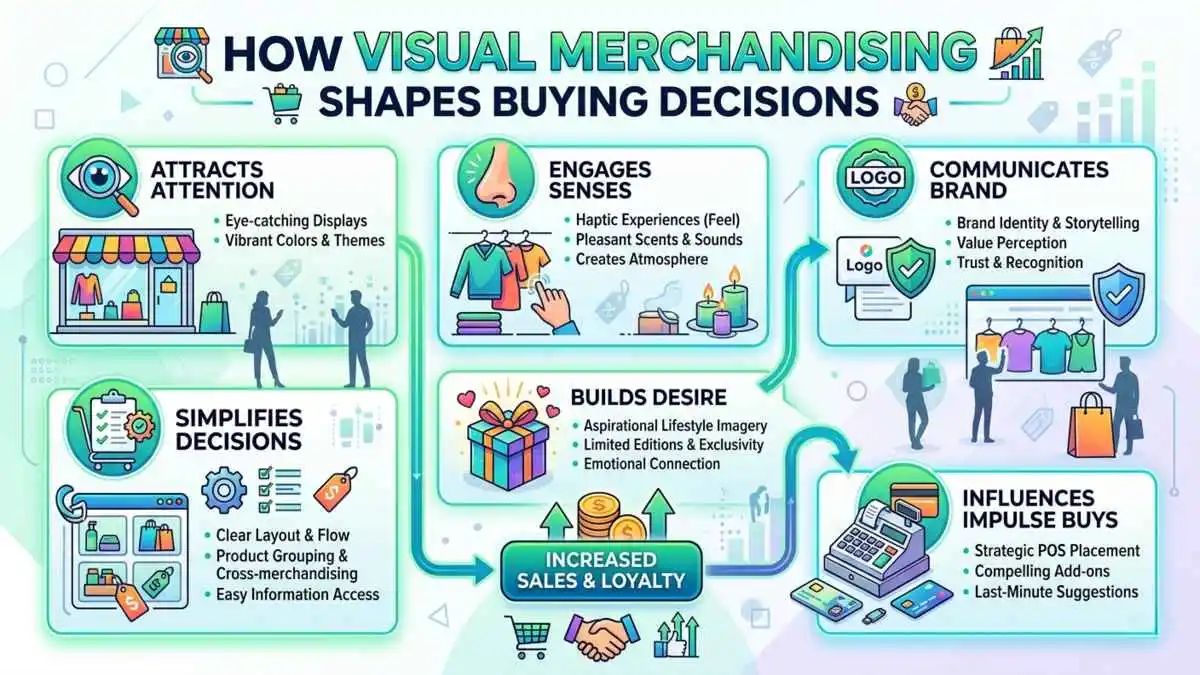
Visual merchandising, also known as the “silent salesperson,” uses elements like store layout, lighting, and music to guide customer attention and encourage spending. Its goal is to maximize sales by creating an attractive shopping environment that influences product perception, triggers impulse buys, and builds brand loyalty.
Table of Contents
Psychology Behind Visual Merchandising
Retailers rely heavily on psychological principles to guide shoppers toward the checkout counter.
First Impressions: The 7-Second Rule
Human beings form an opinion about a space within the first seven seconds of entering it. If a store appears cluttered, dark, or confusing, shoppers will turn around and leave. A clean, well-lit, and aesthetically pleasing entrance immediately lowers defenses and invites customers to explore further.
Color Psychology
Colors evoke strong emotional responses and subconsciously influence purchasing behavior. Red often creates a sense of urgency, making it a favorite for clearance sales. Blue promotes trust and calmness, which is why banks and tech companies frequently use it. Warm tones like orange and yellow can stimulate appetite, a trick commonly used by food retailers.
Sensory Marketing
Sight is only one piece of the puzzle. Retailers engage all the senses to build a memorable experience. The smell of fresh pine during the holidays, the upbeat tempo of pop music in a teen clothing store, and the ability to physically touch soft fabrics all work together. These sensory inputs create emotional connections that make parting with money feel less like a transaction and more like an experience.
Key Elements of Effective Visual Merchandising
A successful retail environment relies on a combination of specific elements to guide the shopper’s journey.
Store Layout and Flow
The physical layout dictates how a customer navigates the space. Supermarkets often use a grid layout for efficiency, while boutique stores might favor a free-flow layout that encourages wandering and discovery. Placing essential items at the back of the store forces customers to walk past other merchandise, increasing the chances of an impulse buy.
Window Displays
The window display is the store’s billboard. It sets the tone, tells a story, and attracts foot traffic. A compelling window display uses bold visuals and thematic elements to stop passersby in their tracks and invite them inside.
In-Store Displays
Once inside, the arrangement of products takes center stage. Retailers use the “rule of three” to create visual interest and group items logically. Investing in custom retail display fabrication allows brands to create unique, eye-catching focal points that perfectly match their aesthetic and highlight key merchandise.
Lighting
Lighting does much more than illuminate the space. Spotlight features draw attention to high-margin items, while soft ambient lighting creates a relaxed atmosphere. Bad lighting can make high-quality products look cheap, while excellent lighting can elevate basic items into must-haves.
Signage and Branding
Clear, concise signage communicates value and helps customers find what they need without frustration. Typography, colors, and the tone of the messaging should align perfectly with the overall brand identity.
How Visual Merchandising Influences Buying Decisions
The physical environment directly manipulates the decision-making process in several distinct ways.
Perceived Value
A watch sitting in a crowded discount bin looks cheap. That exact same watch placed on a velvet cushion inside a brightly lit glass case suddenly appears luxurious. Presentation elevates the perceived worth of a product, allowing retailers to command higher prices.
Impulse Purchases
Strategic placement is the main driver of impulse buying. Retailers place small, inexpensive, or highly appealing items near the checkout lines. While waiting to pay, customers easily convince themselves to add a pack of gum, a lip balm, or a magazine to their basket.
Brand Image and Loyalty
Consistency in visual merchandising builds brand recognition. When customers know exactly what to expect—from the scent of the store to the layout of the shelves—they feel comfortable. This positive experience fosters loyalty, encouraging repeat visits.
Cross-Selling and Upselling
Mannequins wearing a complete outfit demonstrate exactly how pieces work together. Grouping a camera with memory cards and a carrying case subtly reminds the customer of what else they need. This logical grouping encourages shoppers to purchase supplementary items they might have otherwise forgotten.
Decision Fatigue
Too many choices can overwhelm a shopper, leading them to walk away empty-handed. Clear organization and curated displays simplify the decision-making process. By highlighting a “staff pick” or grouping items by color, retailers remove the friction of choosing.
The Role of Technology in Modern Merchandising
Retailers are increasingly turning to technology to enhance the physical shopping experience.
Digital Signage and Interactive Displays
Moving graphics capture attention much faster than static posters. Interactive touchscreens allow customers to check inventory, browse different color options, or learn about product specifications without waiting for an employee.
Augmented Reality (AR)
Virtual try-ons are bridging the gap between imagination and reality. Shoppers can use smart mirrors to see how an outfit looks without undressing, or use an app to visualize a piece of furniture in their own living room before buying.
Data Analytics
Store layouts are no longer based entirely on intuition. Retailers track customer movements using heat maps and Wi-Fi signals. This data reveals which displays attract the most attention and which areas of the store are ignored, allowing for continuous optimization.
Case Studies of Success
Different industries apply these strategies in unique ways to maximize their specific goals.
High-End Fashion Brands
Luxury retailers focus heavily on minimalism. Racks are sparse, and products are given plenty of breathing room. This scarcity implies exclusivity and high value. Lighting is dramatic, and the store environment often feels like an art gallery.
Grocery Store Strategies
Supermarkets are masters of psychology. Produce is placed at the entrance because bright colors and fresh smells immediately put shoppers in a good mood. Dairy and meat are located at the back, forcing customers to traverse the aisles. High-profit cereals are placed at the eye level of children.
Innovative Retailers
Brands like Apple disrupted retail by removing traditional checkout counters and creating a hands-on playground for tech. Anthropologie takes a different approach, creating highly stylized, thematic environments that feel like a curated lifestyle rather than a traditional clothing store.
Visual Merchandising in Different Retail Environments
The principles of presentation apply far beyond the traditional high street.
Brick-and-Mortar Stores
Physical stores hold a distinct advantage: the ability to engage all five senses. The physical space allows for immediate gratification and personal interaction with the product.
E-commerce
Digital merchandising applies the same psychological principles to a screen. High-quality product photography, clear website navigation, and logical categorization replace physical displays. User experience (UX) design dictates the flow, while algorithmic recommendations handle cross-selling.
Measuring the Impact
Retailers need to know if their displays are actually working. They track several key metrics.
Sales Conversion Rates
This measures the percentage of people who walk into the store and actually make a purchase. A great window display might bring people in, but if the conversion rate is low, the internal merchandising needs adjustment.
Average Transaction Value
By analyzing the average amount spent per transaction, retailers can see if their cross-selling and impulse-buy strategies are effective.
Customer Engagement and Dwell Time
The longer a customer stays in a store, the more likely they are to buy something. Retailers track dwell time to see if their layout encourages exploration.
Conclusion
Visual merchandising is an ongoing strategy, not a set-and-forget task. As consumer habits change and new technologies emerge, retail environments must adapt to keep shoppers engaged. The most successful stores continuously test their layouts, update their lighting, and refresh their displays to see what resonates best with their audience.


Lash Line Enhancement in Raleigh, Answered: 12 Honest Questions Before You Book

How Physical Movement Supports Musculoskeletal Health Through Every Stage of Recovery

Why Hospital-Employed Physician Practices Keep Losing Money

Wearable Air Purifiers: A Closer Look at the Personal Clean-Air Trend

Preparing for Your Child’s First Dental Visit: A Practical Guide for Parents

What to Look for in a Pilates Studio or Instructor

Why Recurrent Cleaning Services Keep Homes Spotless All Year

AI PPT Maker for Teachers: Turn Lesson Notes into Slides That Leave Room to Teach

Chief Technical Examiner: Roles, Rules and Responsibilities

When Should You Visit an Orthopaedic Clinic for a Sports Injury?

How to Choose an E-Bike for a More Active Everyday Lifestyle

What is Chin Mudra? Discover Its Meaning and Health Benefits

Classroom20x: Future of Hybrid Learning Explained

Exploring the World of Futbolear: A Comprehensive Guide

LeahRoseVIP: Trusted Lifestyle Magazine for Holistic Wellbeing
-
 GENERAL1 year ago
Christofle – For Those Who Dream of Family Heirloom Silver
-
GENERAL10 months ago
Uncovering the World of кинокрадко: The Dark Side of Film Piracy
-
SPORTS3 months ago
Discover the World of Football with Streameast: Watch Your Favorite Leagues and Tournaments
-
HOME IMPROVEMENT2 years ago
Spacious and Stylish 300cm Round Rugs: Elegant and Modern Designs for a Chic Home Decor