
HEALTH AND FITNESS
How to Choose the Right Orthopaedic Surgeon in Singapore

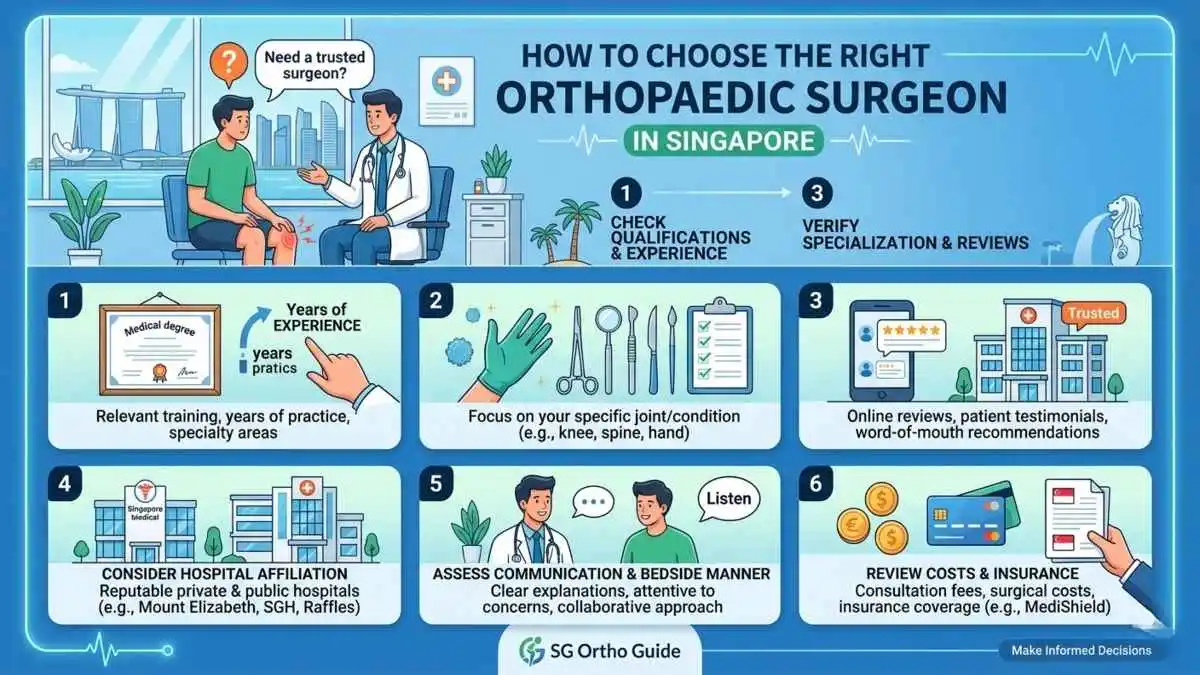
Finding the right orthopaedic surgeon is an important decision, one that can have a meaningful impact on your recovery, your quality of life, and your long-term musculoskeletal health. Whether you are dealing with a sports injury, chronic joint pain, or a condition that may require surgical intervention, the orthopaedic surgeon you choose will play a central role in guiding your care from diagnosis through to treatment and rehabilitation.
In Singapore, patients have access to a range of orthopaedic surgeons practising across both public and private healthcare settings. While this breadth of options is reassuring, it can also make the process of selecting the right specialist feel overwhelming, particularly for patients who are unfamiliar with the orthopaedic field or who are managing an injury for the first time.
This article outlines the key factors to consider when choosing an orthopaedic surgeon in Singapore, so that you can approach the decision with clarity and confidence.
Table of Contents
Understand What an Orthopaedic Surgeon Does
Before beginning your search, it is helpful to have a clear understanding of what an orthopaedic surgeon does and what falls within the scope of their practice.
Orthopaedic surgeons are medical specialists trained in the diagnosis, treatment, and management of conditions affecting the musculoskeletal system, which includes the bones, joints, muscles, tendons, ligaments, and cartilage. Their scope of practice spans both non-surgical and surgical management, and they treat a wide range of conditions, from acute sports injuries and fractures to degenerative joint conditions such as osteoarthritis.
Not all orthopaedic surgeons treat the same types of conditions. Many develop a focus in particular areas, such as sports injuries, joint replacement, spine conditions, or paediatric orthopaedics through further training and clinical experience. Understanding this distinction is an important first step in identifying the right surgeon for your specific needs.
Identify Your Specific Condition or Concern
The most important factor in choosing the right orthopaedic surgeon is the nature of your condition. Orthopaedic care covers a broad spectrum, and the surgeon best suited to managing a knee ligament injury in a young athlete may differ from the surgeon most appropriate for an elderly patient requiring hip replacement surgery.
Before making an appointment, take time to identify as clearly as possible what your symptoms are, which part of the body is affected, and what you hope to achieve from orthopaedic care. This will help you narrow your search to surgeons who regularly manage conditions similar to yours.
For example, if you are an athlete dealing with a sports injury affecting the knee, shoulder, or ankle, you would benefit from consulting an orthopaedic surgeon who focuses on sports-related musculoskeletal conditions. If your concern is hip or knee joint degeneration, a surgeon with a focus in joint reconstruction and replacement would be more appropriate.
Verify Qualifications and Training
In Singapore, orthopaedic surgeons are required to hold recognised medical qualifications and to be registered with the Singapore Medical Council (SMC). When evaluating a surgeon, it is reasonable to investigate their educational background, postgraduate training, and any fellowships or subspecialty training they have undertaken.
Relevant qualifications to look for may include:
Postgraduate surgical qualifications, such as the Fellowship of the Royal College of Surgeons (FRCS) with a specialisation in Trauma and Orthopaedics, or equivalent internationally recognised credentials.
Subspecialty fellowships, which indicate that a surgeon has undertaken additional focused training in a particular area, for example, sports surgery, joint reconstruction, or arthroscopic procedures.
Professional memberships, such as membership in the American Academy of Orthopaedic Surgeons (AAOS), the Asia Pacific Knee Arthroscopy and Sports Medicine Society, or the European Board of Orthopaedics and Traumatology, which reflect engagement with the broader orthopaedic community and ongoing professional development.
These credentials help provide assurance that the surgeon has the foundational training and professional standing expected of a qualified orthopaedic specialist. They do not, however, represent a guarantee of any particular outcome, and qualifications should be considered alongside other factors.
Consider the Surgeon’s Area of Focus
As noted above, many orthopaedic surgeons develop a clinical focus through years of practice and subspecialty training. This focus is relevant to patients because a surgeon who regularly manages a particular type of condition will have accumulated significant familiarity with its presentation, treatment considerations, and potential complications.
When reviewing a surgeon’s profile, look for information about the types of conditions they most commonly treat, the procedures they perform, and whether their clinical interests align with your own needs. This information is often available on the surgeon’s or clinic’s website.
For patients with sports-related injuries, for instance, an orthopaedic surgeon with a focus in sports medicine and sports surgery will be well-positioned to assess the injury in the context of your physical activity demands and to advise on both surgical and non-surgical options with an understanding of your goal to return to sport.
Assess the Range of Services Available
When choosing an orthopaedic surgeon, it is also worth considering the range of services available at the clinic or facility where they practise. Orthopaedic care often involves multiple components, initial assessment, imaging, non-surgical management, surgical intervention if required, and post-operative rehabilitation.
A clinic that offers a comprehensive approach to orthopaedic care can facilitate a more coordinated experience for the patient. This may include access to diagnostic imaging, injection-based treatments such as platelet-rich plasma (PRP) or hyaluronic acid injections, surgical procedures including arthroscopy and joint reconstruction, and structured rehabilitation support.
Having access to a broad range of treatment options under the care of the same orthopaedic surgeon reduces the need for multiple referrals and allows your care to be managed in a consistent and cohesive manner.
Look Into the Surgeon’s Approach to Patient Care
Beyond qualifications and clinical focus, the way a surgeon communicates with and cares for their patients is an important consideration. Orthopaedic care particularly when surgery is involved requires a high degree of trust between patient and doctor. A surgeon who takes time to explain your diagnosis clearly, outlines the available treatment options, and involves you in the decision-making process contributes meaningfully to a positive and informed patient experience.
During your initial consultation, pay attention to whether the surgeon listens attentively to your concerns, provides clear and honest explanations, and answers your questions without making you feel rushed. You should leave the consultation with a clear understanding of your diagnosis, the proposed management plan, and what to expect in terms of recovery.
If you feel uncertain or would like a second opinion before proceeding with any treatment, particularly before committing to surgery, it is entirely reasonable to seek one. A good orthopaedic surgeon will support your right to make an informed decision about your own care.
Consider the Clinic’s Location and Accessibility
Practical considerations such as the location of the orthopaedic clinic, its operating hours, and its accessibility are also relevant, particularly if you anticipate requiring multiple follow-up visits over the course of your treatment and recovery.
In Singapore, orthopaedic clinics are located across various parts of the island, including in specialist medical centres that offer a concentration of specialist services in one location. Choosing a clinic that is accessible to you, whether by private transport or public transit can reduce the logistical burden of attending appointments, especially in the early stages of recovery when mobility may be limited.
It is also worth confirming whether the clinic accepts your health insurance, and whether the surgeon is a panel doctor under your insurer’s scheme. Many private orthopaedic clinics in Singapore work with major insurance providers and can assist with the documentation required for claims.
Understand the Difference Between Public and Private Orthopaedic Care
In Singapore, patients can access orthopaedic care through both the public healthcare system and private specialist clinics. Each pathway has its own considerations.
Public orthopaedic care is available at restructured hospitals such as Singapore General Hospital, Tan Tock Seng Hospital, and National University Hospital, among others. Costs are subsidised for Singapore citizens and permanent residents, and patients are typically referred through a general practitioner or polyclinic. Wait times for elective procedures in the public system may be longer than in the private sector.
Private orthopaedic clinics offer direct access to specialist care without the need for a referral, and generally have shorter waiting times for consultations and procedures. Fees in the private sector are higher, though these can be offset through Medisave, Medishield Life, or private health insurance where applicable.
The right pathway will depend on your individual circumstances, the urgency of your condition, your insurance coverage, and your personal preferences regarding continuity of care with a specific surgeon.
Ask the Right Questions at Your Consultation
Once you have identified a potential orthopaedic surgeon and scheduled a consultation, preparing a list of questions in advance can help you make the most of the appointment. Relevant questions may include:
About your diagnosis: What is the nature of my condition? What structures are affected, and to what extent? What imaging or investigations are needed to confirm the diagnosis?
About treatment options: What are the non-surgical treatment options available to me? Under what circumstances would surgery be recommended? What does the surgical procedure involve, and what are the associated risks?
About recovery: What is the expected recovery timeline? What does rehabilitation involve, and will I require physiotherapy? When can I expect to return to normal activities or sport?
About the surgeon’s experience with your condition: How frequently do you manage this type of condition or perform this procedure? What outcomes do patients typically experience?
These questions are not exhaustive, but they provide a useful framework for obtaining the information you need to make an informed decision about your care.
Making the Right Choice
Choosing an orthopaedic surgeon in Singapore involves weighing a combination of clinical, practical, and personal factors. The right surgeon for you will have the qualifications and clinical focus relevant to your condition, a communication style that puts you at ease, and access to the diagnostic and treatment resources needed to manage your care effectively.
Taking the time to research your options, ask the right questions, and seek a second opinion where necessary are all reasonable steps in the process. Orthopaedic care, particularly when it involves surgery is a significant undertaking, and you deserve to feel confident in the surgeon you choose. If you are looking for an orthopaedic specialist in Singapore with a focus in sports injuries, joint conditions, and musculoskeletal care, consider consulting with a qualified orthopaedic surgeon to discuss your condition and explore your treatment options.


Social Media Scheduler Guide: Features, Benefits, Best Practices & Tools

Eagle Pose: Quick and Easy Guide

Happy Baby Pose: Benefits, Steps, and Tips for Beginners

Detoxify Your Body and Mind with Dragon Pose: A Step-by-Step Guide

HGH Peptides Buy Online: What to Know Before You Buy Peptides

Printed Mailer Boxes: How Printed Mailer Boxes Improve the Unboxing Experience

How Influencer Packaging Campaigns Boost Brand Awareness

How Outdoor Activities Improve Retirement Quality of Life

Why Businesses Trust TekRevol for Healthcare App Development

Flemington’s Complete Healthcare Network: Top Providers Working Together for Community Wellness

How Shared Workspaces Accumulate Bacteria in Places Nobody Thinks to Clean

How Varifocal Glasses Are Better Than the Rest

How Guests Leave a Space Differently Than Residents and What That Means for Effective Cleaning Practices

Retail Store Layout Mistakes That Cost Businesses Sales

Common Conditions Managed by Rheumatologists in Singapore
-
 GENERAL1 year ago
Christofle – For Those Who Dream of Family Heirloom Silver
-
SPORTS1 year ago
Discover the World of Football with Streameast: Watch Your Favorite Leagues and Tournaments
-
GENERAL7 months ago
Uncovering the World of кинокрадко: The Dark Side of Film Piracy
-
GENERAL4 months ago
Unveiling the Art of преводсч: How Translators Bridge Language Barriers