
HEALTH AND FITNESS
Common Types of Hernias: Inguinal, Umbilical, Incisional, and Femoral

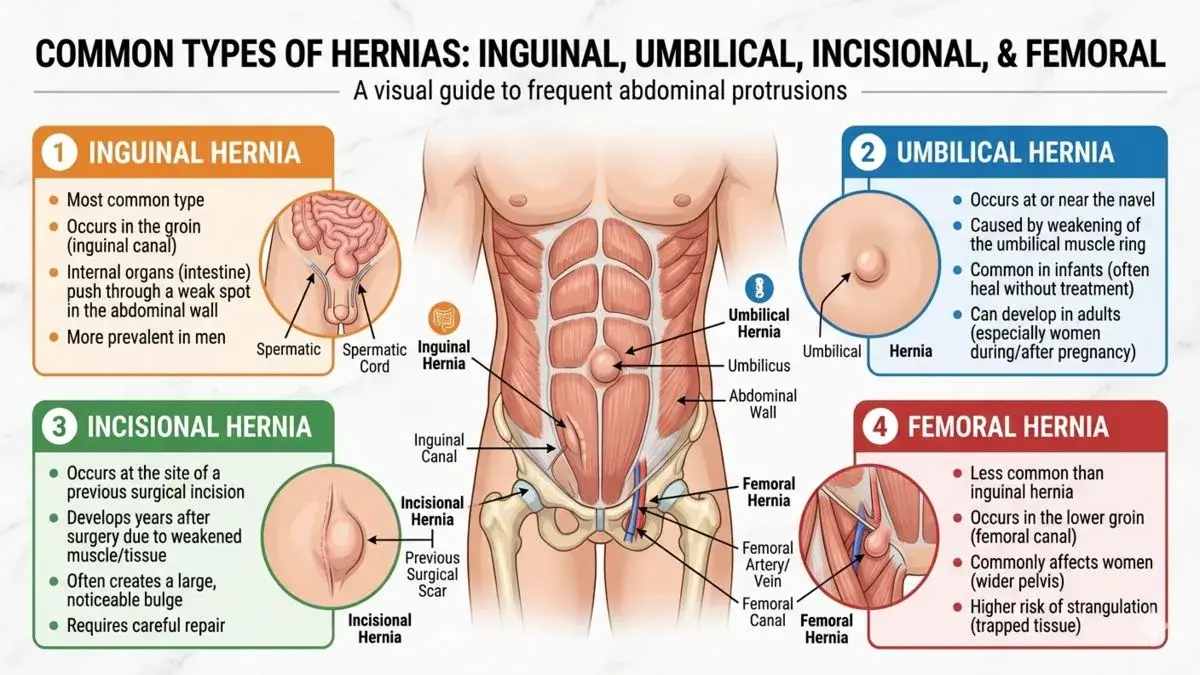
A hernia occurs when an internal organ or tissue pushes through a weakened area in the surrounding muscle or connective tissue. Hernias commonly develop in the abdominal wall or groin and may appear as a lump or bulge.
Some hernias may cause discomfort or pain, while others may initially have few symptoms. Treatment depends on the type of hernia, symptoms, size, and whether complications are present.
Table of Contents
What Causes a Hernia?
Hernias can develop due to a combination of muscle weakness and pressure within the abdomen. Some are present from birth, while others develop over time due to tissue weakness or repeated strain.
Factors that may contribute include:
- Heavy lifting
- Chronic coughing
- Constipation and straining
- Obesity
- Pregnancy
- Previous surgery
- Age-related weakening of tissues
- Repetitive physical strain
Common Hernia Symptoms
Symptoms vary depending on the type and severity of the hernia. Common signs may include:
- A visible lump or swelling
- Groin or abdominal discomfort
- Pain during lifting, coughing, or bending
- A feeling of heaviness or pressure
- Burning or aching sensations
- Swelling that becomes more noticeable when standing
Some hernias may not cause symptoms initially and are only discovered during a medical examination.
Inguinal Hernia
What Is an Inguinal Hernia?
An inguinal hernia occurs when tissue pushes through a weak area in the lower abdominal wall near the groin. It may occur when part of the intestine or fatty tissue protrudes through the inguinal canal.
Common Symptoms
Symptoms may include:
- A bulge in the groin
- Pain or discomfort during lifting or coughing
- Groin heaviness or pressure
- Swelling that becomes more visible while standing
Inguinal hernias are more common in men and may enlarge over time if left untreated.
Possible Complications
If part of the intestine becomes trapped, blood supply may be affected. This is known as a strangulated hernia and may require urgent medical treatment.
Symptoms requiring prompt medical review may include:
- Sudden severe pain
- Nausea or vomiting
- Redness over the bulge
- Inability to push the hernia back in
Umbilical Hernia
What Is an Umbilical Hernia?
An umbilical hernia develops near the belly button when tissue pushes through a weakened area in the abdominal wall.
Umbilical hernias may occur in infants and adults. In adults, they may be associated with obesity, pregnancy, fluid accumulation in the abdomen, or increased abdominal pressure.
Common Symptoms
Symptoms may include:
- A soft bulge near the navel
- Swelling that becomes more visible during coughing or straining
- Mild discomfort or pressure
Some small umbilical hernias may not cause symptoms.
Treatment Considerations
In infants, some umbilical hernias may close naturally over time. In adults, surgery may be considered if the hernia enlarges, causes symptoms, or becomes trapped.
Incisional Hernia
What Is an Incisional Hernia?
An incisional hernia develops through a weakness in the abdominal wall at the site of a previous surgical incision.
It can occur months or years after abdominal surgery.
Risk Factors
Factors that may increase the risk include:
- Previous abdominal surgery
- Infection after surgery
- Obesity
- Smoking
- Repeated strain on the abdominal wall
- Poor wound healing
Common Symptoms
Symptoms may include:
- A bulge near a surgical scar
- Pain or discomfort
- Swelling during coughing or lifting
- Pressure or heaviness in the abdomen
Some incisional hernias gradually enlarge over time.
Femoral Hernia
What Is a Femoral Hernia?
A femoral hernia occurs when tissue pushes through the femoral canal in the upper thigh or groin area.
Femoral hernias are less common than inguinal hernias but may carry a higher risk of complications such as strangulation.
Who May Be Affected?
Femoral hernias are more commonly seen in women, particularly older women.
Common Symptoms
Symptoms may include:
- A lump near the upper thigh or groin
- Groin discomfort
- Pain during standing or lifting
- Swelling that may become tender
Some femoral hernias are only detected when complications occur.
How Hernias Are Diagnosed
Diagnosis usually involves:
- Medical history review
- Physical examination
- Assessment of the bulge or swelling
- Imaging tests if required
Imaging may include:
- Ultrasound
- CT scan
- MRI in selected cases
The type of imaging depends on the location of the hernia and symptoms.
Treatment Options
Observation
Some small hernias with minimal symptoms may be monitored under medical supervision.
Hernia Repair Surgery
Surgery may be recommended if the hernia:
- Causes pain or discomfort
- Enlarges over time
- Affects daily activities
- Has a risk of complications
Hernia repair surgery may involve:
- Open surgery
- Laparoscopic surgery
The suitable approach depends on the type and size of the hernia, medical history, and surgeon assessment.
When to Seek Prompt Medical Attention
Patients should seek urgent medical review if they experience:
- Sudden severe pain
- A painful or firm bulge
- Redness or discolouration over the hernia
- Nausea or vomiting
- Fever
- Inability to pass stool or gas
These symptoms may suggest incarceration or strangulation of the hernia.


Bebasinindo: Championing Freedom in Indonesia

Ankwave: Future of Connectivity with Energy-Efficient Solutions

Afruimwagens: Efficient Mobile Carts for Workspaces

Understanding Formula 1 Standings and Championship Rankings

Do Cats Fart? A Scientific and Behavioral Look at Feline Gas

Hatha Yoga: Balancing Body, Mind, and Energy

Wave_of_Happy_: Cultivating a Positive Mindset for Lasting Joy

Gamer Challenger: Definition, Role, and Competitive Focus

Slope Unblocked: Free Online 3D Ball Running Game

Brand Name Normalization Rules: A Complete Practical Guide

Veneajelu: The Finnish Art of Peaceful Summer Boating

The Journey of iamnobody89757: From Anonymous User to Internet Sensation

Adsy.pw/hb3: The Future of High-Impact Digital Advertising

Soutaipasu: Understanding Relative Paths in Computing

Omaha, Nebraska Mental Health Routines for School, Work, and Changing Seasons
-
 GENERAL1 year ago
Christofle – For Those Who Dream of Family Heirloom Silver
-
GENERAL9 months ago
Uncovering the World of кинокрадко: The Dark Side of Film Piracy
-
SPORTS2 months ago
Discover the World of Football with Streameast: Watch Your Favorite Leagues and Tournaments
-
HOME IMPROVEMENT2 years ago
Spacious and Stylish 300cm Round Rugs: Elegant and Modern Designs for a Chic Home Decor