YOGA
Chakra Colors and Crystals Root Chakra: The Complete Energy Guide

The modern wellness industry turned chakras into aesthetic Instagram graphics: rainbow wheels, polished crystals, and vague promises of “high vibrations.” But beneath the commercialization lies a system with centuries of philosophical, symbolic, and energetic depth.
Search trends around “chakra colors” and “crystals root chakra” have surged because people are trying to solve something deeper than spiritual curiosity. They are looking for emotional stability, nervous-system regulation, better focus, groundedness, and relief from chronic stress.
The root chakra is especially important because it governs the psychological foundation upon which every other chakra operates. When it is dysregulated, people often experience anxiety, insecurity, chronic overwhelm, financial fear, emotional instability, or even physical fatigue.
Understanding chakra colors and root chakra crystals properly requires more than memorizing “red equals grounding.” The real value comes from understanding why color symbolism, mineral composition, ritual practice, and psychological associations intersect.
Table of Contents
What Are Chakra Colors?
In traditional yogic philosophy, chakras are considered energy centers connected to consciousness, emotional states, and physiological functions. The modern color system most people recognize today became widely standardized during the 20th century through a blend of esoteric teachings, Western occultism, psychology, and New Age interpretations.
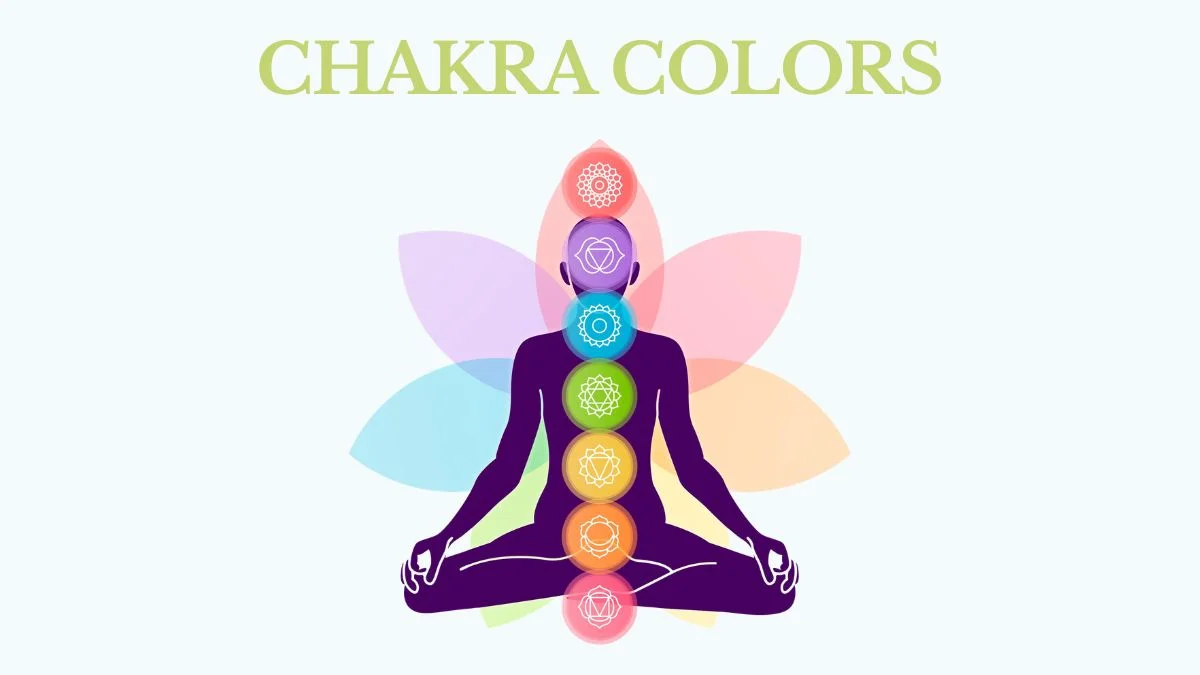
The seven primary chakra colors are:
| Chakra | Sanskrit Name | Color | Associated Themes |
| Root Chakra | Muladhara | Red | Survival, grounding, stability |
| Sacral Chakra | Svadhisthana | Orange | Creativity, sexuality, emotion |
| Solar Plexus | Manipura | Yellow | Confidence, willpower |
| Heart Chakra | Anahata | Green/Pink | Love, compassion |
| Throat Chakra | Vishuddha | Blue | Communication |
| Third Eye Chakra | Ajna | Indigo | Intuition |
| Crown Chakra | Sahasrara | Violet/White | Spiritual awareness |
These colors are not arbitrary. Modern neuroscience and color psychology suggest that colors influence emotional and physiological perception. Red, for example, is repeatedly associated with alertness, urgency, vitality, and physical activation.
That aligns almost perfectly with the root chakra’s symbolic role: safety, survival, and connection to the physical world.
Why the Root Chakra Is Associated with Red
The root chakra sits energetically at the base of the spine. Traditional teachings associate it with:
- Physical security
- Shelter
- Food
- Financial stability
- Tribe and belonging
- Nervous system regulation
- Survival instincts
Red symbolizes blood, heat, movement, and life force. It is biologically attention-grabbing. Studies in sports psychology even show red can affect perception of dominance and competitiveness.
Energetically, practitioners believe red stimulates grounding energy because it pulls awareness downward into the body rather than upward into abstract thinking.
People with an “imbalanced” root chakra often describe symptoms like:
- Chronic anxiety
- Feeling disconnected or unsafe
- Financial fear
- Difficulty focusing
- Constant overthinking
- Fatigue despite rest
- Dissociation or emotional numbness
Whether interpreted spiritually or psychologically, the pattern is remarkably consistent: instability creates hypervigilance.
That is why root chakra work usually focuses on embodiment rather than “high vibration spirituality.”
Crystals Root Chakra: Which Stones Are Actually Used?
One of the biggest misconceptions online is that only red crystals work for the root chakra.
Experienced crystal practitioners usually divide root chakra stones into two categories:
1. Red Stones: Activation and Vitality
These crystals are associated with stimulation, courage, and life force energy.
Red Jasper
Often called the “stone of endurance,” red jasper is widely used for emotional resilience and physical grounding.
Common associations:
- Stability during stress
- Increased focus
- Emotional strength
- Steady energy rather than intense bursts
Unlike highly stimulating crystals, red jaspers are considered slow and stabilizing.
Garnet
Garnet is linked with vitality, ambition, and circulation.
Practitioners often use garnet when root chakra imbalance shows up as:
- Exhaustion
- Lack of motivation
- Emotional heaviness
- Disconnection from passion
Historically, garnets were carried by travelers and warriors for protection.
Bloodstone
Despite its green appearance with red flecks, bloodstone is strongly associated with survival energy and physical courage.
Some crystal healers use it for:
- Recovery periods
- Emotional resilience
- Mental toughness
- Physical grounding during change
Carnelian (Occasionally Shared with Sacral Chakra)
Carnelian bridges survival energy and creative energy. It is often used when someone feels emotionally stagnant or fearful of action.
2. Black Stones: Protection and Deep Grounding
This surprises many beginners.
Advanced practitioners frequently use black crystals for the root chakra because grounding is not only about activation, but also about energetic containment and protection.
Black Tourmaline
Possibly the most popular grounding stone in modern crystal healing.
It is commonly used for:
- Emotional protection
- Energetic boundaries
- Reducing overstimulation
- Stress-heavy environments
People working in healthcare, corporate environments, or emotionally demanding jobs often gravitate toward black tourmaline.
Obsidian
Obsidian is volcanic glass, formed through rapid cooling of lava.
Unlike softer grounding stones, obsidian is often described as psychologically intense because practitioners believe it exposes suppressed emotional patterns.
It is less about comfort and more about truth.
Smoky Quartz
Smoky quartz is widely used in meditation and nervous system regulation practices.
It is associated with:
- Emotional release
- Stabilization
- Reducing mental overwhelm
- Transition periods
Many therapists and energy workers favor smoky quartz because its symbolism aligns more closely with emotional processing than with spiritual escapism.
Hematite
Hematite is heavy, metallic, and physically grounding in a literal sense.
Some practitioners use hematite during:
- Panic episodes
- Meditation
- Focus work
- Somatic exercises
Its weight and cool texture create strong sensory feedback, which may contribute psychologically to grounding effects.
Can Chakra Crystals Actually “Work”?
This is where nuance matters.
There is no universally accepted scientific evidence proving crystals emit measurable healing frequencies that directly alter chakras.
However, dismissing the entire practice misses important psychological mechanisms.
Crystal practices may influence people through:
Symbolic Conditioning
Humans attach meaning to objects. A grounding crystal can become a psychological anchor associated with calmness and safety.
Somatic Attention
Holding a stone during breathing exercises increases body awareness and sensory focus.
Ritual and Nervous System Regulation
Predictable rituals reduce stress responses. This is one reason meditation practices consistently improve emotional regulation.
Color Psychology
Red and black both influence emotional perception differently:
- Red = activation and vitality
- Black = protection and containment
In practical terms, many users experience real emotional benefits regardless of whether they interpret the mechanism spiritually or psychologically.
How to Use Root Chakra Crystals Effectively
Most people misuse crystals by expecting passive magic.
Experienced practitioners instead combine them with behavioral grounding methods.
During Meditation
Place the crystal:
- At the base of the spine
- Between the thighs while seated
- In the palm during breathwork
Focus on slower exhalation rather than visualization alone.
In Daily Environments
Root chakra stones are often placed:
- Near entrances
- Under desks
- Beside beds
- In pockets during stressful days
Black tourmaline and smoky quartz are especially popular in workspaces.
With Physical Movement
Grounding works best when the body is involved.
Combine crystals with:
- Walking barefoot
- Strength training
- Yoga
- Breath regulation
- Stretching
- Nature exposure
This is where many modern “chakra guides” fail; they treat grounding as purely spiritual when it is deeply physical.
Which Root Chakra Crystal Is Best for Anxiety?
There is no universal answer because anxiety presents differently.
If Anxiety Feels Like Hyperactivity
Choose calming grounding stones:
- Smoky quartz
- Hematite
- Black Tourmaline
If Anxiety Feels Like Exhaustion or Fear
Choose energizing root stones:
- Red jasper
- Garnet
- Bloodstone
This distinction matters. Some people need calm energy. Others need activation and courage.
What Color Should You Wear for Root Chakra Healing?
Red is the classic root chakra color, but earthy tones also play an important role.
Helpful grounding colors include:
- Deep red
- Burgundy
- Rust
- Brown
- Black
- Dark gray
Color exposure subtly affects emotional state and identity perception. Even luxury brands strategically use color psychology to influence behavior.
The same principle appears in chakra traditions.
FAQs
1. Can the root chakra be overactive?
Yes. An overactive root chakra is often associated with:
Aggression
Material obsession
Rigidity
Defensiveness
Fear-based control
Grounding is about balance, not constant stimulation
2. Why do some root chakra crystals look black instead of red?
Because grounding includes protection and energetic stability, not just activation. Black stones symbolically absorb, contain, and stabilize energy.
3. How long does root chakra healing take?
There is no fixed timeline. Emotional grounding often reflects lifestyle patterns:
Sleep quality
Financial stress
Trauma history
Physical health
Social stability
Crystals may support grounding practices, but they are not substitutes for mental health care, medical treatment, or life changes.
4. Can you sleep with root chakra crystals?
Many people do. Smoky quartz, black tourmaline, and hematite are frequently placed near beds to promote emotional calm.
Highly stimulating stones like garnets may feel too activating for sensitive sleepers.




PHMHaven: Your Digital Wellness Companion

AMS39K: Revolutionizing Data Processing and System Efficiency Across Industries

WNFLB: A New Frontier for Female Athletes

Mednetwerk: A Comprehensive Approach to Health and Wellness in Schijndel

Understanding Antarvwsna: The Power of Inner Desires and Emotions

What is Asbestlint? Health Dangers, Detection & Safe Handling

MyPascoConnect: Secure SSO Platform for Pasco Schools (Guide 2025)

Speciering: The Evolutionary Path to New Species

Are Electric Bikes Worth the Investment? An Honest Cost Breakdown vs Car Commuting

How Teens Build Confidence Beyond Appearance

How to Stay Safe During Contact Sports with Smart Habits and Protection

Wrist Exercises: A Complete Guide to Stronger, More Mobile, and Pain-Resistant Wrists

Weighted Vest Yoga: The Emerging Fitness Trend That Blends Strength Training and Mindful Movement

Active Rehabilitation Exercises for Injury Recovery: A Comprehensive Guide

Solar Plexus Chakra: Meaning, Power, and Inner Confidence
-
 GENERAL1 year ago
Christofle – For Those Who Dream of Family Heirloom Silver
-
SPORTS1 year ago
Discover the World of Football with Streameast: Watch Your Favorite Leagues and Tournaments
-
GENERAL6 months ago
Uncovering the World of кинокрадко: The Dark Side of Film Piracy
-
GENERAL3 months ago
Unveiling the Art of преводсч: How Translators Bridge Language Barriers