Tech
How AI Is Reshaping the Way We Edit Video

Video content has become the backbone of modern communication, whether for marketing, education, or personal storytelling. Yet traditional editing software has always demanded time, technical skill, and patience that many creators simply do not have. In recent years, artificial intelligence has started to close that gap, offering tools that understand natural language instructions and turn them into finished edits within minutes. This shift is changing not only how professionals work but also how everyday users approach video creation.
Table of Contents
The Rise of Conversational Editing Tools
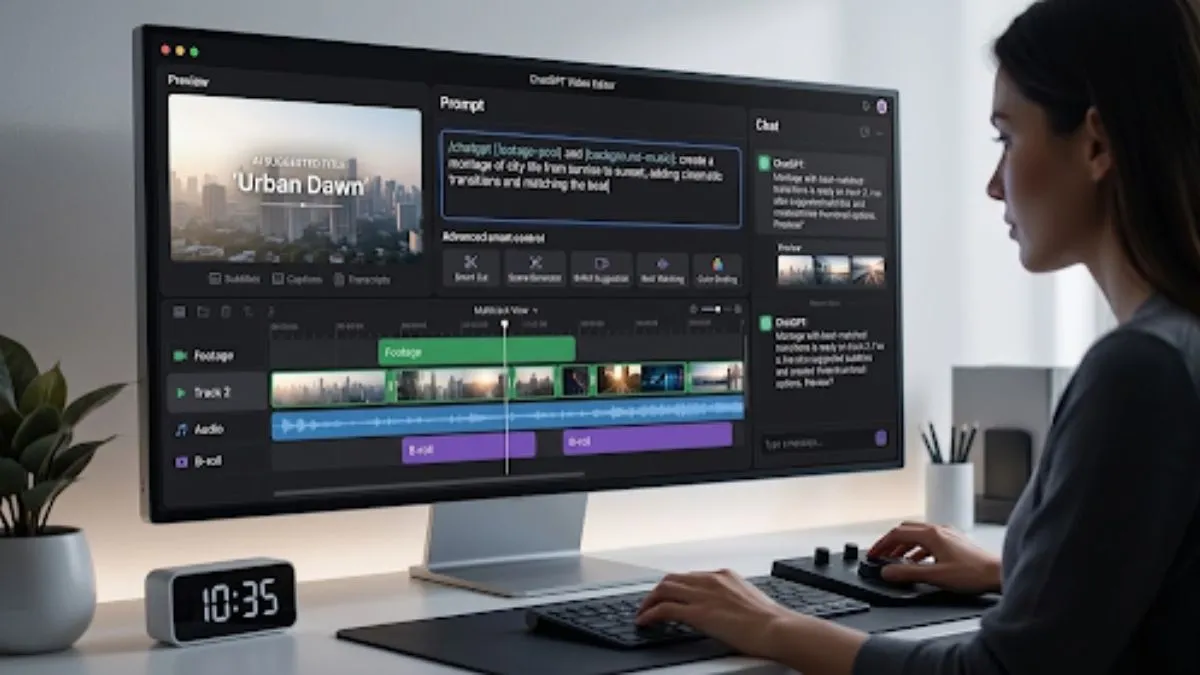
One of the more interesting developments in this space is the emergence of tools that let creators describe what they want in plain language rather than manually dragging clips across a timeline. A ChatGPT video editor style workflow, where a user types a request and the software interprets it into cuts, transitions, or effects, represents a meaningful step forward for people who find conventional editing suites overwhelming. Instead of learning keyboard shortcuts or menu systems, a person can simply explain the outcome they want, and the tool handles much of the technical execution.
This approach is particularly useful for small business owners, social media managers, and hobbyists who need to produce content quickly but lack formal training in video production. It also lowers the barrier for students and educators who want to create instructional videos without investing weeks in learning software.
Why Natural Language Editing Matters
The core appeal of conversational, AI driven editing lies in accessibility. Traditional editing programs, while powerful, often come with a steep learning curve. Features are scattered across panels and timelines, and even simple tasks like trimming a clip or adding a caption can require several steps. By contrast, describing an edit in words mirrors how people already communicate ideas to another person, such as a colleague or a video editor they might hire.
This matters because video is increasingly central to how businesses and individuals share information. A restaurant might want a short clip highlighting a new menu item. A teacher might need a five minute explainer for a lesson. A freelancer might be producing content for multiple clients at once. In each case, speed and simplicity are often more valuable than granular manual control, and AI assisted tools are built to meet that need.
Practical Applications Across Industries
The use cases for AI powered video tools extend well beyond social media. Marketing teams use them to quickly test different versions of an advertisement, adjusting pacing or messaging without waiting on a dedicated editor. Human resources departments use similar tools to create onboarding videos for new employees, updating content as policies change. Journalists and content creators use them to turn raw footage into publishable segments under tight deadlines.
Education is another area seeing rapid adoption. Instructors are increasingly expected to produce video lessons, especially as remote and hybrid learning models remain common. AI assisted editing allows them to focus on the substance of their lessons rather than the mechanics of production. Similarly, nonprofit organizations with limited budgets can produce polished awareness campaigns without hiring outside agencies.
How These Tools Typically Work
Most AI video editing systems rely on a combination of natural language processing and automated media analysis. When a user submits a request, the system interprets the intent behind the words, identifies relevant clips or assets, and applies the requested changes. Some tools go further, offering automatic scene detection, background music suggestions, and even voice narration generation.
It is worth noting that these systems are not meant to fully replace human judgment. Rather, they act as an assistant that accelerates repetitive tasks, such as trimming dead space, synchronizing captions, or generating rough drafts of a video that a human editor can then refine. This collaborative model, where AI handles the initial heavy lifting and a person makes final creative decisions, tends to produce the best results.
Considerations Before Adopting AI Editing Tools
While the benefits are clear, there are a few factors worth keeping in mind. First, output quality can vary depending on the complexity of the request and the quality of the source footage. Users should expect to review and adjust AI generated edits rather than treating them as final products in every case.
Second, workflows should account for file compatibility and export requirements, particularly when working across multiple platforms such as YouTube, Instagram, or internal company systems. Third, teams handling sensitive or proprietary footage should review the privacy and data handling policies of any tool before uploading content, since cloud based processing is common in this category of software.
Finally, it helps to view these tools as part of a broader toolkit rather than a single solution. Combining AI assisted editing with traditional software for finer adjustments often produces the most polished results, especially for projects intended for a wide audience.
The Broader Shift Toward Accessible Content Creation
The growth of AI in video production reflects a larger trend across creative software: making powerful capabilities available to people without specialized training. Just as design tools have made graphic creation more approachable for non designers, AI video editors are doing the same for video production. This democratization does not eliminate the value of skilled editors, but it does expand who can participate in creating professional looking content.
As these tools continue to mature, expect to see improvements in areas such as multi language support, more nuanced understanding of creative intent, and tighter integration with other content creation platforms. The gap between having an idea and producing a finished video is narrowing, and that shift benefits creators at every skill level.
Conclusion
AI is steadily transforming video production from a specialized skill into a more accessible, conversational process. Tools that function like a ChatGPT video editor allow users to describe their vision in plain language and receive a usable draft in return, saving time while still leaving room for human creativity and refinement. As adoption grows across marketing, education, and content creation more broadly, these tools are likely to become a standard part of how people bring their ideas to life on screen, complementing rather than replacing traditional editing skills.


Lizard Pose: A Complete Guide to Form & Flexibility

Dermatologist: Why This Specialist Matters for Your Skin Health

How AI Is Reshaping the Way We Edit Video

Tech Etruesports: The Evolution of Competitive Gaming

Ceıvır: Traditional Turkish Dish with Rich Flavors

GNHUSTGames: The Ultimate Platform for Unblocked Games

Kraams: The Heart of Dutch Market Culture

Butterfly Position: How to Do Baddha Konasana Safely

Tissariss Textile Art: A Tradition of Cultural Weaving

Anna Archive: Free Shadow Library Search Engine

Bl_Faceless: Anonymous Digital Creators Redefining the Digital Space

Pepe Coin Overview: Inside the Meme Cryptocurrency Craze

Lotus Position (Padmasana): How to Do It Safely and Avoid Knee Pain

How to Prepare for a Gynaecology Appointment

RPDJAFUD: The Future of AI-Driven Cybersecurity and Automation
-
 GENERAL1 year ago
Christofle – For Those Who Dream of Family Heirloom Silver
-
SPORTS1 month ago
Discover the World of Football with Streameast: Watch Your Favorite Leagues and Tournaments
-
HOME IMPROVEMENT1 year ago
Spacious and Stylish 300cm Round Rugs: Elegant and Modern Designs for a Chic Home Decor
-
GENERAL8 months ago
Uncovering the World of кинокрадко: The Dark Side of Film Piracy