
YOGA
Bird of Paradise Yoga: How to Master the Pose Safely

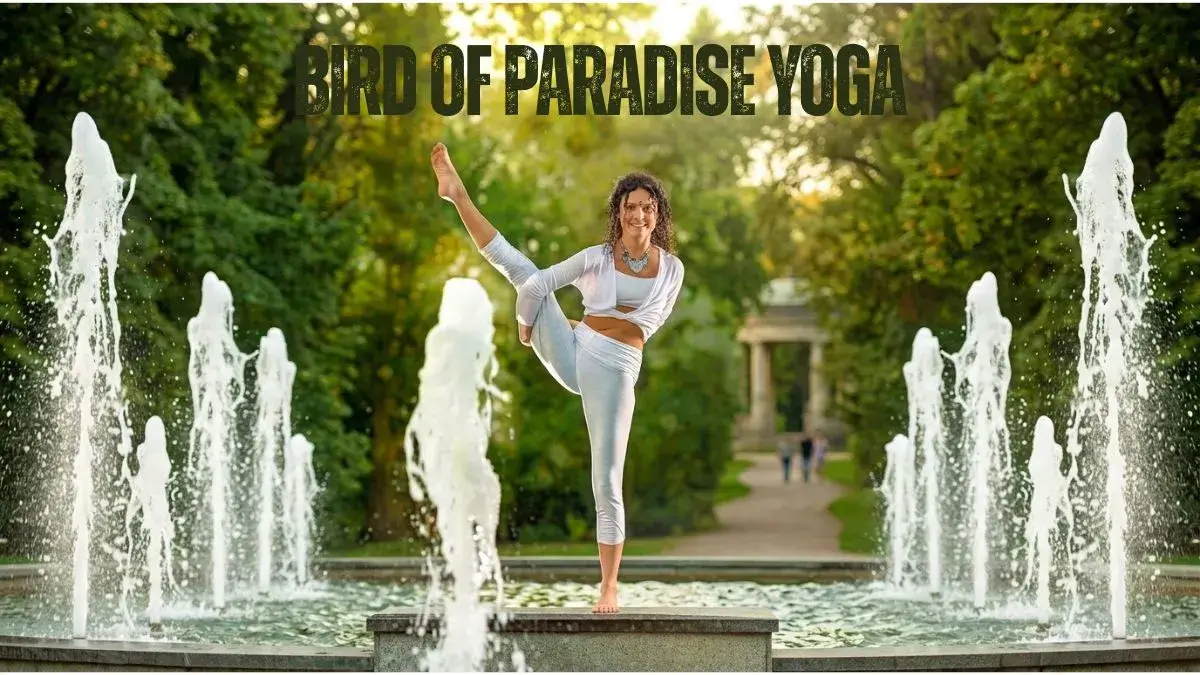
Few yoga poses look as impressive as Bird of Paradise Yoga (Svarga Dvijasana), but its difficulty is often misunderstood. The pose isn’t primarily about flexibility. Instead, it demands a coordinated combination of hip mobility, hamstring length, shoulder openness, core stability, balance, and controlled breathing.
Many practitioners spend months trying to “lift the leg higher,” when the real limitation is usually elsewhere. Tight hamstrings can force the spine into flexion. Limited shoulder mobility prevents a secure bind. Weak standing-leg stability causes wobbling long before flexibility becomes the limiting factor.
Understanding which component is limiting your practice makes Bird of Paradise far more attainable than simply stretching harder.
Table of Contents
What Is Bird of Paradise Yoga?
Bird of Paradise, traditionally called Svarga Dvijasana, is an advanced standing balance that evolves from a bound side-angle position. One leg supports the body’s entire weight while the opposite leg extends upward with the torso remaining upright.
Unlike gymnastic flexibility poses, the Bird of Paradise rewards structural alignment more than maximum range of motion. The objective isn’t to achieve the highest possible leg lift but to maintain spinal length, steady breathing, and balanced weight distribution.
The pose combines elements from:
- Standing balance
- Hip-opening postures
- Hamstring stretches
- Shoulder binding
- Core stabilization
- Breath control
Because multiple systems work simultaneously, weakness in one area affects every other part of the posture.
Why Bird of Paradise Feels So Difficult
Most people assume the raised leg is the hardest part. Experienced instructors usually identify different limiting factors.
| Limitation | What Happens |
| Tight hamstrings | Standing leg rounds the spine |
| Limited shoulder mobility | Unable to maintain the bind |
| Restricted hip mobility | Raised leg cannot straighten comfortably |
| Weak glute muscles | Standing hip collapses sideways |
| Poor ankle stability | Constant loss of balance |
| Rushing the transition | Alignment breaks before standing upright |
Muscles and Joints Working in the Bird of Paradise
The pose is a full-body coordination exercise.
Standing Leg
The standing leg continuously adjusts through the foot and ankle to maintain equilibrium. The gluteus medius prevents the pelvis from dropping sideways while the quadriceps stabilize the knee.
Raised Leg
The hip flexors lift the leg, while the hamstrings lengthen under load. The adductors contribute by maintaining control rather than simply stretching.
Core
Instead of creating movement, the abdominal muscles resist unwanted twisting and spinal collapse. A strong core allows the lifted leg to rise without leaning backward.
Upper Body
The shoulder joint rotates externally while the chest remains open. Tight pectoral muscles often prevent this position more than shoulder weakness itself.
Essential Preparation Before Attempting Bird of Paradise
Attempting the pose without preparation often creates compensations that become difficult to correct later.
A productive warm-up includes:
- Sun Salutations
- Triangle Pose
- Extended Side Angle
- Bound Side Angle
- Pyramid Pose
- Half Moon Pose
- Standing Hand-to-Big-Toe Pose
Notice that every preparation pose develops one missing ingredient rather than directly imitating the Bird of Paradise.
Step-by-Step Instructions
Step 1: Begin with Bound Side Angle
Establish a secure shoulder bind before thinking about standing.
If the bind feels strained, use a yoga strap rather than forcing the hands together.
Step 2: Shift Weight
Transfer most of your body weight onto the front foot.
Keep the standing knee slightly bent during the transition.
Step 3: Walk the Back Foot Forward
Instead of standing immediately, slowly bring the back foot closer until both feet nearly meet.
This shortens the lever arm and improves stability.
Step 4: Rise Slowly
Press firmly through the standing foot while keeping the torso relatively low at first.
Standing too quickly usually causes loss of balance.
Step 5: Extend the Raised Leg
Only after the balance feels stable should you begin straightening the lifted leg.
Many experienced yogis intentionally keep the knee bent because maintaining spinal alignment is more valuable than forcing a straight leg.
Step 6: Breathe
Hold the posture for three to five smooth breaths.
If breathing becomes shallow, the pose has exceeded your current capacity.

Common Mistakes That Slow Progress
Pulling the Leg Higher
Using arm strength to yank the leg upward usually rotates the pelvis and rounds the spine.
Instead, prioritize upright torso over leg height.
Locking the Standing Knee
Hyperextending the standing knee reduces muscular support and places unnecessary stress on the joint.
Maintain a subtle micro-bend.
Looking Down
Vision strongly influences balance.
Fix your gaze on a stationary point several feet ahead rather than on your foot.
Holding the Breath
Many practitioners unknowingly stop breathing during difficult transitions.
Breath-holding increases muscular tension, making balance significantly harder.
Modifications That Actually Work
Not everyone needs full expression.
These progressions often produce better long-term results.
| Modification | Best For |
| Yoga strap for bind | Tight shoulders |
| Bent raised knee | Tight hamstrings |
| Wall support | Balance training |
| Half Bird of Paradise | Learning transition |
| Practice near a chair | Confidence building |
These aren’t “beginner versions.” There are intelligent ways to train the individual components.
When You Should Avoid Bird of Paradise
Skip or modify the pose if you have:
- Acute hamstring strains
- Recent knee injuries
- Hip impingement
- Shoulder instability
- Severe ankle sprains
- Balance disorders that increase fall risk
Pregnant practitioners should consult a qualified prenatal yoga instructor before attempting advanced standing balances.
Expert Tips That Rarely Get Mentioned
Most tutorials emphasize flexibility. In practice, these subtle adjustments make a greater difference.
- Grip lightly. Over-squeezing the bind creates unnecessary shoulder tension.
- Root through the big toe mound. This reduces ankle wobbling more effectively than gripping with all the toes.
- Lift from the sternum instead of leaning backward. A taller chest naturally creates room for the raised leg.
- Train exits as carefully as entries. Most falls occur while leaving the pose because concentration drops too early.
- Practice transitions separately. Standing up from Bound Side Angle can be practiced without extending the leg. This builds confidence much faster than attempting the complete posture every session.
Bird of Paradise vs Standing Hand-to-Big-Toe Pose
| Feature | Bird of Paradise | Standing Hand-to-Big-Toe |
| Shoulder bind | Required | No |
| Hip opening | Greater | Moderate |
| Balance challenge | Higher | Moderate |
| Hamstring demand | High | High |
| Thoracic mobility | High | Low |
| Transition complexity | Advanced | Intermediate |
Although both involve lifting one leg, Bird of Paradise is considerably more demanding because of the shoulder bind and rotational component.
External References
- National Center for Complementary and Integrative Health (NCCIH) – Research on yoga and musculoskeletal health
- International Association of Yoga Therapists (IAYT) – Evidence-informed yoga practice resources
Final Thoughts
Bird of Paradise is less a test of flexibility than a demonstration of integrated movement. Practitioners who focus only on lifting the leg often plateau because they overlook the foundation: stable foot mechanics, active hip control, thoracic mobility, and calm breathing. Treat the pose as the outcome of mastering these individual skills rather than an isolated destination, and progress becomes steadier, safer, and far more sustainable.




Bird of Paradise Yoga: How to Master the Pose Safely

How Much Do Yoga Instructors Make? Salary Breakdown

How Wellness Businesses Can Streamline Deliveries with Smarter Parcel Management

PHMHaven: Your Digital Wellness Companion

AMS39K: Revolutionizing Data Processing and System Efficiency Across Industries

WNFLB: A New Frontier for Female Athletes

How Precision Gear Machining Services Eliminate Fitness Equipment Noise and Boost Durability by 40%: A Guide for Sports Equipment Manufacturers

Mednetwerk: A Comprehensive Approach to Health and Wellness in Schijndel

Understanding Antarvwsna: The Power of Inner Desires and Emotions

What is Asbestlint? Health Dangers, Detection & Safe Handling

MyPascoConnect: Secure SSO Platform for Pasco Schools (Guide 2025)

Speciering: The Evolutionary Path to New Species

Are Electric Bikes Worth the Investment? An Honest Cost Breakdown vs Car Commuting

How Teens Build Confidence Beyond Appearance

How to Stay Safe During Contact Sports with Smart Habits and Protection
-
 GENERAL1 year ago
Christofle – For Those Who Dream of Family Heirloom Silver
-
SPORTS1 year ago
Discover the World of Football with Streameast: Watch Your Favorite Leagues and Tournaments
-
GENERAL6 months ago
Uncovering the World of кинокрадко: The Dark Side of Film Piracy
-
GENERAL3 months ago
Unveiling the Art of преводсч: How Translators Bridge Language Barriers