GENERAL
Zuschneidfelle: The Smart Way to Perfectly Fit Your Climbing Skins

A ski touring setup is only as reliable as its weakest interface. Most skiers obsess over boot flex, binding weight, or ski geometry, yet overlook one of the most performance-critical components: the climbing skin. Poorly fitted skin can compromise uphill traction, reduce glide efficiency, collect snow at the edges, and, in the worst cases, peel off halfway through a cold ascent.
That is exactly where Zuschneidfelle comes in.
Unlike pre-cut skins designed for a limited range of ski models, Zuschneidfelle are intentionally oversized. They are engineered to be trimmed precisely to your ski’s sidecut, waist, and effective running length. The result is a skin that matches your ski like a custom-tailored suit, maximizing grip on steep climbs while preserving glide on long approaches.
Table of Contents
What Are Zuschneidfelle?
Zuschneidfelle are custom-cut climbing skins made from strips of plush material, typically a blend of mohair and nylon, backed with an adhesive layer that attaches to the ski base. They are supplied in a universal width and length, allowing users to trim them to the exact dimensions of their skis or splitboards.
The goal is simple: cover the ski base while leaving the metal edges exposed.
This exposed-edge design is crucial. It preserves edge hold on traverses and icy switchbacks while ensuring maximum skin-to-snow contact under the ski’s running surface.
Why Not Use Pre-Cut Skins?
Pre-cut skins are convenient but inherently standardized. Even when marketed for specific ski models, small variations in tip shape, tail profile, or mounting position can affect fit.
Custom-cut skins eliminate these compromises by adapting to your exact setup, including:
- Ski width at tip, waist, and tail
- Running length
- Tail notch geometry
- Splitboard half dimensions
- Personal trimming preferences
For skiers using older skis, custom builds, or niche touring models, Zuschneidfelle are often the best and sometimes only option.
How Zuschneidfelle Improves Performance on the Skin Track
The performance benefits are more significant than many skiers realize.
Enhanced Uphill Traction
A properly trimmed skin maximizes plush contact directly under the ski. This is where climbing force is generated. Full coverage in this zone improves grip, especially on steep, refrozen, or wind-scoured terrain.
Even a few millimeters of unnecessary edge exposure at the waist can noticeably reduce traction on hard snow.
Better Glide Efficiency
Skinning is a balance between grip and glide. Excess material creates drag, while insufficient coverage sacrifices climbing power.
A precisely cut skin reduces friction by eliminating overhang and minimizing snow resistance. On long approaches, this translates to measurable energy savings. Over a 1,500-meter ascent, even minor reductions in drag can significantly reduce fatigue.
Improved Adhesion and Reliability
Oversized or poorly aligned skins are more likely to wrinkle, trap snow, or peel at the edges. Custom trimming ensures uniform contact across the ski base, improving adhesive performance, particularly in cold, dry conditions.
Mohair, Nylon, or Mix: Which Material Is Best?
Material selection matters just as much as fit.
Mohair Skins
Made from Angora goat hair, mohair skins offer exceptional glide and lighter weight. They are preferred by ski mountaineers, racers, and experienced tourers, prioritizing efficiency.
Best for:
- Long-distance tours
- Fast ascents
- Spring conditions
- Weight-conscious setups
Nylon Skins
Nylon fibers are more durable and provide superior grip, particularly in wet or icy snow.
Best for:
- Beginners
- Heavy packs
- Steep terrain
- Frequent use in variable conditions
Mohair-Nylon Blend
The sweet spot for most skiers.
Blended skins typically offer around 65–70% of mohair’s glide while retaining much of nylon’s durability and traction. For all-around touring, they are often the most versatile choice.
How to Trim Zuschneidfelle Correctly
A good trim is part craftsmanship, part engineering.
Step 1: Attach the Tip Loop
Secure the skin at the ski tip using the manufacturer’s tip attachment system.
Step 2: Center the Skin
Align it carefully along the ski base. Symmetry matters more than perfection on the first pass.
Step 3: Trim One Side
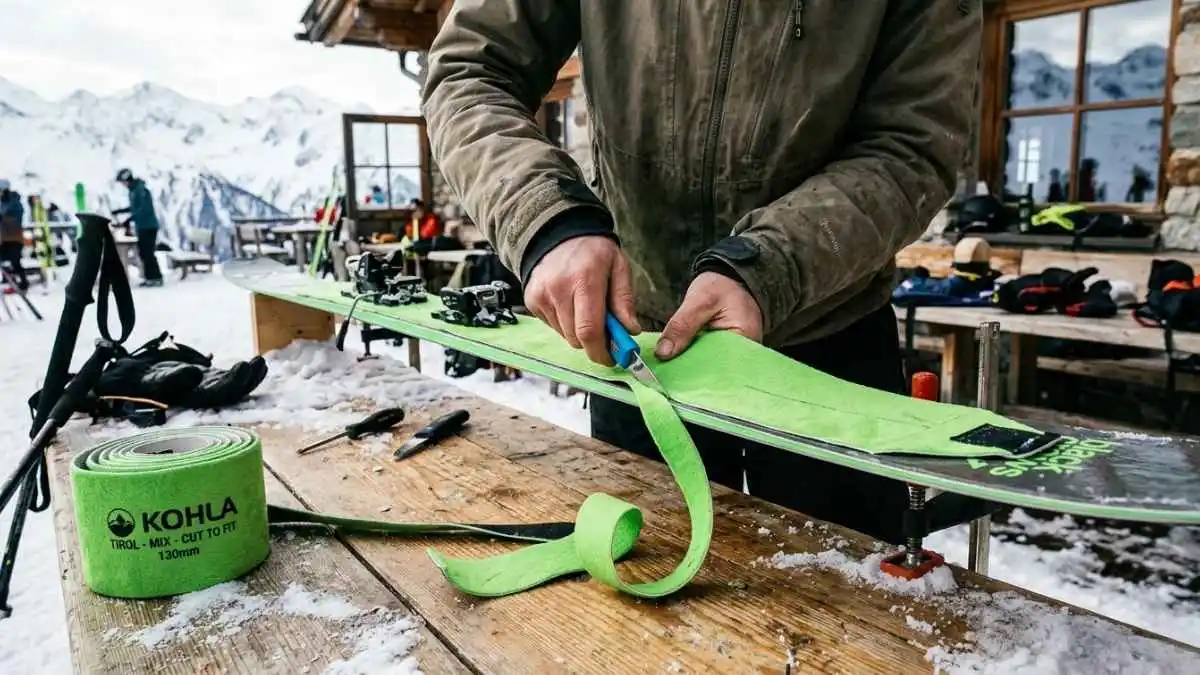
Use the included skin cutter to remove excess material while leaving approximately 2 mm of metal edge exposed.
Step 4: Recenter and Trim the Opposite Side
Shift the skin laterally so the previously trimmed side exposes the same edge width, then repeat.
Step 5: Adjust Tail Length
Trim the tail to match your ski’s effective length and install the tail clip.
A common mistake is overtrimming. You cannot put plush back once it is gone. Measure twice, cut once, the oldest workshop rule still applies.
What Width Should Zuschneidfelle Be?
Choose a skin width equal to or slightly greater than your ski’s widest point, usually the tip.
For example:
- Ski dimensions: 135-100-120 mm
- Recommended skin width: 140 mm
This provides enough material for accurate trimming without wasting plush.
Too narrow, and you lose edge-to-edge coverage at the shovel. Too wide, and you add unnecessary weight and trimming waste.
Are Zuschneidfelle Better for Splitboards?
Absolutely.
Splitboards often have unique outlines, asymmetric sidecuts, and non-standard tail shapes. Pre-cut options are limited, while custom-cut skins allow a precise match for each board half.
This precision improves:
- Skin track grip
- Glide symmetry between halves
- Tail clip retention
- Transition efficiency in cold weather
For splitboard riders, custom-cut skins are less of an upgrade and more of a necessity.
How Long Do Custom-Cut Ski Skins Last?
Lifespan depends on material, usage, terrain, and maintenance.
- Typical durability ranges:
- Mohair: 80–120 touring days
- Hybrid blend: 120–180 touring days
- Nylon: 150–250 touring days
Adhesive performance often declines before plush wear becomes critical.
Signs it is time for replacement include:
- Persistent edge peeling
- Reduced climbing grip
- Bald plush zones underfoot
- Glue contamination or transfer to ski bases
Proper storage, cool, dry, and away from direct heat, can significantly extend lifespan.
Common Mistakes When Buying Zuschneidfelle
Buying Based Only on Ski Waist
Skin width should match the ski tip, not the waist.
Ignoring Tail Attachment Compatibility
Not all tail clips fit all ski tail shapes.
Choosing Race-Focused Mohair for Everyday Touring
Ultra-light skins can wear out quickly under regular use.
Overlooking Glue Type
Modern hybrid adhesives are easier to handle, but traditional hot-melt glue often performs better in extreme cold.
Are Zuschneidfelle Worth It?
For anyone serious about ski touring, the answer is an unequivocal yes.
A well-cut skin improves uphill security, reduces wasted energy, and enhances overall touring efficiency. It also extends the versatility of your setup by adapting perfectly to your skis rather than forcing your skis to adapt to a generic skin.
That precision becomes especially valuable on long traverses, technical ascents, and variable snow conditions, exactly where equipment reliability matters most.
FAQs
1. Can I cut ski skins myself?
Yes. Most Zuschneidfelle kits include a trimming tool and detailed instructions. With patience and careful alignment, home trimming is straightforward.
2. How much edge should remain exposed?
Typically 1.5–2 mm per side. This balances grip with reliable edge hold.
3. Can Zuschneidfelle be re-glued?
Yes. Traditional glue skins can be re-glued multiple times. Hybrid adhesive systems may require replacement adhesive sheets or specialized treatment.
4. Are custom-cut skins universal?
They are highly adaptable, but tip loops and tail clips must match your ski or splitboard geometry.
The Real Value of a Perfect Fit
Backcountry efficiency is built on countless small optimizations. Zuschneidfelle are one of the most impactful.
They transform a generic climbing skin into a precision interface between skier and mountain. Better grip on steep switchbacks. Smoother glide on rolling terrain. More reliable adhesion in harsh conditions.
When every gram, every stride, and every transition matters, custom-cut skins are not just an accessory; they are part of a high-performance touring system.
And unlike many ski-touring upgrades, this one pays dividends on every single climb.


Quad Equalizer: How 4-Band EQ Actually Works

Artificial Zoo: How Technology Creates Digital Wildlife

Hajoca Hub: Streamlining Operations for the Nation’s Top Distributor

Saturn in Aries: Discipline Meets Fiery Ambition

Movierulz: Risks, Legal Consequences, and Industry Impact

The Evolution of AI Image Generation: From Simple Prompts to Photorealistic Art

How to Keep Up Your Yoga Practice While Camping

Mylt34: Streamlining Tasks and Enhancing Productivity

Prizmatem – Next-Gen Digital Prism Technology

Delta Fitness Authority: Gym & Wellness Solutions in KSA

Crocolini: Health Benefits and How to Cook It

5StarsStocks.com: Top Stock Market Platform for Smarter Investing

Kidney Stones and Urinary Problems: Understanding CT Urinary Tract Imaging

NFTRandomize for Cinema4D: Create Unique NFTs with Ease

RemixPapa Study: Revolutionizing Online Learning with Multimedia and AI Tools
-
 GENERAL1 year ago
Christofle – For Those Who Dream of Family Heirloom Silver
-
SPORTS1 month ago
Discover the World of Football with Streameast: Watch Your Favorite Leagues and Tournaments
-
HOME IMPROVEMENT1 year ago
Spacious and Stylish 300cm Round Rugs: Elegant and Modern Designs for a Chic Home Decor
-
GENERAL9 months ago
Uncovering the World of кинокрадко: The Dark Side of Film Piracy