GENERAL
Kouskousi: How Traditional Couscous Is Made and Served

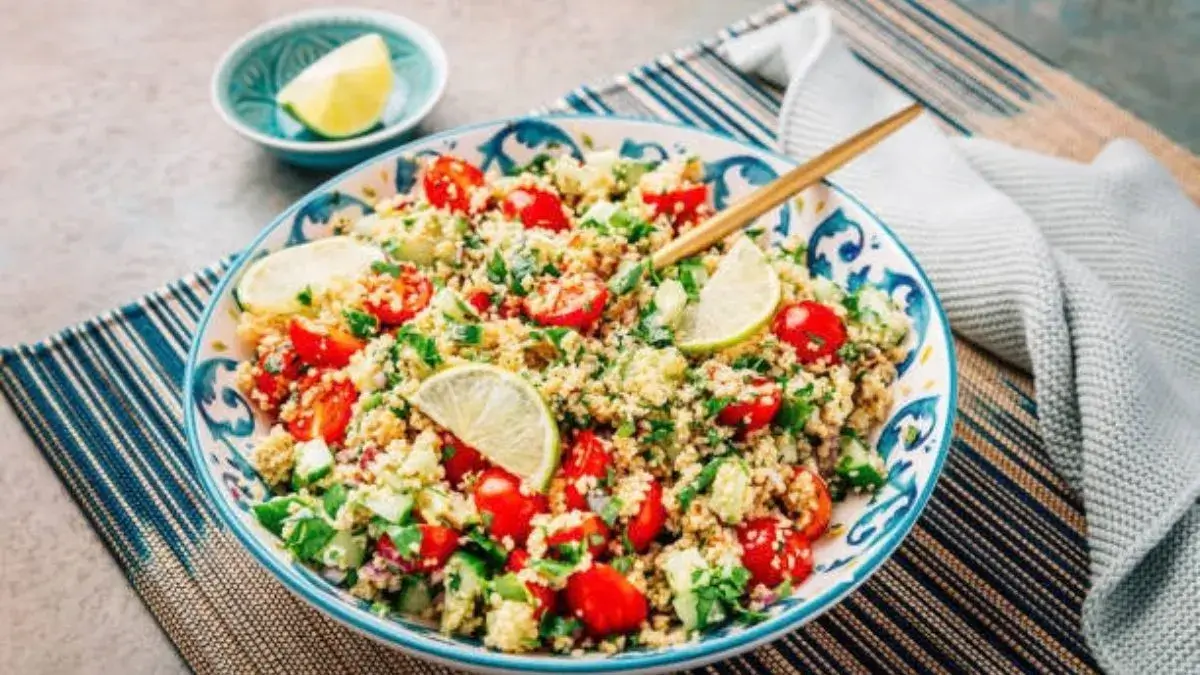
Kouskousi, also spelled couscous or kuskus, is more than a bowl of tiny wheat granules. It is a traditional North African food built around a specific production technique: durum wheat semolina is moistened, rolled into small particles, sieved, dried, and traditionally cooked by steam. The result is a grain-like food that can absorb the flavor of a stew while retaining individual granules.
Table of Contents
What Exactly Is Kouskousi?
Kouskousi is made primarily from durum wheat semolina, a coarse granular product made by milling durum wheat. Water is gradually added to the semolina, so the particles begin to adhere to one another. They are then rolled and rubbed until they form small, relatively uniform granules.
The granules are sieved during preparation because particle size directly affects cooking. Large pieces require more moisture and heat, while very fine particles can become overhydrated quickly. Traditional preparation therefore uses sieving not simply to make the couscous look uniform, but to create grains that behave similarly during steaming.
The word couscous can describe the granules themselves as well as the finished dish. In North African cuisine, however, the meal is rarely just the starch: the couscous is commonly combined with a broth, vegetables, meat, fish, or legumes. This distinction matters when comparing recipes because two dishes can use essentially the same granules but taste completely different because their broths and accompaniments differ.
Why Traditional Couscous Is Steamed Instead of Boiled
The defining feature of traditional kouskousi preparation is steam cooking.
A traditional kouskousi has two sections. The lower vessel contains simmering broth or stew, while the perforated upper section holds the couscous. Steam rises through the holes and passes through the grains.
This arrangement solves a texture problem. If you submerge dry couscous directly in a large quantity of liquid, the particles can absorb water too quickly and become heavy or sticky. Steam provides heat while allowing controlled hydration, rather than forcing every grain to sit in liquid.
Traditional preparation can involve multiple steaming stages. The grains are steamed, removed, loosened, and sometimes rehydrated before being steamed again. The repeated separation is not ceremonial; it helps prevent compacted clumps from remaining undercooked in the center while the exterior becomes excessively soft.
The principle experienced cooks understand
The objective is not to add as much water as possible.
The objective is to distribute enough moisture for the semolina particles to cook and expand while preserving their individual structure. That is why simply increasing the water ratio does not necessarily produce better couscous.
Hand-Rolled Kouskousi vs. Instant Couscous
The couscous sold in supermarkets often differs significantly from traditionally prepared hand-rolled couscous.
| Characteristic | Traditional kouskousi | Instant couscous |
| Main ingredient | Durum semolina | Usually, durum semolina |
| Formation | Often rolled and sieved by hand | Mechanically produced |
| Cooking | Traditionally steamed | Usually rehydrated |
| Processing | May involve repeated steaming | Precooked and dried |
| Texture | More resilient and individually defined | Generally it is softer and faster to prepare |
| Best approach | Steam and loosen | Follow package hydration instructions |
Commercial couscous is generally formed and precooked before packaging. Consumers therefore need to rehydrate it rather than reproduce the full traditional steaming process.
How Traditional Kouskousi Is Actually Produced
Traditional production is a sequence of controlled physical changes, not a single cooking step.
- Semolina is prepared. Durum wheat semolina provides the particles that will become the couscous.
- Water is added gradually. The goal is to dampen it, not make a conventional dough.
- The semolina is rolled. Rubbing encourages small particles to stick together and form granules.
- The grains are sieved. Oversized or irregular particles are separated.
- The couscous is dried or prepared for cooking.
- Steam passes through the grains. Traditional methods may repeat steaming and loosening.
- The finished couscous is served with its accompaniment.
Why Particle Size Changes the Result
Not all couscous grains behave identically. Fine couscous hydrates faster, while larger grains take longer to soften.
This creates a practical rule: don’t assume a cooking time from one package applies to another. Grain size, processing method, and degree of precooking can all alter the amount of water and time required.
This also explains why couscous that looks identical in the package can produce different textures. Two products may both be labeled “couscous,” yet one may be finely milled and precooked while another contains larger, slower-hydrating grains.
Kouskousi Is Not One Regional Recipe
The phrase “authentic couscous” becomes misleading when it implies that North Africa has one fixed recipe.
Couscous traditions developed across the Maghreb, including Algeria, Morocco, Tunisia, and Mauritania. UNESCO’s recognition of the knowledge and practices associated with couscous production and consumption reflects this broader cultural landscape rather than assigning the food to one modern national recipe.
Regional versions can differ substantially in their accompaniments and seasoning.
- Moroccan preparations commonly combine couscous with vegetables, chickpeas, meat, and a fragrant broth.
- Tunisian preparations can feature stronger chile-based seasoning and tomato-rich flavors, producing a markedly different character from milder preparations.
- Algerian couscous encompasses numerous regional styles, with combinations of vegetables, meat, legumes, and sauces changing across the country.
- Mauritanian traditions show how couscous extends beyond the stereotypical vegetable-and-meat platter found in many international restaurant versions.
The useful lesson is that couscous should be understood as a culinary family, not a single standardized recipe.
What Should You Serve with Kouskousi?
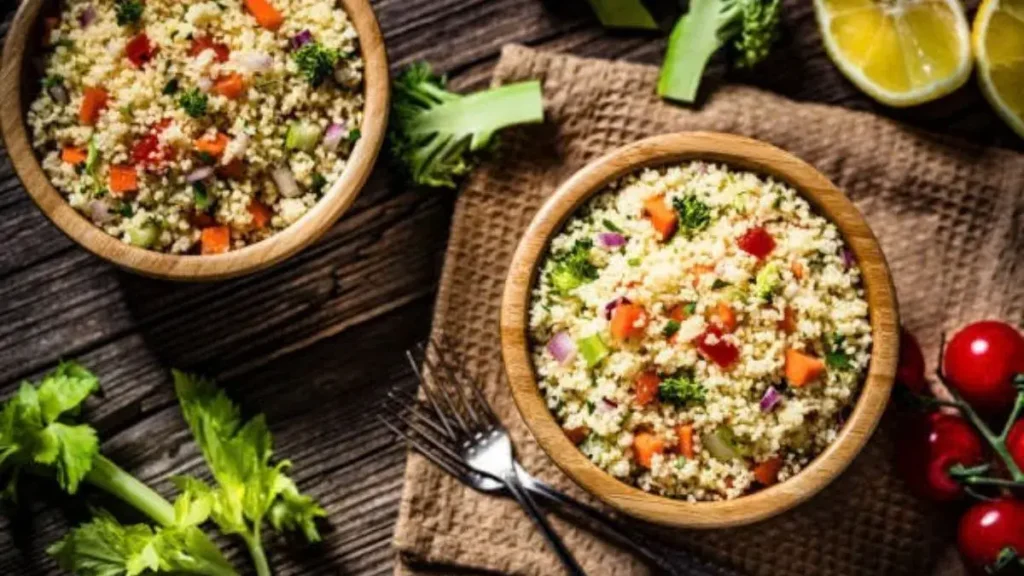
The couscous grains themselves have a relatively mild flavor, which makes them effective at carrying the flavors of their accompanying broth.
Traditional combinations may include:
- Lamb, beef, or chicken
- Fish and seafood
- Chickpeas and other legumes
- Carrots, turnips, zucchini, pumpkin, and onions
- Tomato-based or spiced sauces
- Dried fruits and nuts in sweet preparations
The cooking liquid is particularly important. A well-seasoned broth does more than moisten the couscous; it becomes the primary flavor delivery system.
For that reason, pouring too much broth over the grains is usually counterproductive. Couscous should absorb flavor without losing its granular structure.
The Mistakes That Ruin Couscous
- Using too much liquid: Excess moisture encourages clumping.
- Ignoring grain size: Fine and large couscous do not hydrate at the same rate.
- Cooking instant couscous like traditional couscous: Precooked grains need much less cooking.
- Skipping loosening: Compact clusters can cook unevenly.
- Serving weak broth: Because the grains are mild, the accompanying sauce contributes much of the dish’s character.
- Assuming one recipe is universally authentic: Regional and family traditions vary considerably.
Is Kouskousi Healthy?
Plain cooked couscous is primarily a carbohydrate food, with modest protein and little fat. Its nutritional profile matters more when considered as part of a complete meal than as an isolated ingredient.
Adding chickpeas, vegetables, fish, or lean meat can provide protein, fiber, vitamins, minerals, and greater satiety. Conversely, a preparation made mostly of refined couscous with a small accompaniment will have a different nutritional profile.
Whole-wheat couscous can provide more dietary fiber than conventional refined couscous. Neither traditional wheat couscous nor ordinary semolina couscous should be considered gluten-free, however, because durum wheat contains gluten.
Is Couscous Actually Pasta?
This question has a surprisingly useful answer: it depends on the classification being used.
Couscous is made from wheat semolina and water, like many pasta products, and is sometimes categorized as a type of pasta. Yet its production and culinary use distinguish it from familiar extruded pasta shapes.
Instead of forming a dough into tubes, ribbons, or sheets and cooking the pieces in boiling water, traditional couscous involves forming small semolina granules and steaming them.
So, calling couscous “tiny pasta” communicates its wheat-based nature but misses the production technique that makes traditional kouskousi distinctive.
Is Kouskousi Gluten-Free?
No, when it is made traditionally from durum wheat semolina.
Anyone with celiac disease, wheat allergy, or a medically required gluten-free diet should check the ingredient list and labeling carefully. Products made from corn, rice, millet, or other gluten-free grains may resemble couscous but should not be confused with traditional durum-wheat kouskousi.
Why Kouskousi Is Cultural Practice, Not Just a Recipe
In 2020, UNESCO inscribed the knowledge, know-how, and practices connected with producing and consuming couscous on its Representative List of the Intangible Cultural Heritage of Humanity. Algeria, Mauritania, Morocco, and Tunisia jointly submitted the inscription.
That recognition matters because the heritage includes more than the finished dish. It encompasses knowledge of cereal cultivation, semolina preparation, rolling, steaming, utensils, serving, and the social practices surrounding shared meals.
Kouskousi therefore survives through skills as much as ingredients. The difference between a plate of couscous and the broader tradition lies partly in knowing how the grains are produced, how they are steamed, how they are paired with seasonal foods, and how the meal is shared.


Kouskousi: How Traditional Couscous Is Made and Served

Ashtanga Vs Vinyasa Yoga? Which One Should You Choose?

What Is Enhydro? Exploring Water-Filled Fossilized Amber

Unlocking Mamgatoto: The Cultural Phenomenon Shaping Communities Worldwide

DeviceURL in VEX Robotics: Node.js Communication Explained

Navigator Pear: Ornamental Tree Size, Fruit & Care

PeopleTools ATT: The Complete Guide to Oracle’s Application Technology Tools

Understanding Somatic Yoga: How Movement and Breath Can Heal

Discover Puppygirlxd: The Viral Sensation Embracing Pet Play Culture

Quad Equalizer: How 4-Band EQ Actually Works

The Gdp – Deleted Scene – E355: Fan Theories & Insights

TouchCric: The Go-To Platform for Live Cricket Streaming and Updates

OsteoPur – Natural Support for Bones

Artificial Zoo: How Technology Creates Digital Wildlife

Hajoca Hub: Streamlining Operations for the Nation’s Top Distributor
-
 GENERAL1 year ago
Christofle – For Those Who Dream of Family Heirloom Silver
-
SPORTS2 months ago
Discover the World of Football with Streameast: Watch Your Favorite Leagues and Tournaments
-
HOME IMPROVEMENT1 year ago
Spacious and Stylish 300cm Round Rugs: Elegant and Modern Designs for a Chic Home Decor
-
GENERAL9 months ago
Uncovering the World of кинокрадко: The Dark Side of Film Piracy