
Tech
Digital Quality Is Moving Faster Than Most Analytics Stacks Are Ready For

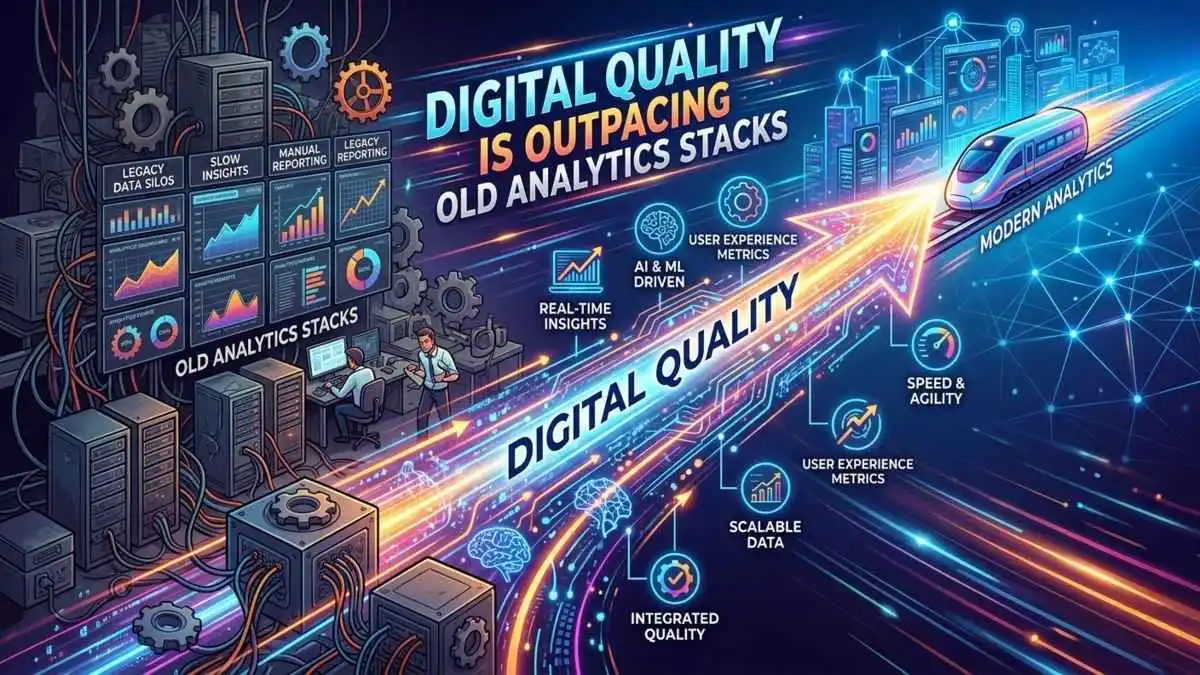
Digital quality measurement is no longer a future state discussion. CMS says it aims to transition all quality measures used in its reporting programs to digital quality measures, and the agency’s Universal Foundation measures are being prioritized for digitization across CMS quality programs.
At the same time, NCQA says HEDIS’ digital future has begun, and more than 235 million people are enrolled in plans that report HEDIS results. That changes the standard for what healthcare data analytics services need to support. Many organizations still have analytics environments built for retrospective reporting, not for computable, cross-system, workflow-connected measurement.
Table of Contents
Why digital quality is changing faster than many teams expect
Digital quality now means more than turning a manual measure into a cleaner dashboard. CMS and NCQA describe it as quality measurement based on standardized digital data from one or more sources, exchanged through interoperable systems, computed in an integrated environment, and able to generate outputs required for quality reporting. In other words, the expectation is shifting from reporting after the fact to measurement that is computable, reusable, and operationally connected.
The policy and standards of direction are also getting clearer. CMS says its Universal Foundation measures are prioritized for digitization, while recent CMS quality modernization materials describe FHIR-based quality measurement as more interoperable, less burdensome, and reusable across programs such as MIPS, IQR, and Promoting Interoperability. CMS’s 2025 to 2028 CCSQ roadmap adds that the agency is expanding digital quality measures across reporting and value-based purchasing programs and using FHIR standards to enable more real-time information exchange.
NCQA is moving in the same direction. Its ECDS transition work is explicitly aimed at fully automated, interoperable measurement systems that reduce manual processes and align data collection with clinical workflows. In April 2026, NCQA also announced a new data quality solution for Digital HEDIS, focused on scalable validation of whether clinical data is fit for use. That is a strong signal that the next challenge is not just getting more data. It proves that the data can be trusted for measurement.
Where healthcare analytics environments start to struggle
Older analytics usually break in predictable places.
First, many were built for retrospective business intelligence, not computable measurement. They depend on extracts, late-arriving feeds, custom mapping logic, and separate reporting workstreams. Meanwhile, CMS is pushing a FHIR based dQM approach even as organizations still maintain older QRDA-based reporting processes. That leaves many player and provider teams straddling two operating models at once.
Second, multi-source data does not become measure-ready just because it lands in a warehouse. NCQA’s current data quality work highlights four practical concerns that many older environments handle poorly: completeness and structure, reasonableness, consistency over time, and understanding where data originated and how it was exchanged and transformed. If a team cannot answer those questions, measurement credibility starts to wobble.
Third, reporting readiness is not a visualization problem. Digital quality depends on data that emerges cleanly from routine workflows and can move across systems with enough structure for reliable calculation. That is very different from assembling performance views after the fact. When the stack is not connected to operational workflows, the dashboard may look polished while the measure logic underneath remains fragile.
Why reporting readiness is not just a dashboard problem
A useful way to see this is through reporting pressure that already exists today. Under CMS 0057 F, impacted payers must publicly report certain prior authorization metrics annually, with operational requirements starting January 1, 2026 and the initial metrics due by March 31, 2026. CMS also requires specific denial reasons regardless of whether the request came through a portal, fax, email, mail, or phone. That means organizations need authoritative event capture, clean denominator logic, consistent timestamps, and traceable workflow states across channels. A dashboard can display the final numbers, but it cannot repair missing operational history.
The same logic applies to quality measurement more broadly. If encounter data, claims, lab results, medication history, or supplemental data arrive with inconsistent formats or unclear provenance, the reporting layer becomes the place where teams discover the problem, not the place where they solve it.
Real-world scenarios leaders will recognize
Consider a health plan that improves data ingestion from provider partners and health information exchanges but still cannot stabilize a preventive care measure month to month. The issue may not be the measure itself. It may be that supplemental clinical data arrive with uneven coding, shifting file structures, or inconsistent patient linkage.
Or consider a multi-site provider organization that can show strong quality dashboards to leadership, yet frontline teams do not trust the numbers. One site documents screening in structured fields, another uses free text, and a third captures them in a workflow outside the main EHR pattern. The dashboard still renders at a rate. The measure still looks complete. But the underlying operational variation keeps quality improvement teams from acting with confidence.
These are not edge cases. They are exactly the kinds of conditions digital quality makes it harder to ignore.
What organizations need to fix or modernize
The priority is cleaner data capture. Digital measures work best when the data they depend on are structured early, not rehabilitated late. That means documenting where required elements enter the workflow, where they change, and where they are likely to drift.
The second is governance with provenance. Teams need to know not just what the value is, but where it came from, how it moved, and what transformations touched it along the way. NCQA’s current Digital HEDIS work makes that point directly, and CMS is pushing toward quality architectures that depend on interoperable exchange and automated reporting.
The third is integration that supports measurement, not just analytics. Pulling EHR, claims, lab, pharmacy, and partner data into one place still matters, but the more important question is whether the integrated environment can support repeatable measure logic and reporting outputs without constant manual intervention.
What healthcare data analytics services should support now?
A useful benchmark for analytics services is whether they help quality teams do five things well: create governed multi-source data foundations, automate reporting logic, validate data fitness for use, expose provenance, and push insight back into operational workflows. If the stack stops at visualization, it is already behind where digital quality is headed.
Teams dealing with unstable inputs may also want to revisit the basics in this guide to healthcare data quality management, especially around completeness, consistency, timeliness, and trust.
What healthcare leaders should evaluate now?
Before reporting pressure rises further, leaders should ask a few uncomfortable questions.
Can we explain where each quality critical data element originated? If the answer depends on tribal knowledge, the stack is not ready.
Can we rerun the same measure and get the same answer across periods and systems? If not, the organization has a repeatability problem, not a reporting problem.
Do we detect changes in source content or file structure before measures move? Drift monitoring is becoming essential, especially as more data arrive from outside partners.
Can our teams move from measure result to workflow action without manual swivel work? Reporting that never reaches operations creates delay, not improvement.
Are quality, compliance, and IT working from the same definitions? Digital quality falls apart when each team maintains its own version of measure logic, data lineage, or exceptions.
Conclusion
Digital quality is moving faster because the industry is moving measurement closer to interoperable data, automated calculation, and real operational use. CMS and NCQA are both signaling that direction clearly. The organizations that adapt will not be the ones with the prettiest dashboards. They will be the ones with cleaner capture, stronger governance, better integration discipline, and workflows that can support trusted measurement at scale.
As leaders evaluate the next phase of healthcare data analytics services, the real question is simple: can the stack produce trusted numbers from real workflows, across real systems, under growing reporting pressure?


Holistic Chiropractic Care: A Comprehensive Approach to Health and Wellness

How to Stay Anonymous on the Internet

How Medical Treatment Timing Affects Your Car Accident Claim

OTI IAS: Modern UPSC Preparation Competency Model

Why Local Connection Still Matters When Choosing NDIS Providers in Preston

Privacy Curtain Design Considerations for Hospitals, Clinics, and Medical Centers

Medical Software Solutions: Comprehensive Guide for Choosing a Robust DAX Copilot Alternative

How DAX AI Scribe Transforms Patient Documentation Efficiency

Artificial Fall Wreath vs Natural Fall Wreath: Which Looks More Authentic?

Faux Plants vs Real Plants: Which Is More Cost-Effective for Home Decor?

Pravi Celer: Stalk Celery Uses, Benefits, and Identity

What Is Stormuring? A New Era of Strategic Agility

Foenegriek (Fenugreek): Health Benefits, Uses & Substitutes

Uncuymaza: Leading Higher Education in Mendoza, Argentina

BCN Play OTT: Basic & Platinum Streaming Bundles
-
 GENERAL12 months ago
Christofle – For Those Who Dream of Family Heirloom Silver
-
SPORTS1 year ago
Discover the World of Football with Streameast: Watch Your Favorite Leagues and Tournaments
-
GENERAL5 months ago
Uncovering the World of кинокрадко: The Dark Side of Film Piracy
-
GENERAL2 months ago
Unveiling the Art of преводсч: How Translators Bridge Language Barriers