
HEALTH AND FITNESS
Managing Knee Pain Holistically: When Yoga Helps and When Medical Care Is Needed

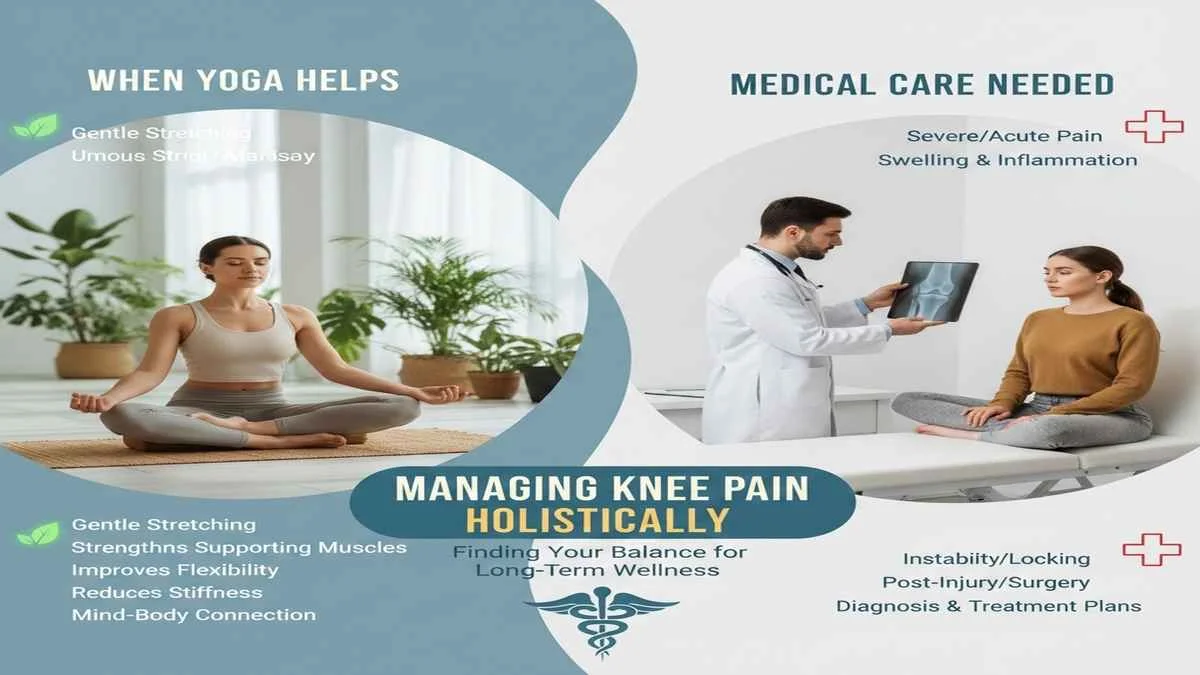
Knee pain is a top physical complaint among people of every age, whether they are active yogis or seniors who want to spend their golden years practicing gentle movement. As a practitioner of whole body wellness, I’ve known how quickly knee pain can derail our lives, our confidence in moving and even disrupt emotional equilibrium. Yoga frequently is the primary line of treatment, providing gentle strength, mobility and mindfulness first. But knee pain is not always a matter of something that can be stretched or breathed away. Knowing when to turn to yoga versus medical care is essential for taking care of knee pain in a manner that genuinely supports the body.
Holism does not dismiss medical care. Instead, it seeks equilibrium by catching the body’s signals early and responding with the right combination of movement, awareness and professional intervention. Knee pain is a good example of where this balance becomes very important.
Table of Contents
Anatomy and Mechanisms of the Knee: The Knee as a Complex Articulation
The knee joint is one of the most complex and weight-bearing parts in the human body, providing a perfect interplay between flexibility (movement) and stability. There’s actually a lot of intricacy that involves bones, cartilage, ligaments, tendons, muscles and blood flow. Pain can arise whenever one of these factors goes wrong or is threatened.
In general, knee pain is the least likely of issues to be isolated. This might be affected by hip movement, ankle strength, posture, walking style or even psychological stress that influences muscle tension. Yoga can be great about exposing these connections how if one part is out of whack, the rest follow along. But some knee pain inside the joint comes from deeper and needs a doctor to figure out.
How Yoga Supports Knee Health
“Yoga is great to protect the knees since it helps bring them back into alignment, strengthens tissues that may be tight or weak (so anything that’s not working properly gets a little help), and practicing yoga also increases body awareness.” Slow movements with this piece of apparatus help strengthen the quads, hams and glutes, which all support the knee joint, meaning there is less pressure/stress on it. Light, gentle stretching to promote blood circulation and reduce stiffness for those who sit or stand all day.
Equally important is the role of mindfulness. Yoga encourages people to move mindfully instead of through sheer force. This change alone can minimize overuse and avoid ongoing injury. Yoga, for mild to moderate aches and pains due to tight muscles, overuse or an imbalance, can be a powerful tool for pain relief as well as prevention.
When Yoga Is Not Enough
Yoga has limitations, though. Purpose: Constant pain, swelling, feeling of locking up, or a consistent progression of discomfort can lead to knee structural concerns. If there is wear and tear, inflammation or blood supply weakness in the cartilage,e it may not get better with stretching and exercises.
The new everyday wearables. One of the problems with holistic spaces is that they can encourage powering through pain for the sake of consistency or discipline. Pain never has to be feared, but rather awareness. Where knee pain is disturbing even your day-to-day life, sleep and walking normal distances, it may be time to seek medical advice.
The Body’s Warning Signals postexercise Listening to the Body’s Warning Signs
When something needs further attention, the body is really clear. Pain that’s sticking around, discomfort inhibiting weight bearing, or recurrent inflammation post motion > These can all indicate that there may be more than just tight muscles at play here.
Holistic health believes in listening to, not superseding, those signals. Getting medical help is not a fumble but an extrapolation of taking care of yourself. A balanced approach values the intelligence of the body and uses modern diagnostics to see what is not felt with movement alone.
Place of Medical Evaluation for Knee Pain
Medicine gives an answer where feeling is not enough. Imaging and clinical analysis may provide professionals the opportunity to recognize an underlying mechanism leading to pain, such as joint degeneration, inflammation or vascular pain. This knowledge is essential for establishing the best plan of action.
To people interested in holistic living, medicine can seem daunting and intrusive. In the early days, treatments for knee pain were characterized by invasive surgeries and extended rehabilitation. But these days are no more as we have a range of treatment options like accuracy, balance and comfort so that patients can return to a regular lifestyle as quickly as possible.
Linking the Natural with the Scientific
The best knee pain relief regimens would combine both natural and medical treatments. First, yoga conditions the body through increased mobility and strength; then care interacts with structural or physiological issues that movement alone is not going to address.
For certain people, focused treatments like the GAE Procedure for Knee Pain can bring relief by targeting root contributors to long-term pain. Paired with conscious movement and rehabilitation-based yoga, these interventions can assist in both healing and lifelong joint health.
Movement After Medical Treatment
Medicine is not the antithesis of holistic. Indeed, yoga can be more valuable after pain is dealt with. Post-treatment movement promotes circulation, restores trust and teaches your muscles how to rebuild stably.
Gentle yoga is about inviting people to reconnect with their bodies without fear. It promotes biomechanically sound movement patterns and reduces over-guarding behaviour that can occur with prolonged pain due to the fear of hurting yourself.
Emotional Aspects of Knee Pain
And knee pain is about a lot more than physical movement. It can subtly impact mental wellness by preventing engagement in activities that make one happy, connected, or peaceful. Chronic pain is accompanied by frustration, anxiety, and self-doubt.
With holistic practices, this emotional level is treated by instilling patience and self-compassion. Healing comes emotionally when pain is taken care of medically, getting the necessity and cause for the stage of grief. Being mobile again feels liberating; it builds trust in your body’s capacity to recuperate.
The Use of Education as an Empowerment Tool
By knowing what’s causing knee pain, it helps people make educated decisions instead of guessing. Intuition and medical science are connected by knowledge. When patients can grasp why pain happens and what their options are, they’re more empowered to select care that’s congruent with their values.
Educational tools, wellness platforms and boutique clinics all feed into this sense of empowerment. We don’t want to pick one over the other, but thoughtfully integrate them.
What You Can Do to Avoid Knee Pain in the Future
Prevention provides one of the best advantages of holistic medicine. Yoga, with its focus on alignment, balance and mindful, controlled movement, reduces extraneous pressure in the knees. Cultivation of posture, type of footwear, and daily habitsbecomese a way to support the health of our joints.
This preemptive method, when combined with regular medical consultation, enables issues to be dealt with as soon as they come to the surface. Prevention isn’t avoiding care, but reducing the need for more intensive intervention down the road.
Balanced Approach to Long-Term Joint Health
Genuine wellness means respecting the past along with new ideas. The combination of traditional movement practice and modern medical knowledge is an area in which the management of knee pain excels. This equilibrium reflects the complexity of the body, and honours that every one of us is unique.
Understanding when yoga is good for one’s knees and when medical attention is appropriate helps people to confidently navigate their knee pain rather than becoming overwhelmed by it. By clearing this, we have less anxiety and can heal our relationship with movement.
Conclusion: Choosing Balance Over Extremes
Integrating treatment for knee pain should not mean comparing yoga to medication or downplaying one in favour of the other. That means listening fiercely, responding judiciously and pulling out all available stops to help the body heal. Yoga offers awareness, strength and emotional grounding, while medical care provides clarity and targeted relief if pain is deeper. These tactics combined help me to reduce the knee pain, which is less reliable and intimidating that way. Through balance, education and self-esteem, people can walk forward with confidence, ability and renewed quality of care for their body.


What a Transparent Chiropractic Fee Structure Covers

What Is a Medical Pedicure? Why Podiatrist Foot Care Matters Most

Bebasinindo: Championing Freedom in Indonesia

Ankwave: Future of Connectivity with Energy-Efficient Solutions

Afruimwagens: Efficient Mobile Carts for Workspaces

Understanding Formula 1 Standings and Championship Rankings

Do Cats Fart? A Scientific and Behavioral Look at Feline Gas

Hatha Yoga: Balancing Body, Mind, and Energy

Wave_of_Happy_: Cultivating a Positive Mindset for Lasting Joy

Gamer Challenger: Definition, Role, and Competitive Focus

Slope Unblocked: Free Online 3D Ball Running Game

Brand Name Normalization Rules: A Complete Practical Guide

Veneajelu: The Finnish Art of Peaceful Summer Boating

The Journey of iamnobody89757: From Anonymous User to Internet Sensation

Adsy.pw/hb3: The Future of High-Impact Digital Advertising
-
 GENERAL1 year ago
Christofle – For Those Who Dream of Family Heirloom Silver
-
GENERAL9 months ago
Uncovering the World of кинокрадко: The Dark Side of Film Piracy
-
SPORTS2 months ago
Discover the World of Football with Streameast: Watch Your Favorite Leagues and Tournaments
-
HOME IMPROVEMENT2 years ago
Spacious and Stylish 300cm Round Rugs: Elegant and Modern Designs for a Chic Home Decor