
YOGA
How to Meditate Effectively: Science-Based Guide

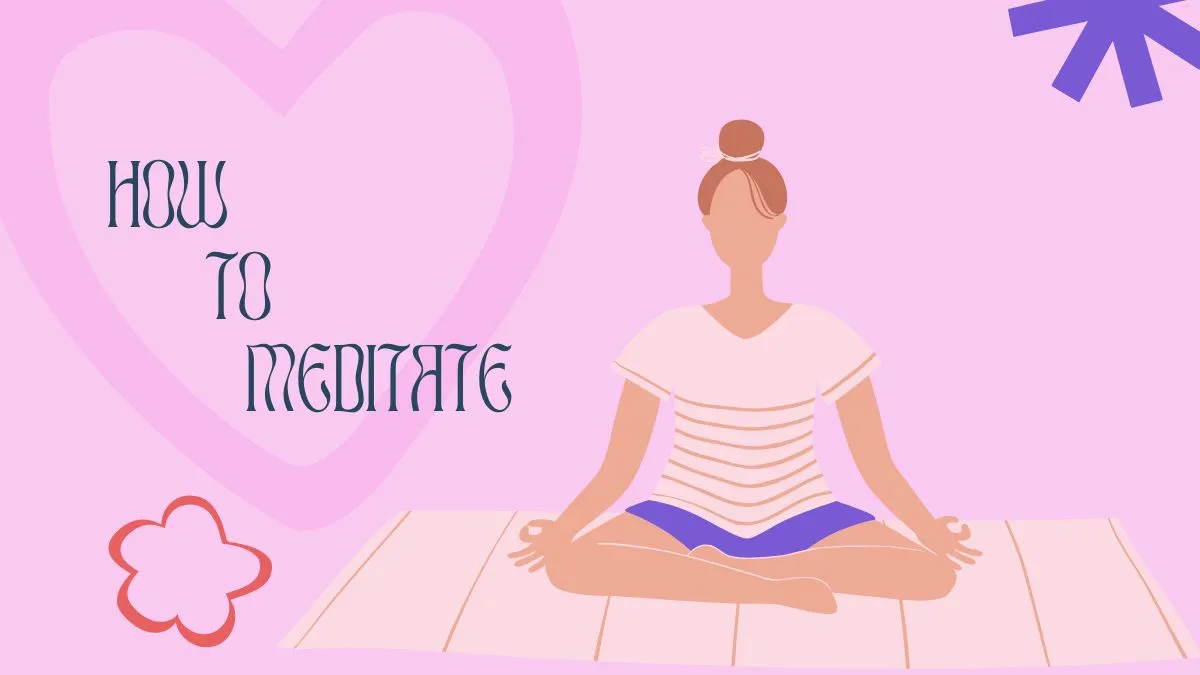
Most beginners misunderstand meditation in a critical way: they treat it as a relaxation technique. That misconception is the reason many people quit within a week.
Meditation is not about “feeling calm.” It is about training attention control and meta-awareness, the ability to notice where your mind is, and intentionally redirect it without frustration.
Neuroscience shows that even 8 weeks of structured mindfulness training (like MBSR programs) can measurably reduce activity in the brain’s default mode network (DMN), which is responsible for mind-wandering, self-referential thinking, and rumination. This is not subjective; it is observable in fMRI scans.
So if you are searching for how to meditate, you are really asking:
How do I train my brain to stop being hijacked by thoughts?
Table of Contents
How to Meditate (The Real Mechanism Behind It)
At its core, meditation works through a loop:
- Attention is placed on an object (breath, sound, body sensation)
- Mind inevitably wanders
- You notice the distraction
- You return attention without judgment
This loop is not failure; it is the entire training process.
Each repetition strengthens:
- The dorsolateral prefrontal cortex (focus control)
- The anterior cingulate cortex (error detection)
- Connectivity between attention and emotional regulation systems
Think of it like reps in a gym, except the muscle is attention itself.
Why Most People Fail at Meditation
Before learning how to meditate, you must understand why most attempts fail:
1. They expect “blank mind”
The brain produces ~6,000–70,000 thoughts per day. Suppressing thought is neurologically unrealistic.
2. They confuse distraction with failure
Every distraction is the moment of training. Without distraction, there is no repetition.
3. They use unstable attention anchors
“I’ll just focus on my breath” is too vague. The brain needs structured anchoring.
4. They meditate too long and too early
Sustained attention is a limited cognitive resource. Beginners often exceed capacity and associate meditation with frustration.
The Correct Way to Start (Step-by-Step Protocol)
This is a clinically aligned beginner protocol used in mindfulness-based cognitive training systems.
Step 1: Choose a stable attention anchor
Pick ONE:
- Breath at nostrils (best for precision)
- Abdomen rising/falling (best for grounding)
- Sound (best for anxiety-heavy minds)
Avoid switching anchors mid-session.
Step 2: Set a micro-duration (5–10 minutes)
Research shows adherence drops significantly when beginners exceed 10–12 minutes initially.
Start with:
- Day 1–7: 5 minutes
- Day 8–14: 8 minutes
- Day 15+: 10–15 minutes
Consistency matters more than duration.
Step 3: Apply “soft attention”
Do not force focus. Instead:
- Hold attention gently on the anchor
- Expect drift within 5–15 seconds initially
This is normal attentional decay, not failure.
Step 4: Label distraction (critical technique)
When thoughts arise, silently label:
- “thinking”
- “planning”
- “remembering”
- “judging”
Labeling activates meta-awareness circuits and reduces emotional fusion with thoughts.
Step 5: Return without negotiation
Do not analyze the thought. Do not complete it.
Simply return to anchor.
This “return phase” is where neuroplasticity is built.
The Neuroscience of Meditation (What Changes in Your Brain)
Meditation is not abstract mental hygiene; it produces measurable changes.
1. Default Mode Network (DMN) suppression
The DMN is active during:
- Overthinking
- Self-criticism
- Mental time travel (past/future rumination)
Experienced meditators show reduced DMN activation, meaning fewer spontaneous thought loops.
2. Increased attentional stability
The anterior cingulate cortex improves:
- Conflict monitoring
- Error detection
- Attention switching control
This is why meditators report “noticing distractions earlier.”
3. Amygdala downregulation
Stress response becomes less reactive over time.
This is not emotional suppression; it is faster recovery after emotional activation.
Advanced Insight Most Guides Don’t Tell You
Meditation is not about stopping thoughts; it’s about reducing identification with thoughts.
There are two layers of experience:
- Thought generation (automatic, uncontrollable)
- Thought identification (“this is me”)
Meditation weakens the second layer, not the first.
This is why experienced practitioners still think but suffer less from thinking.

Common Experiences (Normal vs Misleading)
“My mind is worse after meditation”
This often happens in week 1–2 because:
- You are noticing thoughts you previously ignored
- Awareness increases before control improves
This is called the attentional amplification phase.
“I feel bored or restless”
This is withdrawal from constant cognitive stimulation (phones, dopamine loops).
The brain resists low-stimulus environments initially.
“I feel nothing is happening”
Meditation effects are cumulative and delayed:
- Early phase: awareness increase
- Mid phase: emotional regulation improvement
- Late phase: automatic mindfulness
Different Meditation Styles (When and Why to Use Them)
Focused Attention Meditation
Best for:
- Beginners
- ADHD-like attention patterns
Mechanism: single-point concentration training
Open Monitoring Meditation
Best for:
- Advanced practitioners
- Emotional intelligence training
Mechanism: non-reactive awareness of all sensations
Body Scan Meditation
Best for:
- Anxiety
- Sleep issues
Mechanism: strengthening interoceptive awareness
Breath-based grounding under stress
Best for:
- Panic states
- Acute emotional overload
Mechanism: vagal tone activation via slow respiration
How Long Before Meditation Works?
Based on clinical mindfulness studies:
- 3–7 days: increased awareness of mind-wandering
- 2–3 weeks: improved emotional labeling
- 6–8 weeks: measurable stress reduction and attention control
- 3+ months: trait-level changes in reactivity
But only if practice is consistent, even 5–10 minutes daily.
FAQs
1. How to meditate if I can’t focus at all?
Start with breath counting (1–10 cycles). Counting reduces cognitive load and stabilizes attention.
2. Should I stop thoughts during meditation?
No. The goal is not suppression. The goal is recognition and return.
3. Is it normal to feel sleepy during meditation?
Yes. It usually indicates low alertness or poor posture. Sitting upright and practicing with eyes slightly open can help.
4. What is the best time to meditate?
Morning improves consistency; evening improves emotional processing. The best time is the one you can sustain daily.
5. Can meditation permanently change the brain?
Yes. Long-term studies show structural changes in attention and emotional regulation networks with sustained practice.
A Practical Real-World Application Most People Miss
Meditation is not just a “practice session.” Its real value appears in daily life:
- During arguments: faster emotional labeling (“I’m reacting”)
- During work: quicker recovery from distraction
- During stress: reduced escalation speed
- During decision-making: less impulsive cognitive bias
The goal is not to be calm while meditating.
The goal is to carry awareness into chaos without losing control of attention.
Final Insight
If you understand one thing about how to meditate, it should be this:
Meditation is not about achieving a special state. It is about changing the relationship between attention and thought.
Once that relationship shifts, the “practice” stops being a separate activity and becomes a background skill like balance when walking.
And at that point, you are no longer trying to meditate. You are noticing when you’ve stopped.






Quad Equalizer: How 4-Band EQ Actually Works

Artificial Zoo: How Technology Creates Digital Wildlife

Hajoca Hub: Streamlining Operations for the Nation’s Top Distributor

Saturn in Aries: Discipline Meets Fiery Ambition

Movierulz: Risks, Legal Consequences, and Industry Impact

The Evolution of AI Image Generation: From Simple Prompts to Photorealistic Art

How to Keep Up Your Yoga Practice While Camping

Mylt34: Streamlining Tasks and Enhancing Productivity

Prizmatem – Next-Gen Digital Prism Technology

Delta Fitness Authority: Gym & Wellness Solutions in KSA

Crocolini: Health Benefits and How to Cook It

5StarsStocks.com: Top Stock Market Platform for Smarter Investing

Kidney Stones and Urinary Problems: Understanding CT Urinary Tract Imaging

NFTRandomize for Cinema4D: Create Unique NFTs with Ease

RemixPapa Study: Revolutionizing Online Learning with Multimedia and AI Tools
-
 GENERAL1 year ago
Christofle – For Those Who Dream of Family Heirloom Silver
-
SPORTS1 month ago
Discover the World of Football with Streameast: Watch Your Favorite Leagues and Tournaments
-
HOME IMPROVEMENT1 year ago
Spacious and Stylish 300cm Round Rugs: Elegant and Modern Designs for a Chic Home Decor
-
GENERAL9 months ago
Uncovering the World of кинокрадко: The Dark Side of Film Piracy