
GENERAL
A Little Room to Breathe: Making Quieter AI Videos with Wan 3.0

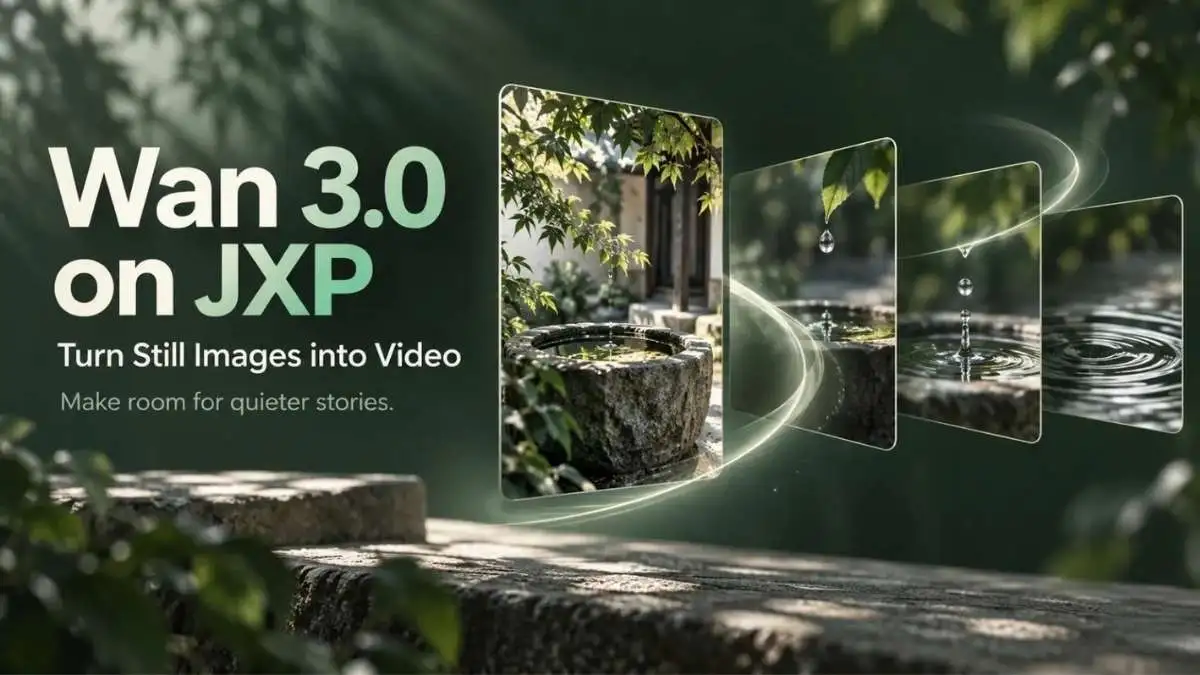
A raindrop hangs from a leaf above a courtyard basin. The bench behind it is empty. Nothing races towards the camera, and nothing explodes into a new scene. For a moment, the question is simply whether the drop will fall. That small expectation can give a quiet video somewhere to go.
Lifestyle publishers often need this kind of footage: a gentle opening to a home story, a pause between sections of an interview, or an atmospheric introduction to a weekend newsletter. Yet asking an AI generator for a peaceful scene can produce a surprisingly busy result. The camera glides, every plant sways, water sparkles, and the frame never quite settled.
Wan 3.0 offers text-led and image-led video generation, giving creators a way to explore a quieter scene without assembling a physical set. The creative task is to decide what deserves to happen within it. A useful brief describes a small event and the space around it, rather than relying on adjectives such as relaxing or cinematic.
Table of Contents
Give the viewer something to wait for
Quiet is not the same as empty. A scene becomes easier to follow when there is an unfinished action: a drop about to fall, a curtain approaching the window frame, or a paper boat drifting towards the edge of a shallow pool. The viewer understands the possibility before seeing the result.
For the fictional courtyard, choose the raindrop. Let the bench and wall establish the setting but keep the leaf and basin close enough for their relationship to be obvious. If the drop is too small to notice, the audience cannot anticipate it. If the basin fills the entire frame, the scene may lose the sense of a place someone could sit.
This is a composition decision before it is a timing decision. The image needs enough context to feel inhabited, without adding a person whose gestures would compete with the small event.
The pause belongs on both sides of the event
A common mistake is to make the opening slow and then rush away as soon as something happens. The drop falls, the water ripples, and a transition immediately replace the courtyard. The viewer gets the action but little chance to experience its aftermath.
Think of the shot as three unequal intervals:
- Arrive: allow time to recognize the leaf, water and empty bench.
- Notice: let the drop fall and produce a visible change.
- Remain: stay while the rings spread and the water begins to settle.
These are editorial intentions, not a promise that a generator will hit exact timestamps. A prompt can describe their order, but the returned clip still determines where an editor can make a useful cut. If the opening wanders, trim it. If the ripples end too abruptly, choose a different take rather than forcing a long freeze that makes the water look stuck.
The final interval is especially important. It lets the consequence of an action become part of the scene. Without it, even a slow clip can feel impatient.
Where the clip appears changes how much waiting makes sense. Between two spoken interview passages, the courtyard might need only a brief pause. As a standalone visual on an article page, it can take longer to establish its rhythm. Watch it in that intended setting, not only in the generator’s preview. An edit that feels leisurely on its own may interrupt a speaker awkwardly; another that feels uneventful in a gallery may work well beside a paragraph. The surrounding material supplies part of the pace.
Remove the camera’s urge to explore
A moving camera is not automatically more engaging. In the courtyard, a forward glide changes the size of the basin, reveals new surfaces and shifts the bench against the wall. Those changes can overwhelm a falling drop.
Begin with a fixed viewpoint at roughly seated eye level. A concise motion direction might read: “A locked-off view of a sheltered courtyard after rain. One drop falls from the foreground leaf into the basin. Gentle ripples spread; the bench and surrounding architecture remain still. Hold the scene as the water settles.”
That description leaves some interpretation open while establishing a clear priority. There is no need to add an orbit, a zoom, a dramatic focus pull and a weather change. If a returned clip includes unwanted camera movement, assess whether it still serves the scene; an attractive glide is not a reason to abandon the original idea.
Watch the straight edges, too. A bench that subtly stretches or a basin that changes shape can make a supposedly still shot feel restless. Slower pacing gives viewers more time to notice these details, so a quiet concept is not necessarily an easier generation task.
Choose a starting image that has somewhere to go
A beautiful photograph may capture the event too late. If the basin already contains dramatic splashes, it offers a different starting point from a suspended droplet above smooth water. The second image contains anticipation; the first is already at the payoff.
Wan 3.0 image-to-video is a relevant option when the courtyard’s arrangement matters more than discovering a new setting through text. Supply an eligible original or appropriately licensed image, then describe the intended change. The image provides a visual starting point, not a guarantee that every leaf, reflection or architectural edge will remain identical.
Keep decorative headline lettering out of the generation reference if it is not meant to appear in the moving scene. A finished article illustration and a useful video input have different jobs. Start from a clean scene image, with permission for external AI processing as well as publication.
Let the scene finish without making a claim
Sound can easily undo the restraint of the picture. A loud splash, swelling music or constant birdsong turns a small courtyard moment into a performance. If using generated sound, listen separately for unexpected voices, abrupt changes and effects that exaggerate the action. A modest ambient track assembled in an editor may suit the piece better; silence is also a legitimate choice.
Match the surrounding copy to what the video offers. An atmospheric scene can accompany a story about a quiet corner at home. It does not demonstrate a health benefit, proves that a real retreat looks this way, or replaces footage of a location being advertised.
After the event has had room to register. The water need not become perfectly smooth, and the camera need not discover something else. Sometimes the most convincing ending is simply a place that continues to exist after the viewer stops watching.


Acamento: The Artful Science of Finishing with Purpose

Aura Farming: The Viral Slang Shaping Digital Identity

SoSoActive: Lifestyle & Culture for Millennials & Gen Z

Prasarita Padottanasana: How to Do It Correctly

From Webinar Recordings to Social Clips with Video Cutter AI

A Little Room to Breathe: Making Quieter AI Videos with Wan 3.0

Kouskousi: How Traditional Couscous Is Made and Served

When Should You Consider Lower Eyelid Surgery?

What to Look for When Choosing a Memory Care Community

Best IPTV Australia Services in 2026: A Comprehensive Review

Ashtanga Vs Vinyasa Yoga? Which One Should You Choose?

What Is Enhydro? Exploring Water-Filled Fossilized Amber

Unlocking Mamgatoto: The Cultural Phenomenon Shaping Communities Worldwide

DeviceURL in VEX Robotics: Node.js Communication Explained

Navigator Pear: Ornamental Tree Size, Fruit & Care
-
 GENERAL1 year ago
Christofle – For Those Who Dream of Family Heirloom Silver
-
SPORTS2 months ago
Discover the World of Football with Streameast: Watch Your Favorite Leagues and Tournaments
-
HOME IMPROVEMENT2 years ago
Spacious and Stylish 300cm Round Rugs: Elegant and Modern Designs for a Chic Home Decor
-
GENERAL9 months ago
Uncovering the World of кинокрадко: The Dark Side of Film Piracy