
HEALTH AND FITNESS
How to Choose the Right Orthopaedic Surgeon for Your Sports Injury

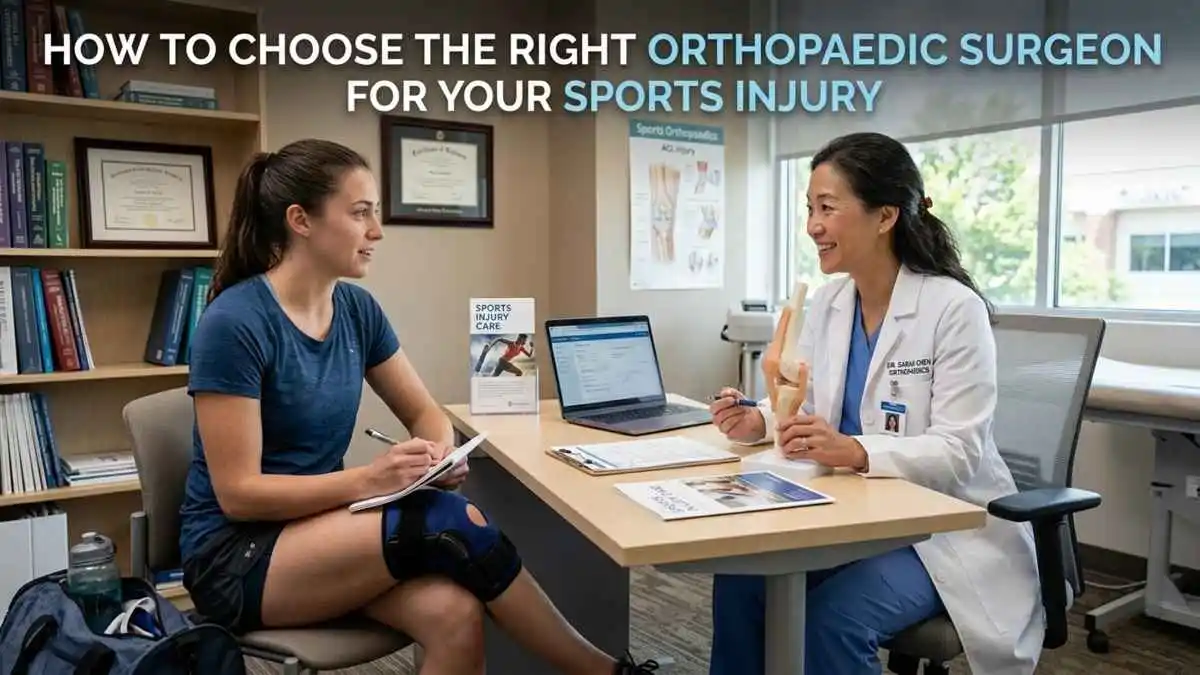
A sports injury can be a defining moment, not just physically, but emotionally. Whether you are a competitive athlete, a weekend runner, or someone who simply enjoys staying active, being sidelined by a torn ligament, a fractured ankle, or a damaged joint is both frustrating and alarming. The decision you make next choosing the right orthopaedic surgeon can determine how fully and how quickly you recover.
However, not all orthopaedic surgeons are the same. The field of orthopaedics is broad, encompassing the spine, joints, hands, feet, and more. For sports injuries specifically, you need a surgeon with the right sub-specialty training, clinical experience, and patient-centred approach.
This guide walks you through the most important factors to consider when selecting an orthopaedic surgeon for a sports injury, so that you can make a confident, well-informed decision about your care.
Table of Contents
1. Confirm Sub-Specialty Training in Sports Medicine or Sports Orthopaedics
Orthopaedic surgery is a vast discipline. A surgeon who specialises in spinal conditions or paediatric deformities may have limited experience with the types of soft tissue and joint injuries that are common in sport.
When evaluating a surgeon, ask specifically about their fellowship training or sub-specialty focus. Look for qualifications or clinical experience in:
- Sports medicine orthopaedics
- Arthroscopic (keyhole) surgery
- Ligament reconstruction, including ACL and PCL repair
- Tendon and cartilage repair
- Fracture management in active individuals
Surgeons who have completed a sports orthopaedics fellowship have undergone additional years of training focused exclusively on the conditions athletes experience. This specialised foundation translates directly into better surgical judgment and more targeted rehabilitation planning.
2. Assess Experience with Your Specific Injury
Beyond general sports orthopaedics, consider how experienced the surgeon is with your particular diagnosis. A surgeon who performs dozens of ACL reconstructions each year will have refined technique, a clearer sense of individual variation, and more nuanced post-operative protocols than one who performs the procedure only occasionally.
Do not hesitate to ask the following questions during your consultation:
- How many cases of this specific injury have you treated?
- What surgical technique do you typically use, and why?
- What outcomes do your patients generally achieve?
- What does the rehabilitation process look like, and how do you support patients through it?
A confident, experienced surgeon will welcome these questions. The answers will give you insight not only into technical competence, but also into how the surgeon communicates, which matters greatly throughout your recovery.
3. Verify Credentials and Professional Standing
In any medical decision, verifying a surgeon’s credentials is not merely advisable, it is essential. Confirm that your orthopaedic surgeon is:
- Registered and in good standing with the relevant national medical board
- Fellowship-trained in orthopaedic surgery, ideally with sports-specific experience
- Affiliated with an accredited hospital or surgical facility
- Recognised by professional orthopaedic bodies or associations
In Singapore and across Southeast Asia, you can verify a doctor’s registration status through the Singapore Medical Council (SMC) or the equivalent body in your country of treatment. A surgeon’s hospital affiliations also reflect the standard of care and facilities available to you throughout your treatment journey.
4. Evaluate the Diagnostic and Treatment Approach
The best orthopaedic surgeons do not lead every consultation with surgery. A thorough diagnostic process, including physical examination, imaging review, and a discussion of your activity level and goals should precede any treatment recommendation.
Be cautious of any surgeon who proposes a surgical solution before conducting a comprehensive assessment. Equally, be aware that some sports injuries, particularly those involving ligament tears or displaced fractures, do require timely surgical intervention to prevent long-term dysfunction.
A good orthopaedic surgeon will:
- Clearly explain your diagnosis and its implications
- Present both surgical and non-surgical options where relevant
- Align the treatment plan with your personal goals whether that means returning to elite competition or resuming recreational activity
- Set realistic expectations for recovery timelines
This individualised, evidence-based approach is a hallmark of high-quality orthopaedic care.
5. Consider Access to Multidisciplinary Support
Recovery from a sports injury rarely involves surgery alone. The most successful outcomes are typically achieved through a coordinated multidisciplinary approach that includes orthopaedic surgery, physiotherapy, and where relevant, sports medicine consultation and nutritional support.
When choosing your surgeon, consider whether their practice has access to or works closely with:
- Physiotherapists experienced in post-surgical sports rehabilitation
- Sports medicine physicians for non-surgical co-management
- Diagnostic imaging services for ongoing monitoring
Continuity of care is critical. A surgeon who is closely integrated with a rehabilitation team will be better positioned to monitor your progress, modify your programme as needed, and ensure a safe return to sport.
6. Look for Clear Communication and Patient-Centred Care
Technical expertise matters enormously, but so does communication. A surgeon who explains your diagnosis clearly, takes time to answer your questions, and ensures you understand your treatment options will enable you to be an active participant in your own recovery.
Before committing to a surgeon, consider:
- Did the surgeon listen carefully during the consultation?
- Were complex concepts explained in terms you could understand?
- Did you feel your concerns were taken seriously?
- Was adequate time given to your consultation, or did it feel rushed?
Patient-centred care is not a luxury, it is a key indicator of professionalism and surgical quality. Trust your instincts as well as the evidence.
7. Seek a Second Opinion if Necessary
For significant injuries that may require surgery, ACL reconstruction, ankle ligament repair, cartilage restoration obtaining a second opinion is entirely appropriate and widely encouraged within the medical community. A qualified surgeon will not take offence at this; on the contrary, it reflects the diligence expected of an informed patient.
A second opinion can confirm your diagnosis, introduce alternative treatment perspectives, or simply provide the reassurance needed to proceed with confidence.
Conclusion
Choosing the right orthopaedic surgeon for a sports injury is a decision that warrants careful consideration. Your recovery and your ability to return to the activities you value depends on the quality of care you receive from the very first consultation.
Look for a surgeon with sub-specialty training in sports orthopaedics, demonstrated experience with your specific injury, verifiable credentials, a thorough diagnostic approach, and a commitment to patient-centred communication. These qualities, taken together, are the foundation of a trusted surgeon-patient relationship.


What Is Drop MMS? Multimedia Messaging Simplified

What is a Rebar Locator? Understanding Non-Destructive Testing (NDT) for Reinforced Concrete

Humanilex: Revolutionizing Human-Computer Interaction

MyLawyer360: Your Comprehensive Legal Resource and Assistance Platform

How Innocams Revolutionizes Home Security: Everything You Need to Know

Cursed-Memes.com: Where Disturbing Meets Funny in Meme Form

TweakLoad Software: Master Weight & Balance Simulation

Diamondfairybunny: Unveiling the Myth and Magic

Lizard Pose: A Complete Guide to Form & Flexibility

TechDae.frl: Explore Expert Tips on Android, iPhone, and Social Media

What is ghuk-y44551/300? A Complete Guide to Product Identifiers

XannyTech.net: Best Platform for Tech Enthusiasts and Everyday Users

Dermatologist: Why This Specialist Matters for Your Skin Health

How AI Is Reshaping the Way We Edit Video

Tech Etruesports: The Evolution of Competitive Gaming
-
 GENERAL1 year ago
Christofle – For Those Who Dream of Family Heirloom Silver
-
SPORTS1 month ago
Discover the World of Football with Streameast: Watch Your Favorite Leagues and Tournaments
-
HOME IMPROVEMENT1 year ago
Spacious and Stylish 300cm Round Rugs: Elegant and Modern Designs for a Chic Home Decor
-
GENERAL9 months ago
Uncovering the World of кинокрадко: The Dark Side of Film Piracy