
HEALTH AND FITNESS
6 Benefits of Experiential Therapy for Teens in Managing Anxiety and Stress

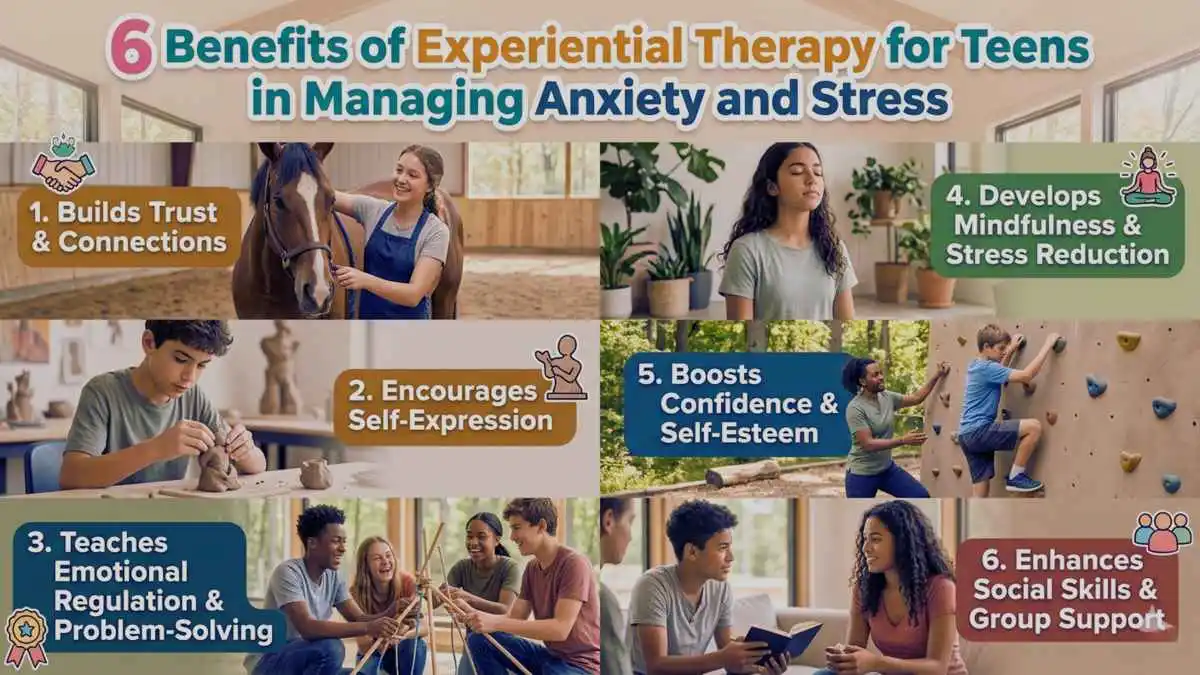
Teen years can feel heavy sometimes. Not in one big dramatic way, but more like small things stacking up one after another. School starts asking more. Friends keep changing. And there is always something sitting at the back of the mind, even if you are not fully thinking about it.
A lot of teens just carry all of that quietly. They do not always say that I am stressed. Most of the time, it does not even feel like stress in words. It just feels like being tired for no clear reason or like your mind keeps picking up small things and turning them over again and again, way more than it should. Some days, they just go quiet, and that becomes their normal way of dealing with it.
That is where experiential therapy for teens comes in. It is not just sitting in a room talking for an hour straight. It uses activities, simple actions and real moments so teens can express what is going on without needing to find perfect words. For many of them, that feels more natural.
Table of Contents
1. Helps teens say what they cannot explain
Most teens know something is going on inside, but when they try to explain it, it just doesn’t really come out the way they mean it. The feeling is there, but the words feel stuck or confusing.
In experiential sessions, there is less pressure to explain everything properly. Sometimes it is drawing, sometimes movement, sometimes just doing simple tasks together. And slowly, feelings start showing up without forcing it.
It feels easier because no one is asking them to sound perfect or make sense all the time.
2. Makes anxiety feel a bit lighter
Anxiety in teens does not always look dramatic. Sometimes it is just constant overthinking. Sometimes it is a weird, tight feeling in the body. Sometimes it is just being on edge for no clear reason.
With experiential therapy for teens, attention is not stuck only in thoughts. There is something happening at the moment. So the mind is not stuck looping the same worries over and over again. For a bit, they are focused on something else rather than being stuck in their heads.
The anxious thoughts may still be there, but they do not feel as strong in that moment.
3. Helps emotions start making sense
A lot of teens feel too much at once. Like everything is mixed together, and nothing feels clear. Stress, sadness, irritation, confusion, all kinds of blending.
After doing simple activities, they sometimes start noticing small patterns. Like “oh, this makes me tense” or “this situation always bothers me.”
It is not instant. It is actually pretty slow. But over time, things stop feeling like one big mess and start separating a bit.
4. Builds confidence in small ways
Confidence in teen years goes up and down a lot. One day it feels fine, the next day it feels gone again.
In experiential therapy, teens are not just talking about confidence. They are actually trying small actions. Even basic ones. And that changes how they see themselves a little.
It is not loud progress. It is quiet. But it adds up. A small win here, another small one there. And slowly they start trusting themselves a bit more.
5. Helps with everyday stress
Stress is a normal part of life for most teens, but figuring out what to do with it is the hard part. A lot of them just keep it to themselves and deal with it however they can.
Research from the NIMH shows that around 31.9% of adolescents experience an anxiety disorder. It shows how common anxiety really is during the teen years, even when it is not always easy to notice from the outside.
In sessions, they start to notice how they react at different moments. They slow down a bit without even realizing it. Not reacting instantly all the time.
It does not fix life, but everyday things start to feel slightly easier to handle.
6. A space where they do not have to act fine
Most teens do not really have a place where they can just drop the act of “I am okay.” At home, they hold back. With friends, they hold back too.
It feels different because they do not have to pretend they are okay. They can talk, ha or just sit there without feeling pushed.
There is no pressure to open up fast or explain things before they are ready.
Why it works for teens
Teens usually do not respond that well to long talks or heavy explanations. It can feel tiring or forced.
That is why experiential therapy for teens often works better. It matches how they naturally express things, more through action than just words.
Also, there is no rush. Some teens open up quickly, some take time, and some just slowly warm up. All of that is fine in this kind of setting.
Final thoughts
Teen years are not always simple, even if they look fine from the outside. There is a lot happening internally that does not always get spoken about.
Experiential therapy gives teens another way to deal with it. Not just talking but actually doing things that help them understand themselves a bit better over time. It does not fix everything or make all stress disappear. But it can make things feel a little easier to carry. And some days, even that is enough.


What Is Drop MMS? Multimedia Messaging Simplified

What is a Rebar Locator? Understanding Non-Destructive Testing (NDT) for Reinforced Concrete

Humanilex: Revolutionizing Human-Computer Interaction

MyLawyer360: Your Comprehensive Legal Resource and Assistance Platform

How Innocams Revolutionizes Home Security: Everything You Need to Know

Cursed-Memes.com: Where Disturbing Meets Funny in Meme Form

TweakLoad Software: Master Weight & Balance Simulation

Diamondfairybunny: Unveiling the Myth and Magic

Lizard Pose: A Complete Guide to Form & Flexibility

TechDae.frl: Explore Expert Tips on Android, iPhone, and Social Media

What is ghuk-y44551/300? A Complete Guide to Product Identifiers

XannyTech.net: Best Platform for Tech Enthusiasts and Everyday Users

Dermatologist: Why This Specialist Matters for Your Skin Health

How AI Is Reshaping the Way We Edit Video

Tech Etruesports: The Evolution of Competitive Gaming
-
 GENERAL1 year ago
Christofle – For Those Who Dream of Family Heirloom Silver
-
SPORTS1 month ago
Discover the World of Football with Streameast: Watch Your Favorite Leagues and Tournaments
-
HOME IMPROVEMENT1 year ago
Spacious and Stylish 300cm Round Rugs: Elegant and Modern Designs for a Chic Home Decor
-
GENERAL9 months ago
Uncovering the World of кинокрадко: The Dark Side of Film Piracy