HEALTH AND FITNESS
How Advanced Tooth Restoration Can Improve Oral Function

Key Takeaways
- Restores function and appearance for damaged or missing teeth.
- Uses durable, natural-looking materials like zirconia and bioactive resins.
- Digital tools and 3D printing enable precise, customized restorations.
- Minimally invasive techniques preserve healthy tissue.
- Improves chewing, speech, and overall oral comfort.
- Provides long-term benefits: durability, oral health, and patient confidence.
Optimal oral function is a cornerstone of both dental and overall health. When teeth are damaged, decayed, or missing, the effects can extend far beyond the mouth. Everyday activities such as chewing, swallowing, and speaking may become more difficult, and individuals often experience a decline in self-esteem because of their appearance. Fortunately, thanks to ongoing technological advancements, modern solutions like dental implants and a variety of sophisticated restorations are now available. These treatments can successfully recreate both the appearance and function of natural teeth, offering patients renewed confidence and a significantly improved quality of life. Advanced restorations have truly transformed the landscape of dental care, making once-permanent problems manageable and even reversible.
Today’s advanced tooth-restoration techniques surpass simple repairs. Instead of just filling cavities or capping teeth, they mimic natural anatomy and function. Modern restorations improve bite, support long-term oral health, and enhance comfort by tailoring treatment to each patient. Digital planning, better biomaterials, and less invasive methods make restorative dentistry more effective and comprehensive. These advances help more people, including those with complex issues, regain function and live pain-free.
Table of Contents
Understanding Tooth Restoration
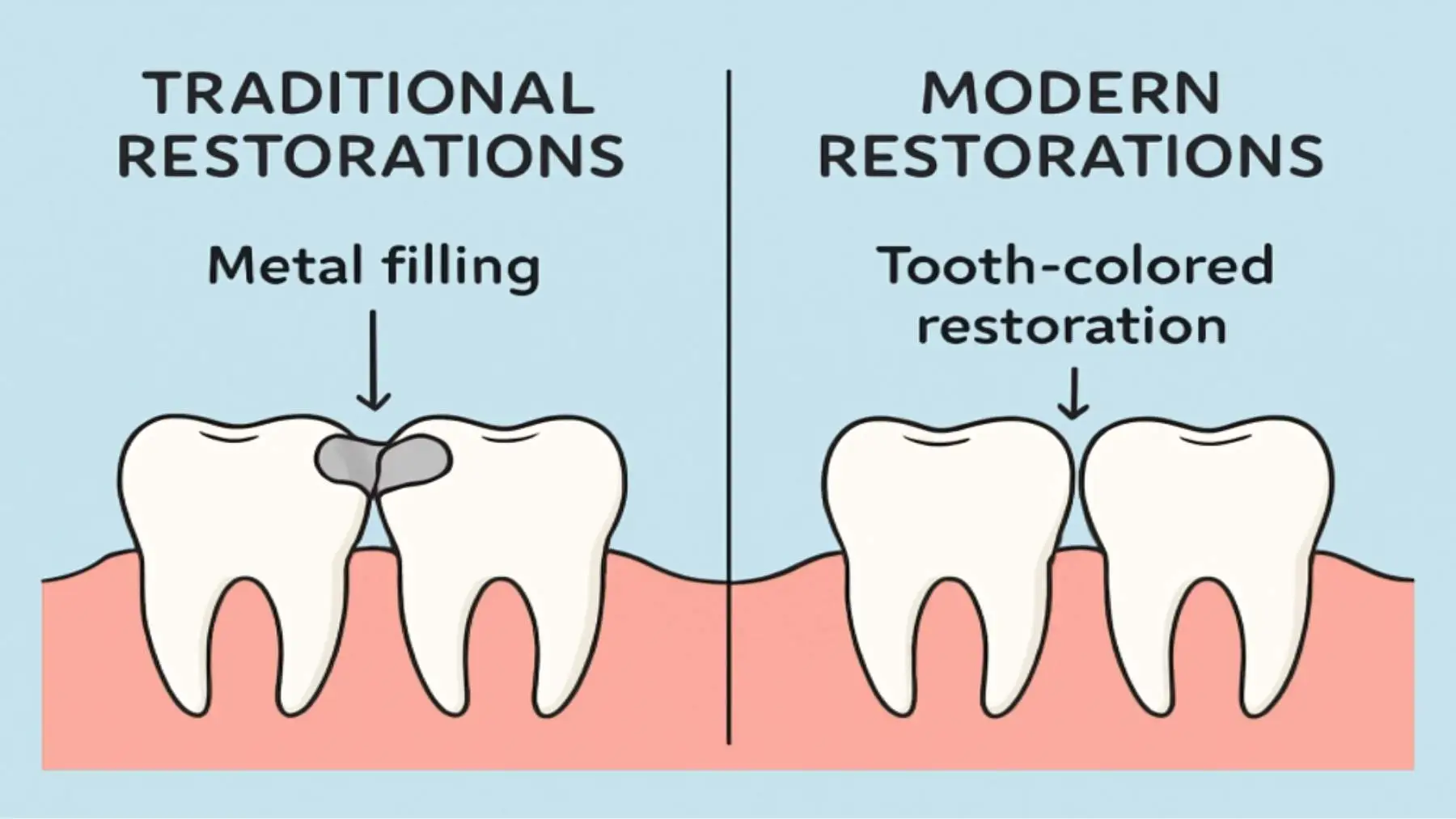
Restorative dentistry provides treatments for damaged, decayed, or missing teeth. Traditional solutions such as crowns, fillings, bridges, and dentures have enhanced both appearance and function but sometimes fall short in durability or natural sensation. Modern options now include dental implants, which are anchored into the jawbone to replicate natural roots, offering stability, enhanced bite strength, and helping prevent bone loss. Additionally, advances feature partial dentures and full-arch restorations customized for complex cases.
Innovations in Dental Materials
A key highlight of restorative dentistry is the rapid advancement in dental materials. In the past, choices were limited to metals, resin composites, and traditional ceramics, which often appeared artificial and degraded over time. Today, the focus is on materials that offer both durability and a natural appearance. Common options include advanced ceramics such as zirconia and lithium disilicate, bioactive glass, and high-strength resins. These materials are long-lasting, wear-resistant, and closely match the color and translucency of teeth. Additionally, bioactive ceramics and innovative resins can interact with gum tissue and bone, reducing inflammation and promoting healing. Some of these materials also release calcium or fluoride ions, which help prevent decay and bone loss, resulting in healthier, more durable restorations.
Digital Dentistry and 3D Printing
The digitization of dental care has ushered in a new era for both patients and practitioners. Digital imaging and intraoral scanners can create highly detailed 3D impressions of a patient’s mouth, eliminating the need for traditional molds, which many patients find uncomfortable. These precise digital impressions are then analyzed using computer-aided design (CAD) software, enabling restorations to be meticulously planned and tailored to the patient’s dental anatomy, down to the smallest detail. Manufacturing through computer-aided manufacturing (CAM) systems ensures that restorations are milled or printed with remarkable accuracy, strength, and speed.
3D printing technology is another game-changer in the industry. Dental professionals can now create detailed models, crowns, bridges, surgical guides, and even partial dentures right in the office, sometimes in a single appointment. This not only greatly reduces patient wait time but also allows for immediate adjustments and refinements if necessary.
Minimally Invasive Techniques
Modern restorative dentistry focuses on minimally invasive methods. Previously, many techniques involved removing substantial healthy tissue for crowns or fillings. Today, newer strategies aim to preserve natural structures, minimize trauma, and support long-term oral health. For instance, atraumatic restorative treatment (ART) uses hand tools to gently remove decay, often avoiding drilling and anesthesia, which is especially suitable for anxious patients or children. Micro-preparation techniques target only the decayed areas, conserving healthy tissue. Advances in adhesive bonding provide strong, durable attachments, extending the lifespan of restorations, reducing the need for repeated procedures, and preserving the natural smile.
Improved Aesthetics and Functionality
Recent advances in restorative dentistry enhance both function and aesthetics, using materials such as composite resins and porcelain that seamlessly blend with natural teeth. Modern crowns and bridges offer improved fit and durability, allowing patients to eat a wider variety of foods and lowering the risk of failure. For replacing multiple teeth or entire arches, implants and implant-supported bridges restore bite strength, support speech, and reduce dietary limitations. These solutions help preserve oral health, maintain facial structure, and prevent the sunken look commonly associated with tooth loss.
Long-Term Benefits and Patient Satisfaction
Perhaps the most powerful advantage of advanced restorative dentistry is its ability to deliver transformative, lasting results. By addressing both functional and cosmetic concerns, modern treatments ensure that patients not only look better but also regain their ability to eat, speak, and interact with confidence. Extensive surveys and clinical follow-ups show that individuals with high-quality restorations consistently report greater comfort, reduced pain, and superior oral function over many years, compared to those with older or temporary solutions.
High-quality restorative work can have a profound effect on self-esteem, daily comfort, and social interactions. As dentistry continues to build on proven techniques and emerging innovations, the focus remains on integrating the latest technology with expert planning and clinical skill, ensuring that patients receive care that stands up to everyday use and supports a healthier lifestyle.
Conclusion
Advanced tooth restoration has radically transformed the way dental professionals restore health, confidence, and function to their patients’ smiles. By leveraging state-of-the-art materials, digital design, and minimally invasive procedures, today’s restorative treatments deliver stronger, more comfortable, and more natural outcomes than ever before. Understanding the breadth of modern restorative options empowers individuals to pursue the highest standard of dental care for improved oral health and a brighter quality of life.


Master Bhujangasana: Backbend Technique Explained

Messagenal and the Science of Clear Messaging

How Advanced Tooth Restoration Can Improve Oral Function

BCN Play OTT: Basic & Platinum Streaming Bundles

How Much Does Hair Transplant Cost in UAE

What is Chin Mudra? Discover Its Meaning and Health Benefits

Why Second Reads Matter For Complex Or Rare Cases

Telegraph247: A Comprehensive Guide to the Leading Online News Platform

Antarayas: Understanding and Overcoming Obstacles on the Path to Growth

Flying Pigeon Pose: Benefits, Tips, and How to Perfect It

Insoya: Fermented Soy Protein for Better Nutrition

Keyword Optimization by Garage2Global Explained

Discover VandyWorks: The Web-Based Staffing System for Vanderbilt Medical Staff

Improving indoor air quality affected by cannabis smoke: How air purifiers help

Organizing Makeup Efficiently with a Vanity Desk
-
 GENERAL8 months ago
Christofle – For Those Who Dream of Family Heirloom Silver
-
SPORTS10 months ago
Discover the World of Football with Streameast: Watch Your Favorite Leagues and Tournaments
-
GENERAL2 months ago
Uncovering the World of кинокрадко: The Dark Side of Film Piracy
-
GENERAL4 months ago
ATFBooru: Anime, Gaming, and Subculture Imageboard