
HEALTH AND FITNESS
Technology-Driven Anesthesia Scheduling Systems and Their Effect on Hospital Efficiency

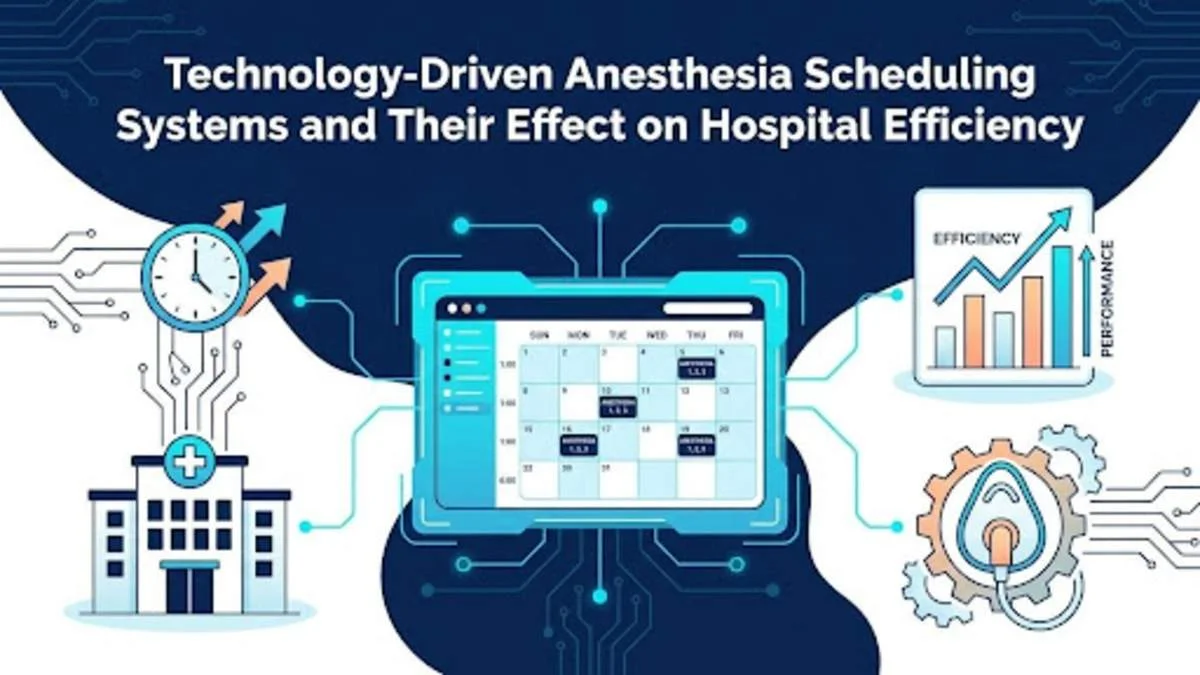
Not long ago, anesthesia scheduling in many hospitals relied heavily on spreadsheets, phone calls, emails, and manual coordination. A schedule might look organized at the beginning of the week but keeping it accurate was a different challenge altogether.
One provider change could trigger multiple adjustments. A delayed case affected room assignments. Coverage gaps created a chain reaction that required several teams to coordinate quickly. By the time updates reached everyone involved, the schedule had often already shifted again.
Hospitals still deal with changing demand today, but expectations have changed. Surgical departments are moving faster, operating room utilization is under closer scrutiny, and teams are expected to make decisions with much less delay.
That shift is one reason technology-driven scheduling systems are becoming more important. Hospitals are not simply adopting software because it looks modern. They are using technology to create visibility, improve coordination, and make staffing decisions with better information.
As part of that broader shift, facilities are also changing how they find CRNAs and manage provider access when schedules become difficult to predict.
Table of Contents
Scheduling has become more complex than it used to be
The challenge with anesthesia scheduling is that the process rarely stays fixed. Operating room schedules change constantly. Cases run longer than expected. Add-on procedures appear. Provider availability shifts. Temporary coverage may need to be arranged on short notice.
Traditional scheduling approaches often struggle because they rely heavily on manual updates.
What begins as a small change in one room can eventually affect multiple departments:
- Operating room timing changes
- Provider assignments shift
- Turnover schedules adjust
- Patient flow becomes less predictable
Without strong visibility, teams spend much of their day reacting instead of planning.
Technology helps reduce that reactive cycle.
Better scheduling starts with better information
One advantage modern systems provide is real-time access to operational information.
Instead of relying on separate conversations happening across different teams, scheduling platforms can create a shared view of:
- Provider availability
- Room assignments
- Case timing changes
- Workload distribution
- Staffing needs
That visibility helps departments identify potential problems earlier. A schedule may still change, but hospitals gain more time to respond before small disruptions become larger operational issues.
This becomes especially useful when departments need to find CRNAs quickly during periods of increased demand or unexpected coverage gaps.
Efficiency problems often begin with communication delays
Hospitals sometimes assume operational inefficiency comes from staffing shortages alone.
Information gaps frequently create similar problems.
A provider assignment update may not reach the right teams quickly enough. A schedule adjustment may happen without visibility across departments. Coverage needs may be recognized later than they should have been.
These delays create friction that affects the entire surgical process. Technology-driven scheduling systems reduce some of this friction because information moves more consistently across teams rather than depending entirely on manual coordination.
The operating room benefits when scheduling becomes more flexible
Efficiency inside surgical departments depends heavily on adaptability. Schedules that function well under ideal conditions may struggle once real-world variables appear. Delays happen. Case lengths change. Demand increases unexpectedly.
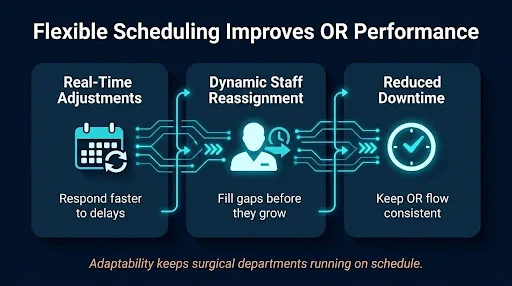
Hospitals increasingly build scheduling systems around flexibility instead of fixed assumptions.
Technology supports this by allowing departments to adjust faster and evaluate staffing options more clearly.
Instead of restructuring entire schedules manually, teams can identify changes and respond with greater precision.
That flexibility becomes important when facilities need to find CRNAs or adjust staffing support before delays affect operating room performance.
Staffing visibility affects more than coverage
Hospitals are also recognizing that scheduling systems influence workforce strategy itself. Limited visibility creates several challenges:
- Providers may become unevenly distributed
- Workload balance becomes harder to maintain
- Staffing pressure develops gradually
- Scheduling inefficiencies remain hidden longer
Modern scheduling tools help departments identify these patterns earlier. The goal is not simply assigning people to rooms. It is understanding how workforce decisions affect operational performance over time.
Technology also supports workforce sustainability
There is another reason scheduling systems are evolving. Departments increasingly focus on workforce sustainability alongside efficiency.
Repeated schedule strain affects provider workload, overtime trends, and long-term staffing stability. Technology can help identify patterns that may otherwise remain unnoticed.
For example, systems may reveal:
- Consistently overloaded schedules
- Uneven provider utilization
- Recurring coverage gaps
- Patterns tied to specific time periods
These insights allow hospitals to make more proactive staffing decisions rather than waiting for operational problems to become obvious.
Where 1MAC fits into modern scheduling strategies
As hospitals adopt more flexible workforce approaches, platforms like 1MAC Anesthesia are helping facilities improve provider access when scheduling needs change unexpectedly.
Instead of relying only on slower traditional processes, hospitals can identify available anesthesia professionals more efficiently and respond faster when staffing demand shifts.
That responsiveness becomes especially useful when departments need to find CRNAs without disrupting surgical schedules already under pressure.
Better systems create fewer reactive days
Hospitals that improve scheduling processes often describe a similar outcome. The day feels less reactive. Not necessarily easier. Not necessarily slower. Just more controlled.
Teams spend less time chasing updates and more time focusing on patient care and operational flow. Scheduling changes still happen, but they create fewer downstream disruptions.
That difference becomes meaningful across large surgical environments where even small delays can affect multiple departments.
Looking ahead
Technology alone does not solve staffing challenges. Hospitals still need experienced providers, effective workflows, and strong operational planning. However, better systems create better visibility, and visibility improves decision-making.
As surgical departments continue managing increasing complexity, technology-driven scheduling will likely play a larger role in workforce coordination and hospital efficiency.
Facilities that improve how they find CRNAs, manage staffing changes, and coordinate schedules may ultimately create stronger operational performance without simply adding more resources.
Because in modern healthcare, efficiency increasingly depends on information moving as effectively as people do.
FAQs
1. How do technology-driven scheduling systems improve hospital efficiency?
They create better visibility, improve communication, and help hospitals respond faster to staffing and scheduling changes.
2. Why are anesthesia schedules difficult to manage manually?
Surgical schedules change frequently and require constant coordination between teams.
3. Can scheduling software reduce OR delays?
Better visibility and faster updates can help prevent small issues from becoming larger disruptions.
4. Why is workforce visibility important?
It helps hospitals identify workload imbalances and staffing pressure before operational problems develop.
5. How do hospitals find CRNAs more efficiently today?
Many facilities use modern staffing platforms and flexible workforce tools to access providers faster when need change.


Why Hospital-Employed Physician Practices Keep Losing Money

Wearable Air Purifiers: A Closer Look at the Personal Clean-Air Trend

Preparing for Your Child’s First Dental Visit: A Practical Guide for Parents

What to Look for in a Pilates Studio or Instructor

Why Recurrent Cleaning Services Keep Homes Spotless All Year

AI PPT Maker for Teachers: Turn Lesson Notes into Slides That Leave Room to Teach

Chief Technical Examiner: Roles, Rules and Responsibilities

When Should You Visit an Orthopaedic Clinic for a Sports Injury?

How to Choose an E-Bike for a More Active Everyday Lifestyle

What is Chin Mudra? Discover Its Meaning and Health Benefits

Classroom20x: Future of Hybrid Learning Explained

Exploring the World of Futbolear: A Comprehensive Guide

LeahRoseVIP: Trusted Lifestyle Magazine for Holistic Wellbeing

Daily Spine Care: Simple Habits for Less Strain and More Comfortable Movement

Switching 2nd: Understanding the Shift into Second Gear
-
 GENERAL1 year ago
Christofle – For Those Who Dream of Family Heirloom Silver
-
GENERAL10 months ago
Uncovering the World of кинокрадко: The Dark Side of Film Piracy
-
SPORTS3 months ago
Discover the World of Football with Streameast: Watch Your Favorite Leagues and Tournaments
-
HOME IMPROVEMENT2 years ago
Spacious and Stylish 300cm Round Rugs: Elegant and Modern Designs for a Chic Home Decor