SERVICES
VisualGPT AI Old Photo Restoration for Avoiding Over-Restoration and Preserving Visual Truth

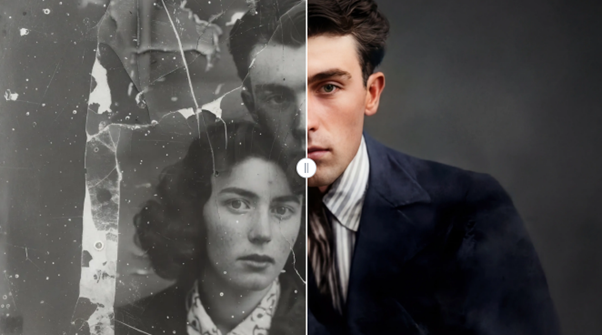
VisualGPT AI Old Photo Restoration and ImageEditor are often discovered after users have already tried—and failed—to restore old photographs. In many cases, the problem is not a lack of tools, but the wrong approach. AI Old Photo Restoration fails most often when clarity is prioritized over truth.
This article examines why over-restoration is the most common mistake in historical photo recovery, and how VisualGPT AI Old Photo Restoration takes a fundamentally different path by focusing on visual accuracy rather than aesthetic perfection.

(VisualGPT AI Old Photo Restoration for Avoiding Over-Restoration)
Why Many AI Old Photo Restorations Feel “Wrong” Even When They Look Clean
A restored photo can appear sharp, bright, and technically impressive while still feeling inaccurate. This discomfort is usually subtle but immediate. Facial expressions seem unfamiliar. Skin texture looks artificial. Shadows no longer match the original lighting logic.
Most image enhancement tools are designed to improve modern photos. When applied to old photographs, they unintentionally impose contemporary visual assumptions on historical material. VisualGPT AI Old Photo Restoration is built specifically to avoid this trap.
Instead of asking how an image should look, the system asks how it likely did look before damage occurred.
VisualGPT AI Old Photo Restoration Is Designed to Resist Overcorrection
One of the defining characteristics of VisualGPT AI Old Photo Restoration is restraint. The AI does not attempt to fully reconstruct missing information unless there is sufficient contextual evidence within the image itself.
Structural Recovery Over Cosmetic Enhancement
VisualGPT focuses on restoring structure first: edges that define form, tonal transitions that convey depth, and textures that indicate material. Color correction, contrast balancing, and noise reduction are applied conservatively, ensuring that the image remains consistent with its original medium.
This approach is particularly important for photographs from the early to mid-20th century, where film grain, lighting limitations, and printing techniques are part of the image’s identity.
Protecting Facial Authenticity
Faces carry the highest emotional and historical value. Even minor distortions can change how a person is recognized. VisualGPT AI Old Photo Restoration avoids aggressive smoothing or feature reshaping. The AI reconstructs facial clarity without altering proportions or expressions, preserving the emotional accuracy of the photograph.
Restoration Should Reveal Information, Not Replace It
A successful restoration allows viewers to see more, not something different. VisualGPT AI Old Photo Restoration treats damage as an obstacle to visibility, not as a signal to redesign the image.
Scratches, fading, and blur often obscure relationships within the image: who is standing where, what objects are present, how light interacts with space. By removing these barriers carefully, the AI restores access to information that was already embedded in the photograph.
This philosophy makes VisualGPT particularly suitable for research, archival documentation, and family history projects, where accuracy matters more than visual appeal.
The Practical Reality After Restoration Is Complete
Once restoration is finished, users often face a new set of decisions. The photo is now readable and historically intact, but not necessarily ready for modern use. Borders may be uneven from scanning. Old stamps or watermarks may still be present. Composition may not suit digital formats.
This is where ImageEditor becomes relevant.
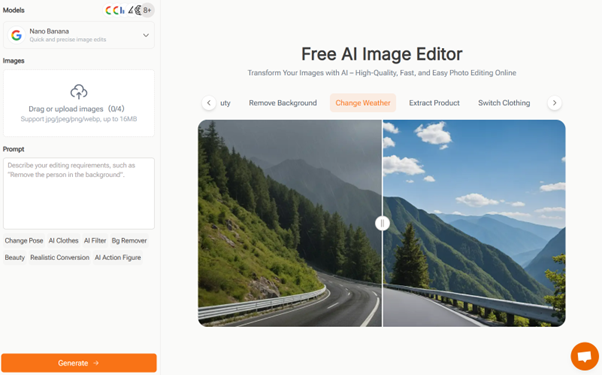
imageeditor does not replace restoration. It operates after the fact, handling presentation-level adjustments through AI-based tools. Cropping, background cleanup, and layout adaptation can be applied without interfering with the restored content.
The distinction is important. Restoration protects meaning. ImageEditor supports usability.
(ImageEditor-The Practical Reality After Restoration Is Complete)
Why Separating These Steps Produces Better Outcomes
Trying to solve restoration and presentation in a single step often leads to compromise. VisualGPT AI Old Photo Restoration works best when it is allowed to focus exclusively on historical repair. ImageEditor works best when it handles contextual adaptation.
This separation mirrors professional archival workflows, where restoration and reproduction are treated as distinct disciplines. AI simply makes this process accessible to more users.
Long-Term Value Comes from Accuracy, Not Visual Impact
Old photos gain value over time, not through novelty but through reliability. An accurately restored image can be reused, reprinted, and reinterpreted for decades. An over-processed image quickly becomes questionable.
VisualGPT AI Old Photo Restoration creates durable visual records. ImageEditor ensures those records can move comfortably across modern platforms without sacrificing integrity.
Conclusion
A successful AI Old Photo Restoration does not draw attention to itself. It allows the viewer to focus on the subject, the moment, and the context. VisualGPT AI Old Photo Restoration (https://visualgpt.io/ai-old-photo-restoration) achieves this by prioritizing restraint, structure, and historical fidelity.
ImageEditor (https://imageeditor.online/) complements this process by addressing modern usage requirements without altering the restored image’s core truth.
Together, they support a realistic, respectful approach to AI Old Photo Restoration—one that values accuracy over spectacle and preservation over perfection.


Holistic Chiropractic Care: A Comprehensive Approach to Health and Wellness

How to Stay Anonymous on the Internet

How Medical Treatment Timing Affects Your Car Accident Claim

OTI IAS: Modern UPSC Preparation Competency Model

Why Local Connection Still Matters When Choosing NDIS Providers in Preston

Privacy Curtain Design Considerations for Hospitals, Clinics, and Medical Centers

Medical Software Solutions: Comprehensive Guide for Choosing a Robust DAX Copilot Alternative

How DAX AI Scribe Transforms Patient Documentation Efficiency

Artificial Fall Wreath vs Natural Fall Wreath: Which Looks More Authentic?

Faux Plants vs Real Plants: Which Is More Cost-Effective for Home Decor?

Pravi Celer: Stalk Celery Uses, Benefits, and Identity

What Is Stormuring? A New Era of Strategic Agility

Foenegriek (Fenugreek): Health Benefits, Uses & Substitutes

Uncuymaza: Leading Higher Education in Mendoza, Argentina

BCN Play OTT: Basic & Platinum Streaming Bundles
-
 GENERAL12 months ago
Christofle – For Those Who Dream of Family Heirloom Silver
-
SPORTS1 year ago
Discover the World of Football with Streameast: Watch Your Favorite Leagues and Tournaments
-
GENERAL5 months ago
Uncovering the World of кинокрадко: The Dark Side of Film Piracy
-
GENERAL2 months ago
Unveiling the Art of преводсч: How Translators Bridge Language Barriers