
GENERAL
Tumbons in Thailand: Role, Structure, and Administration

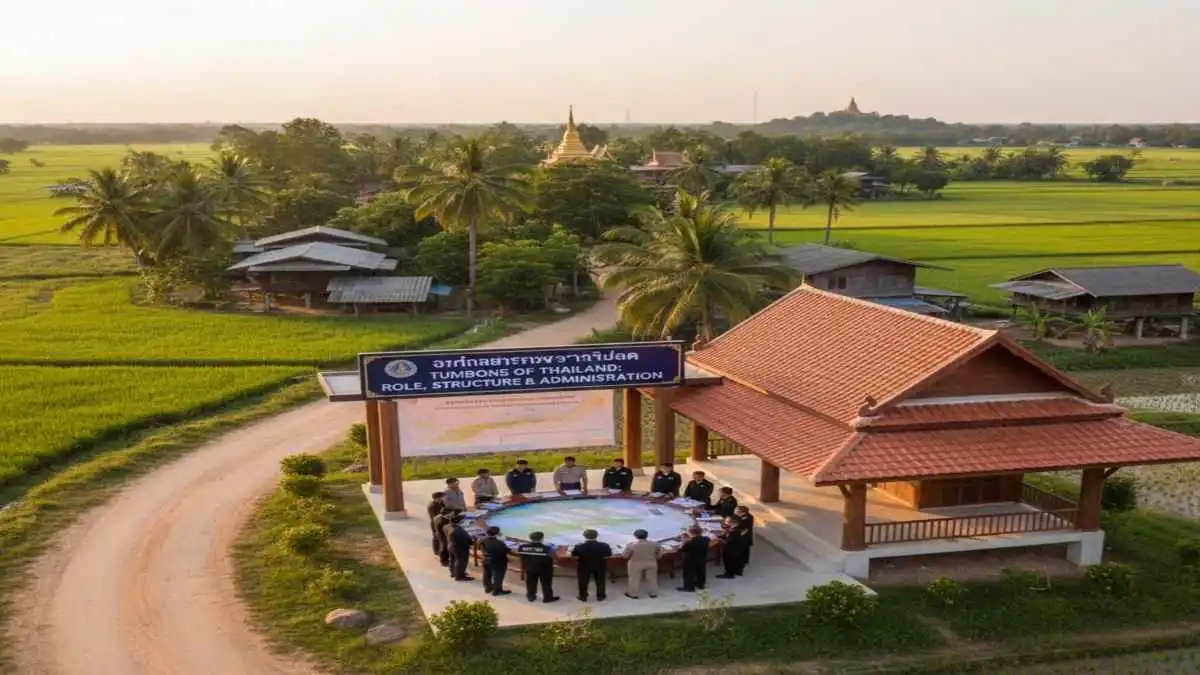
Tumbons (also spelled Tambons) are an essential component of Thailand’s administrative framework, serving as subdistricts that bridge national governance and local communities. Positioned below districts (amphoe) and above villages (muban), tumbons represent a crucial level of grassroots administration. They are designed to ensure that public services, development initiatives, and welfare programs are delivered efficiently and in accordance with local needs.
Table of Contents
Administrative Hierarchy in Thailand
Thailand’s territorial administration follows a structured hierarchy that enables coordinated governance across different levels. At the top are provinces (changwat), which are divided into districts (amphoe). Each district is further subdivided into tumbons, and each tambon consists of multiple villages (muban).
This layered system allows for policy implementation that is both nationally consistent and locally adaptable. Tumbons serve as the operational units through which government policies are translated into practical action, ensuring that services reach citizens at the community level.
Composition and Geographic Scope
A typical tumbon comprises several villages that often share geographic, economic, or cultural characteristics. The size and population can vary significantly depending on whether they are located in rural, semi-urban, or urban areas. Rural tumbons may cover large agricultural zones with dispersed populations, while urban tumbons tend to be more compact and densely populated.
Despite these differences, they are uniformly recognized as legally defined administrative units, which provides consistency in governance while allowing flexibility in local management.
Governance and Administrative Bodies
In most rural areas, tumbons are governed by a Tambon Administrative Organization (TAO). The TAO is a local government body responsible for planning and implementing development initiatives within its jurisdiction. It operates under Thailand’s decentralization framework, which aims to empower local authorities to make decisions that directly affect their communities.
In urbanized areas, they may fall under municipal authorities rather than TAOs. Municipal administrations assume similar responsibilities but often manage more complex infrastructure and public services due to higher population density and economic activity.
Roles and Responsibilities of Tumbons
Tumbons are entrusted with a broad range of responsibilities that directly influence residents’ quality of life. These responsibilities typically include:
- Infrastructure development, such as local roads, drainage systems, and public facilities
- Sanitation and environmental management, including waste collection and water management
- Public health support, often coordinated with district-level health offices
- Social welfare programs, particularly for vulnerable populations such as older people and low-income households
- Community development initiatives, including education support, cultural preservation, and local economic projects
Tumbons and Local Democracy
One of the most significant aspects is their role in promoting local democratic participation. Members of TAOs are typically elected, allowing residents to have a direct voice in local governance. This system enhances accountability and transparency while encouraging civic engagement.
Local elections at the tumbon level provide opportunities for community leaders to emerge and for citizens to influence development planning. This grassroots participation strengthens trust between residents and governing bodies, contributing to more sustainable and inclusive development outcomes.
Economic and Community Development
Tumbons often serve as focal points for community-based economic development. Many local initiatives, such as agricultural cooperatives, small-scale tourism projects, and handicraft production, are coordinated at the tumbon level. These initiatives aim to support local livelihoods while preserving cultural identity.
In rural Thailand, it plays a particularly important role in supporting agriculture, which remains a cornerstone of the national economy. Local authorities often collaborate with district and provincial agencies to provide training, resources, and infrastructure that enhance productivity and sustainability.
Public Service Delivery and Coordination
Effective public service delivery relies heavily on coordination between tumbons, districts, and provincial authorities. While they manage local implementation, funding, and policy guidance, these functions often come from higher administrative levels. This collaborative approach ensures consistency with national development goals while allowing room for local adaptation.
For example, public health campaigns or disaster preparedness programs are typically designed at the national or provincial level but executed through tumbon-level structures, ensuring outreach to even the most remote communities.
Challenges Facing Tumbons
Despite their importance, tumbons face several challenges.
- Limited budgets, administrative capacity constraints, and disparities between urban and rural areas can affect service quality.
- Additionally, rapid urbanization and demographic changes place new demands on tumbon administrations, requiring them to adapt governance models.
The Evolving Role in Thailand
As Thailand continues to modernize its governance framework, the role of tumbons is evolving. Greater emphasis is being placed on transparency, digital administration, and citizen participation. These changes aim to enhance efficiency while preserving the local character that defines tumbon governance.
They are increasingly recognized not just as administrative units, but as vital platforms for community engagement, sustainable development, and social cohesion.
Conclusion
Tumbons represent a foundational element of Thailand’s administrative system, connecting national governance structures with everyday community life. By managing local services, supporting development initiatives, and fostering democratic participation, they play a critical role in shaping social and economic outcomes at the grassroots level.


When the Mat Becomes a Mirror: Mindfulness, Emotional Regulation, and the Practice That Actually Lasts

Youtu-chan: Your Daily Dose of Anime & Game News

How Long Do Custom Orthotics Last? A Brampton Patient’s Guide

CoWordle: The Ultimate Multiplayer Word Game Experience

Solu Computer Review: Cloud-Based Mini PC

Coyyn.com: Revolutionizing Decentralized Finance (DeFi)

Exhentaime: The Art of Efficient Time Management

Cyanová : The Versatile Blue-Green Pigment Across Art, Design, and Nature

OnionPlay: The Shocking Truth About Free Streaming

Speciering: The Evolutionary Path to New Species

Tesla Balance Bike Explained: What the New Launch Means for Families and EV Fans

How to Find a Reliable Georgia Moving Company Without Overpaying

Joi Database: A Practical Guide to Data Validation and Database Integrity

AI Image Generators Explained: What They Are and Who’s Actually Using Them

Best Personal Trainer Software With a White-Label Branded App (2026)
-
 GENERAL1 year ago
Christofle – For Those Who Dream of Family Heirloom Silver
-
SPORTS1 year ago
Discover the World of Football with Streameast: Watch Your Favorite Leagues and Tournaments
-
GENERAL7 months ago
Uncovering the World of кинокрадко: The Dark Side of Film Piracy
-
GENERAL3 months ago
Unveiling the Art of преводсч: How Translators Bridge Language Barriers