
SERVICES
Freelance vs Full-Time EHR Developers: What’s Right for Your Clinic?

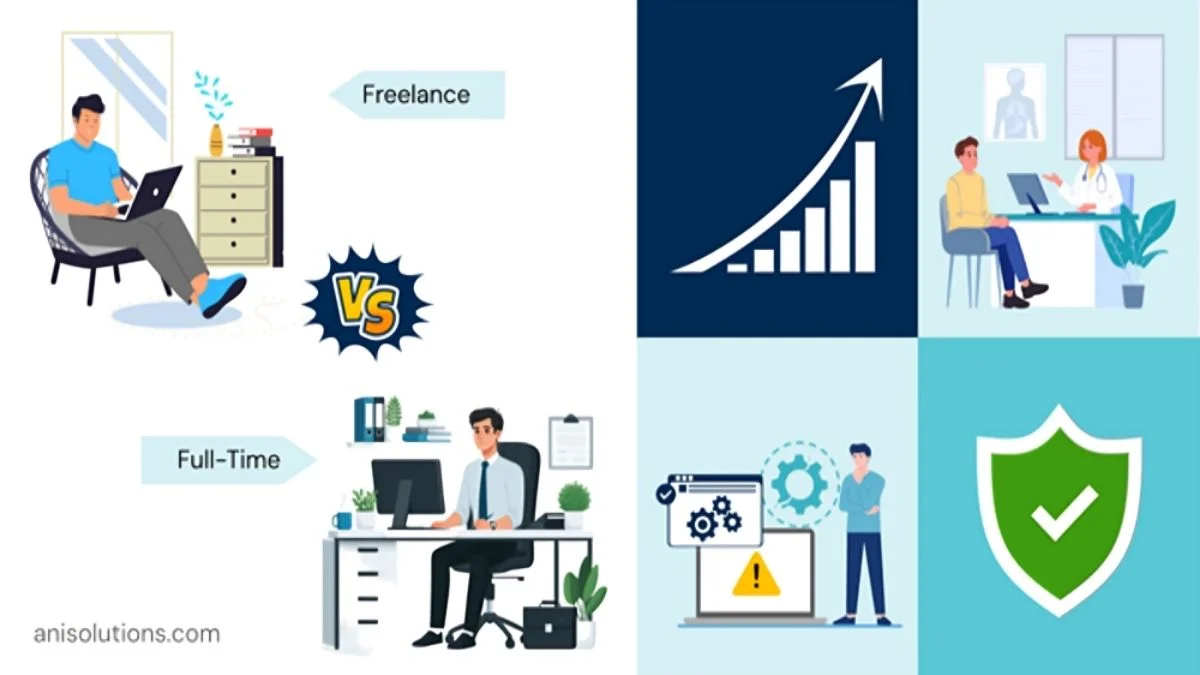
For years, many clinics relied on off-the-shelf EHR platforms and simply adjusted their workflows to fit the software. That approach is starting to break down, as care models are becoming more complex and fast-paced, with rigid systems slowing down instead of supporting them.
As a result, more practices are moving toward custom workflows, tailored integrations, and flexible extensions rather than forcing clinicians to work around generic EHR limitations. But here is the part where many healthcare organizations make mistakes: choosing who builds and maintains the system.
This is where the hiring decision becomes critical.
When clinics hire EHR software developers, they are not just outsourcing code. They are assigning responsibility for clinical workflows, patient data handling, interoperability, and regulatory safeguards. A poorly aligned developer can introduce usability issues, documentation gaps, or compliance issues that don’t show up until the system is live, when fixing them becomes expensive and disruptive.
That’s why, when developing an EHR, you need to choose wisely between a freelancer and a full-time EHR developer. Both have their pros and cons; for instance, freelancers promise faster onboarding and lower upfront costs.
Whereas a full-time EHR developer offers deeper system ownership, long-term stability, and more flexibility. This is a strategic decision that affects scalability, compliance, readiness, and operational reliability, rather than only a budget decision.
In this blog, we will explore the difference between a freelancer and a full-time EHR developer, and when you should hire which one for your clinic.
Table of Contents
When Freelancer EHR Developers Make Sense?
Hiring freelance EHR developers can be a practical option for clinics, as long as the scope is clearly defined and the risk is controlled. Freelancers work best when clinics need speed, flexibility, and targeted expertise rather than long-term system ownership.
One of the biggest advantages is lower upfront costs, as freelancers don’t require long-term employment commitments, benefits, or ongoing payroll. They also allow teams to bring in niche skills quickly, especially for short-duration healthcare software development tasks.
This model is particularly effective for:
- One-time EHR enhancements or UI updates.
- Data migration from legacy systems.
- API or HL7/FHIR integrations with labs, billing, or pharmacies.
- Reporting modules or proof-of-concept builds.
In these cases, the work is finite, measurable, and easier to validate before deployment. However, freelance engagement comes with trade-offs such as continuity of care. Once the project ends, the developer may move on, taking system knowledge with them. Without strong documentation and handover processes, clinics can struggle to maintain or extend the work later.
Another concern is the availability of freelancers, as they work on multiple projects and may operate across time zones, which can delay fixes during system issues. In healthcare environments, delayed responses can directly affect operations and patient care.
Most importantly, compliance responsibility is with clinics, even if a freelancer builds the system. The clinic remains fully accountable for data security, HIPAA compliance, and audit readiness. So, freelancer EHR developers make sense for focused, short-term projects, but only when clinics have internal monitoring to manage risk effectively.
When Full-Time EHR Developers Are the Better Choice?
When it comes to hiring full-time EHR developers, the choice is right if you are building a core clinical and operational system. For clinics investing in custom EHR development, long-term ownership often matters more than short-term cost savings.
Unlike freelancers, full-time developers gain a deep understanding of clinic workflows, care teams, and patient population over time. They learn how clinicians actually document care, where bottlenecks occur, and how small system changes can impact productivity, compliance, and patient safety. This contextual knowledge is difficult to replicate in short-term engagements.
Another key advantage of hiring a full-time developer is availability. Full-time developers are immediately accessible for system issues, security patches, performance optimization, and regulatory updates. In healthcare, where downtime or data inconsistencies can disrupt care delivery, having in-house expertise reduces response time and operational risks.
Full-time developers also align more closely with long-term EHR roadmaps. As clinics scale services, add chronic care programs, or integrate new tools, in-house developers provide continuity and architectural consistency. This reduces technical debt and prevents fragmented development that can occur when multiple freelancers work in isolation.
The trade-off is higher upfront investment, with salaries, onboarding, and retention costs being real considerations. However, this investment often delivers stronger accountability. Moreover, full-time developers take ownership of system quality, security posture, and long-term maintainability.
So, healthcare organizations planning for long-term growth, ongoing compliance, and continuous system improvement, full-time EHR developers offer stability that contract-based models often cannot match.
Key Factors Clinics Should Compare Before Hiring EHR Developers
Choosing between freelance and full-time EHR software developers is ultimately about risk, responsibility, and long-term ownership. Cost may influence the decision, but in healthcare, compliance failures, downtime, and poor accountability are far more expensive than development fees.
To make the trade-offs clear, clinics should compare both hiring models across the factors that most directly affect system reliability and regulatory readiness:
| Decision Factor | Freelance EHR Developers | Full-Time EHR Developers |
| Security & Compliance | Typically focused on project delivery, clinics must enforce HIPAA controls, audits, and safeguards independently | Embedded into daily operations with ongoing responsibility for security practices and compliance |
| Availability | Limited to contract terms; response time may vary during incidents | Immediately available for outages, patches, and urgent fixes |
| Communication | Often asynchronous; time zone differences can delay collaboration | Real-time communication with clinical, operational, and IT teams |
| Accountability | Ownership often ends at project handoff | Clear, long-term ownership of system stability and performance |
| Knowledge Continuity | Risk of losing system knowledge after contract completion | Institutional knowledge is retained and built over time |
How to Decide What’s Right for Your Clinic?
There is no simple framework for how clinics should hire EHR software developers. The right choice depends on how central the EHR is to daily operations, how often it needs to change, and how much internal oversight the clinic can realistically provide.
Start with the project scope, whether it is going to be a short-term or long-term EHR development. If the need is limited to a one-time build, integration, or migration with clearly defined requirements, freelance support may be sufficient. But if the EHR will undergo continuous development, new workflows, compliance updates, reporting needs, or care program expansions, long-term ownership becomes important.
Another point is evaluating the total cost of ownership rather than only calculating the budget. Freelance developers may reduce upfront costs, but frequent handoffs, rework, and delayed issue resolution can increase costs over time. Whereas full-time developers require a higher initial investment, they often reduce long-term risk through continuity, faster response, and better system stability.
Finally, consider long-term growth and compliance expectations. If you are a clinic planning to scale services, support chronic care programs, or adapt to evolving healthcare regulations, then hiring full-time developers is the right choice for you.
However, what to choose depends on your development needs, resources, and clinical priorities, rather than short-term convenience.
Conclusion
Long story short, there is no one-size-fits-all approach to hiring EHR software developers. Freelance and full-time models each serve valid purposes when aligned with the clinic’s goals, risk tolerance, and internal capabilities. What matters most is not cost alone, but ownership of compliance, system reliability, and long-term scalability.
Clinics that treat EHR development as a strategic function, rather than a short-term project, are better positioned to adapt to regulatory change, evolving care models, and operational growth. The right hiring decision turns the EHR from a technical tool into a durable foundation for clinical success.
Click here to book your free consultation and hire EHR developers who understand healthcare, not just software development.
Frequently Asked Questions
Are freelance EHR developers suitable for healthcare clinics?
Yes, freelance EHR developers are suitable for short-term, well-defined tasks like integrations, migrations, or feature updates. Clinics must have strong oversight to manage compliance, documentation, and post-project maintenance effectively.
When should a clinic hire full-time EHR software developers?
Clinics should hire full-time EHR software developers when the EHR requires continuous development, rapid issue resolution, regulatory updates, and deep workflow alignment. This model supports long-term scalability, accountability, and system stability.
What compliance risks exist when working with freelancers?
Freelancers may lack ongoing accountability for HIPAA safeguards, audit readiness, and security updates. If documentation or access controls are poorly managed, clinics remain fully liable for data breaches, compliance violations, and regulatory penalties.
How does long-term scalability affect the hiring decision?
Long-term scalability requires consistent system ownership, architectural continuity, and proactive compliance management. Clinics planning growth, new care programs, or evolving workflows often benefit more from full-time developers than short-term freelance support.


Social Media Scheduler Guide: Features, Benefits, Best Practices & Tools

Eagle Pose: Quick and Easy Guide

Happy Baby Pose: Benefits, Steps, and Tips for Beginners

Detoxify Your Body and Mind with Dragon Pose: A Step-by-Step Guide

HGH Peptides Buy Online: What to Know Before You Buy Peptides

Printed Mailer Boxes: How Printed Mailer Boxes Improve the Unboxing Experience

How Influencer Packaging Campaigns Boost Brand Awareness

How Outdoor Activities Improve Retirement Quality of Life

Why Businesses Trust TekRevol for Healthcare App Development

Flemington’s Complete Healthcare Network: Top Providers Working Together for Community Wellness

How Shared Workspaces Accumulate Bacteria in Places Nobody Thinks to Clean

How Varifocal Glasses Are Better Than the Rest

How Guests Leave a Space Differently Than Residents and What That Means for Effective Cleaning Practices

Retail Store Layout Mistakes That Cost Businesses Sales

Common Conditions Managed by Rheumatologists in Singapore
-
 GENERAL1 year ago
Christofle – For Those Who Dream of Family Heirloom Silver
-
SPORTS1 year ago
Discover the World of Football with Streameast: Watch Your Favorite Leagues and Tournaments
-
GENERAL7 months ago
Uncovering the World of кинокрадко: The Dark Side of Film Piracy
-
GENERAL4 months ago
Unveiling the Art of преводсч: How Translators Bridge Language Barriers